
Jul 14, 2023 | News
Air relief valves are automatic valves that vent air during the filling of pipelines and vessels, and relieve pressure buildup caused by thermal expansion of trapped air. By releasing air pockets and compressible gases, these critical valves ensure efficient operation of piping systems and prevent damage from excessive pressure.

How DO Air Relief Valves Work?
Air relief valves contain a float, diaphragm or piston that rises when liquid enters the valve, sealing the air discharge orifice. As air accumulates above the liquid, the float, diaphragm or piston drops to open the valve and allow the air to vent. When the liquid level drops again, the float rises and closes the valve orifice.
Cast iron air valve is as designed to remain closed during normal system operation, and only open intermittently to vent accumulated air when required. They automatically reseal once the air has been discharged.
Various Types Of Air Relief Valves
There are several types of air relief valve:
• Float Valves – Contain a floating ball, lever or weight that rises and falls with liquid levels to open and close the valve orifice. Simple and reliable design.
• Diaphragm Valves – Utilize a flexible diaphragm that moves up and down with pressure changes to open the valve orifice. Often provide more precise control and higher capacities.
• Piston Valves – Feature a shaped poppet or piston that rises and lowers within a cylindrical bore based on pressure and liquid levels. Can handle high pressures and temperatures.
• Quick Release Air Valve – Designed to purge entrapped air quickly during pipeline filling operations. Often manually operated and opened until purging is complete.
Air Relief Valves Uses In Wide Range Of Industries
Air relief valves serve important functions within liquid and slurry handling systems, including:
• Pipeline filling – Allow automatic venting of air during pipeline commissioning to ensure lines are completely full of liquid before operation.
• Pressure relief – Prevent over-pressurization of pipelines, vessels and equipment during operation due to thermal expansion of trapped gases.
• Drain outlet – Provide an automatic air gap at water ends of drains to prevent backflow or back siphonage.
• Pumping systems – Vent air from casings and seal pots of pumps, devices and hydraulic systems during startup and operation.
• Level control – Allow air to escape from level sensors and instrumentation to provide accurate readings and control.
• Process systems – Maintain efficiency within industrial processes by releasing compressible gases that would otherwise impair proper operation.
Factors To Consider When Selecting Air Relief Valves
• Operating Pressure – Choose a valve with a pressure rating higher than the maximum system pressure. This ensures the valve can safely relieve excess pressure buildup.
• Temperature Range – Make sure the valve materials and seals can withstand the full range of temperatures the system may operate at. High temperatures can degrade valve components over time.
• Capacity – Select a valve with a flow rate greater than the maximum expected relief air volume. The valve needs to be able to relieve pressure buildup quickly enough to prevent system damage.
• Media Compatibility – Confirm the valve is constructed of materials and uses seals that are compatible with the specific liquid, gas or vapor in the system. Incompatible materials can fail prematurely.
• Enclosure – For outdoor applications, choose a valve with a weatherproof or explosion-proof housing as needed. The enclosure protects the valve from environmental conditions and safely contains any relief events.
Jul 13, 2023 | News
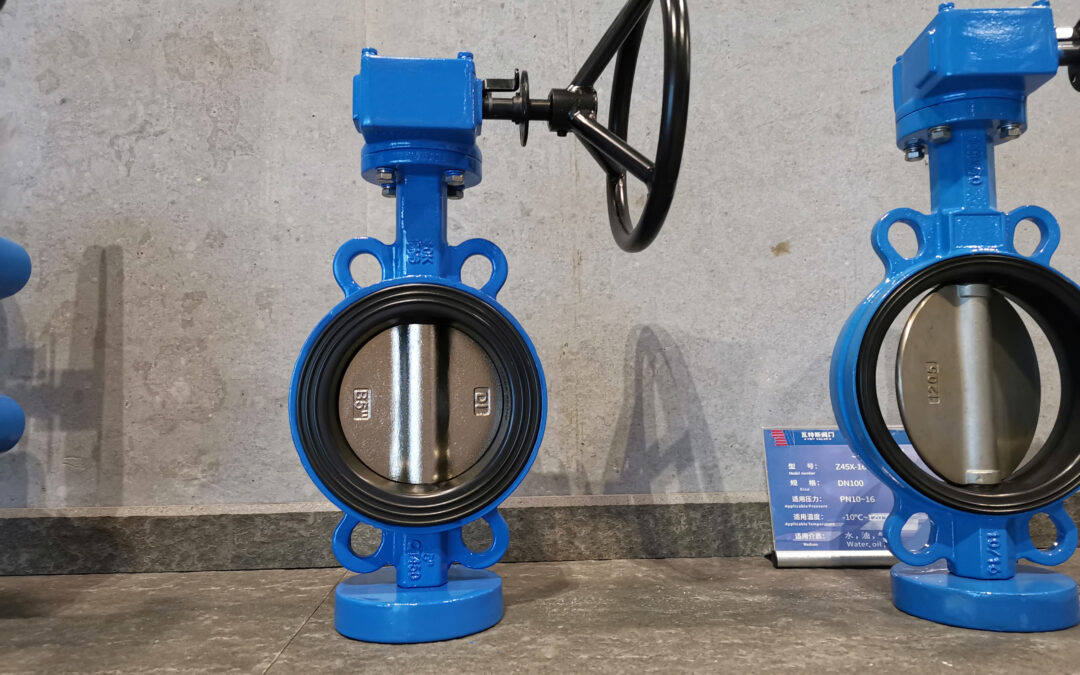
Triple offset butterfly valve features a unique design that provides an alternative solution for applications where tight shut-off, zero leakage and long service life are crucial. They accomplish this through a “tripling” of the standard disc offset found in conventional butterfly valves.
The triple offset design of these butterfly valves enables significant improvements in shut-off capability, reduced torque requirements, increased resistance to vibration and cavitation, and longer service life.

How Triple Offset Butterfly Valves Work Properly?
In a standard butterfly valve by triple offset butterfly valve factory, the disc is offset from the centerline of the valve body to improve sealing and shut-off. This is known as a single offset design. China triple offset butterfly valve takes this one step further. They feature a disc that is offset in three ways relative to the flow axis:
• Radial offset – The disc is offset radially outward from the center of the valve body. This delays the point of contact with the seat for improved shut-off.
• Axial offset – The disc is offset along the axis of the valve shaft. This extends the sealing line with the seat for a tighter, more secure seal.
• Angular offset – The disc is offset at a slight angle relative to the normal axis of rotation. This applies a wiping action when seating for a dynamic seal with no dead space.
The result of these triple offsets is a valve that can achieve zero leakage and is inherently better at vibration resistance, cavitation erosion resistance, and fatigue resistance due to the more advanced sealing design.
Benefits Of Triple Offset Butterfly Valves
The additional complexity of triple offset butterfly valves translates to a number of key advantages over traditional butterfly designs:
• Zero or ultra-low leakage – The triple-offsetting action provides an extended sealing surface and wiping action for a dynamic seal with almost no leakage.
• Longer service life – The design is less prone to vibration, cavitation erosion and fatigue failure due to a more optimum stress distribution and reduced number of stress-concentration points.
• Easier maintenance – The disc can still be removed and replaced without disassembling the pipeline, similar to standard butterfly valves.
• Bi-directional sealing – The triple offset design provides sealing in both flow directions for applications that require reverse flow capability.
• Less torque required – The delayed point of contact means less torque is needed to seal the valve, reducing actuator size requirements.
• Higher cy clearage – The more gradual sealing surface results in lower friction and wear, enabling a greater number of open-close cycles before maintenance is needed.
Common Applications For Triple Offset Butterfly Valves
Due to their inherent advantages for tight shut-off and regulating critical flows, triple offset butterfly valves are specified for:
• Pulp and paper processes – Controlling and isolating flow of pulping liquors, white and brown stock, and steam.
• Power plants – Isolating flows of boiler feedwater, condensate, cooling water and various chemicals.
• Oil & gas pipelines – Flow control of hydrocarbons and related fluids in transportation and production applications.
• Wastewater treatment plants – Isolating and throttling flows of sludge, effluent and plant chemicals.
• Pharmaceutical processes – Regulating critical flows in clean room environments with zero contamination tolerance.
• Semiconductor fabs – Tight shut-off and minimum dead space help maintain high purity of process gases.
• Food and beverage – Controlling liquid flows while meeting 3A and USDA standards for zero leakage and no dead spaces.
Jul 12, 2023 | Uncategorized
Choosing the right butterfly valve manufacturer is crucial for ensuring the safety and efficiency of your industrial operations. In this article, we will guide you through the essential factors to consider when selecting a manufacturer and highlight the strengths of…
Jul 7, 2023 | News
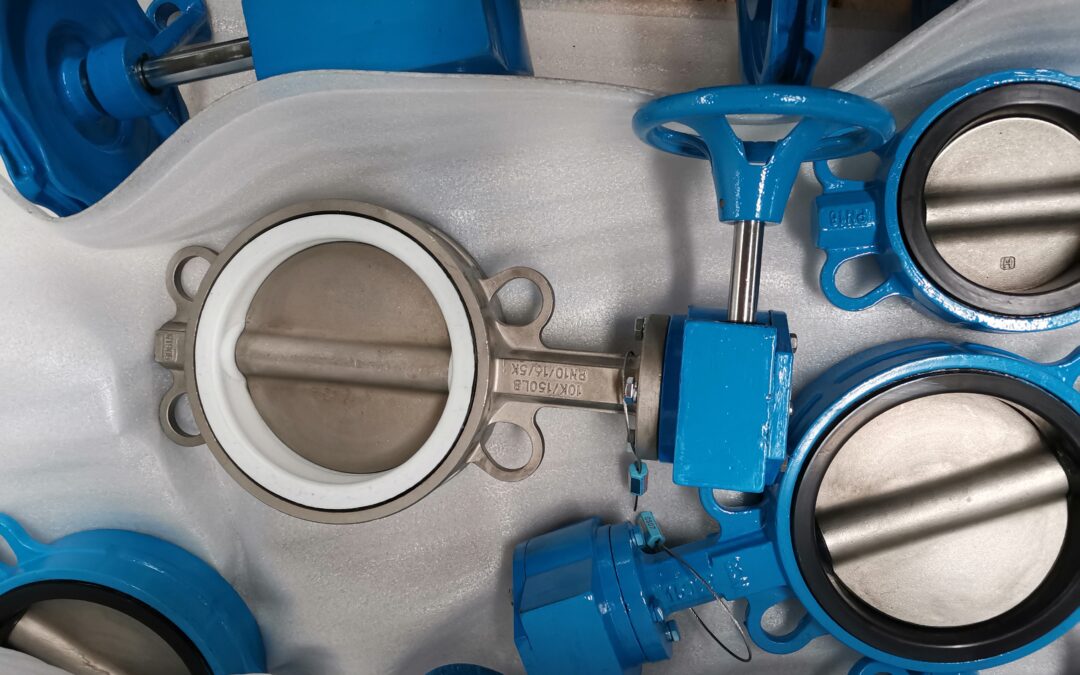
A butterfly valve is a type of valve that is used to regulate the flow of fluids in a pipeline. It gets its name from the shape of the disc, which is similar to that of a butterfly. The disc is mounted on a shaft and rotates to control the flow of fluid. Butterfly valves are commonly used in a variety of applications, including HVAC systems, water treatment plants, and chemical processing plants.
One particular type of butterfly valve that has gained popularity in recent years is the ductile iron wafer butterfly valve. In blog post, we will take a closer look at this type of valve and explore its features and benefits.

What Is A Ductile Iron Wafer Butterfly Valve?
A ductile iron wafer butterfly valve is a type of butterfly valve that is made from ductile iron and is designed to be mounted between two flanges. It is called a wafer valve because it is designed to fit between two flanges without the need for additional bolts or nuts. The valve is held in place by the flanges themselves.
Ductile iron is a type of iron that has been treated with small amounts of magnesium and cerium to improve its strength and ductility. Ductile iron is commonly used in applications where high strength and durability are required, such as in the construction of pipes, valves, and fittings.
Features And Benefits Of Ductile Iron Wafer Butterfly Valves
Ductile iron wafer butterfly valves offer several features and benefits that make them an attractive choice for many applications. Some of these features and benefits include:
- Easy Installation: Ductile iron wafer butterfly valves are designed to be easy to install. They do not require additional bolts or nuts, which means that installation can be completed quickly and easily.
- Low Cost: Ductile iron wafer butterfly valves are relatively inexpensive compared to other types of valves. This makes them an attractive option for applications where cost is a significant factor.
- High Strength and Durability: Ductile iron is a strong and durable material that can withstand high pressures and temperatures. This makes ductile iron wafer butterfly valves suitable for use in a wide range of applications.
- Corrosion Resistance: Ductile iron is resistant to corrosion, which makes ductile iron wafer butterfly valves suitable for use in corrosive environments.
- Low Maintenance: Ductile iron wafer butterfly valves require little maintenance, which makes them a low-maintenance option for many applications.
Applications Of Ductile Iron Wafer Butterfly Valves
Ductile iron wafer butterfly valves are suitable for use in a wide range of applications, including:
- HVAC Systems: Ductile iron wafer butterfly valves are commonly used in HVAC systems to regulate the flow of air.
- Water Treatment Plants: Ductile iron wafer butterfly valves are used in water treatment plants to regulate the flow of water and other fluids.
- Chemical Processing Plants: Ductile iron wafer butterfly valves are used in chemical processing plants to regulate the flow of chemicals and other fluids.
- Oil and Gas Industry: Ductile iron wafer butterfly valves are used in the oil and gas industry to regulate the flow of oil, gas, and other fluids.
- Food and Beverage Industry: Ductile iron wafer butterfly valves are used in the food and beverage industry to regulate the flow of food and beverage products.

Jul 7, 2023 | News
Butterfly valves are commonly used fluid control devices that find wide applications in various industries. This article will introduce three common types of butterfly valves: PN16 butterfly valve, GGG50 butterfly valve, and LT butterfly valve, and discuss their characteristics and applications.
The PN16 butterfly valve is a type of butterfly valve with a standard pressure rating of PN16.

It utilizes PN16 standard flange connections and offers high pressure resistance and sealing performance. PN16 butterfly valves are typically made of cast iron or stainless steel and are suitable for fluid control under medium pressure and temperature conditions. The main features of PN16 butterfly valves include simple structure, small size, light weight, and convenient operation. They are widely used in water supply and drainage systems, chemical process pipelines, and other fields.
The GGG50 butterfly valve is a type of butterfly valve that utilizes GGG50 ductile iron material.
GGG50 butterfly valve possess high strength and corrosion resistance, making them suitable for special industrial environments. The key characteristics of GGG50 butterfly valves include high temperature resistance, corrosion resistance, and wear resistance, making them suitable for fluid control in high-pressure, high-temperature, and corrosive media. GGG50 butterfly valves are widely applied in industries such as petrochemical, metallurgy, and power.
The LT butterfly valve is a type of butterfly valve that utilizes LT material.
LT butterfly valves offer excellent corrosion resistance and sealing performance, making them suitable for specific media. The main features of LT butterfly valves include corrosion resistance, high temperature resistance, and wear resistance, making them suitable for fluid control in corrosive and high-temperature media. LT butterfly valve find extensive applications in industries such as chemical, petroleum, and pharmaceutical.
In conclusion, PN16 butterfly valves, GGG50 butterfly valves, and LT butterfly valves are three common types of butterfly valves. Each type has its own characteristics and application areas. Choosing the appropriate type of butterfly valve can effectively meet the fluid control requirements in different industrial environments.



