Nov 21, 2023 | News
In all kinds of pipe network systems, valves are called “throat”. Leakage, shutdown, and major accidents caused by valve performance and quality problems have brought immeasurable losses to the normal operation of industrial production, personal safety, and property (such as the Three Mile Island nuclear power plant accident in the United States that shocked the world). According to relevant statistics, the major production accidents caused by the world every year, 1/3 of which are caused by valve quality accidents.
In August 2020, the thermal power project of Madian Gangue Power Generation Company in China was undergoing thermal commissioning when a high-pressure steam pipeline suddenly broke, resulting in a major safety accident that killed 21 people and injured 5 people (3 of whom were seriously injured).
It is reported that the valve used by the factory is not a qualified high-quality dn25-dn3600 butterfly valve, and the cause of the accident includes improper operation as well, which shows that not only to select a good butterfly valve, but also to pay attention to the operation of the butterfly valve.
The cause of the terrible accident
After preliminary investigation and analysis, the main causes of the accident are: the weld seam of the main pipeline flowmeter valve at the steam outlet of the No. 2 boiler was cracked, and a large number of high temperature and high pressure steam spilled out, resulting in the breakage of the glass of the main control room, causing serious casualties in the main control room.
Causes of valve weld failure:

- There are problems with the material of the pipeline, and the possibility is that the material of the main steam pipe is unqualified.
- The welding quality is not up to standard, the weld treatment process is not perfect, and 100% welding seam detection is not carried out after welding.
- The layout of the pipeline is unreasonable, and the accident pipeline is arranged in the 8m floor, which is the connection of the main steam pipe and the outlet pipe of No. 2 furnace in the factory, and also the boiler water supply platform. A large number of pipelines are cross-arranged and the space is limited, which leads to the expansion of the pipeline is blocked and the welding joint is easily broken due to thermal stress.
- There is a phenomenon of overtemperature and overpressure in operation.When using a gate valve,such as a bs5163 gate valve pn16,the control of temperature and pressure needs a lot attention.BS5163 is a British Standard specification for resilient-seated gate valves used for waterworks purposes. PN16 is a pressure rating that indicates the valve is designed to withstand a maximum pressure of 16 bar (232 psi) at a temperature range of -10°C to +80°
Precautions of applying valves
We have to learn from every single valve accident to avoid further accident from happening to the highest level.Here are some tips on the application of gate valves,including ggg50 butterfly valve,from TWT,one of the largest valve manufacturer:
1.The valve storage environment should pay attention to, should be stored in a dry and ventilated room, and blocked at both ends of the path.
2.The valve should be checked regularly, and remove the dirt on it, and apply anti-rust oil on its surface.
3.After the installation of the application of the valve, it should be regularly repaired to ensure that it works normally.
4.Check whether the sealing surface of the valve is worn, and repair or replace it according to the situation.
5.Check the trapezoidal thread wear of the valve stem and valve stem nut, whether the packing is outdated and invalid, and carry out the necessary replacement.

Nov 20, 2023 | News
Are you curious about what is a gate valve and their role in various industries? This article provides a comprehensive understanding of gate valves, their function, and their applications. Discover the mechanism behind gate valves and how they control fluid flow. Explore the diverse industries where gate valves are utilized and the benefits they offer. Whether you’re an engineer or simply interested in valve technology, this article will enrich your knowledge of gate valves and their significance in industrial operations.
What Is a Gate Valve: Understanding Its Function and Applications
What is a gate valve? A gate valve is a vital component popular in regulating fluid flow in numerous industries. It operates by either fully opening or closing the passage to control the flow of liquids or gases. The valve’s mechanism involves a gate that moves up or down within the valve body to allow or block the flow.
The primary function of a gate valve is to provide a tight shut-off, ensuring the complete closure of the passage. This characteristic makes gate valves particularly useful in applications where a leak-tight seal is essential, such as in the oil and gas industry, wastewater treatment plants, and power generation facilities.

The Mechanism and Operation of Gate Valves
One of the key advantages of gate valves is their low resistance to flow when fully open, resulting in minimal pressure drop. Additionally, gate valves exhibit excellent resistance to erosion and are capable of handling high-pressure and high-temperature applications effectively. Their simple design facilitates easy maintenance and repair, making them a preferred choice in industrial settings.
Gate valves find widespread applications across various industries. In the oil and gas sector, they are employed to control the flow of crude oil, natural gas, and refined petroleum products. Water treatment plants utilize gate valves to regulate the flow of water and wastewater. Moreover, gate valves play a crucial role in power plants, chemical processing plants, and mining operations.
- Increasing Industrialization: With the rapid industrialization happening worldwide, the demand for gate valves is expected to rise. Industries such as oil and gas, water treatment, power generation, chemical processing, and mining are expanding, driving the need for reliable and durable valve solutions.
- Infrastructure Development: Infrastructure projects, including construction, pipelines, and water distribution systems, require robust valves to regulate fluid flow. Gate valves, with their ability to provide a tight shut-off and handle high-pressure applications, are well-suited for infrastructure development projects.
- Growing Energy Sector: The energy sector, including oil, gas, and renewable energy, is expanding to meet the increasing global energy demand. Gate valves are critical components in energy production, transportation, and refining processes. As the energy sector continues to grow, the demand for gate valves will likely follow suit.
- Advancements in Technology: The valve industry is witnessing technological advancements, including smart and automated valves. Gate valves integrated with advanced control systems, sensors, and actuators offer enhanced performance, remote monitoring, and automation capabilities. These innovations make gate valves more efficient, reliable, and compatible with modern industrial requirements.

In summary, the prospect of gate valves is promising due to increasing industrialization, infrastructure development, the growing energy sector, technological advancements, environmental sustainability goals, and emerging markets.
Gate valves will continue to be sought after for their reliability, durability, and efficient fluid control capabilities in various industries. As industries evolve, gate valves are poised to meet the evolving needs and contribute to the smooth operation of industrial processes.
Diverse Applications and Benefits of Gate Valves
In power generation facilities, gate valves control the flow of steam, condensate, and cooling water. Chemical plants rely on gate valves to handle the flow of corrosive chemicals, acids, and alkalis. In mining operations, gate valves regulate the flow of slurry and other abrasive fluids.
To summarize, gate valves are indispensable components in various industrial applications. Their primary function is to control fluid flow, ensuring a secure shut-off when necessary. With their durability, versatility, and ease of maintenance, gate valves are popular across industries such as oil and gas, water treatment, power generation, and more. These valves enable efficient and reliable fluid control, contributing to the smooth operation of industrial processes.
In conclusion, gate valves play a vital role in industrial operations, providing efficient control of fluid flow. By understanding the function and applications of gate valves, professionals can make informed decisions regarding their implementation. Gate valves offer reliable shut-off capabilities. Embrace the benefits of gate valves and enhance the efficiency of your industrial processes.
Nov 17, 2023 | More information
A butterfly valve is a type of quarter-turn valve that uses a disc-shaped closure element to control flow. While, A gate valve is a linear motion valve that uses a sliding gate or wedge-shaped closure element to control flow.
2 key differences between butterfly valves and gate valves:
Butterfly valves operate on a quarter-turn principle, while gate valves operate on a linear motion principle. Butterfly valves require a 90-degree rotation to open or close, while gate valves require upward or downward movement to open or close.
Butterfly valves provide excellent flow control with low-pressure drop, making them suitable for large flow rates. Gate valves, on the other hand, can have higher pressure drops due to the obstruction caused by the gate/wedge.
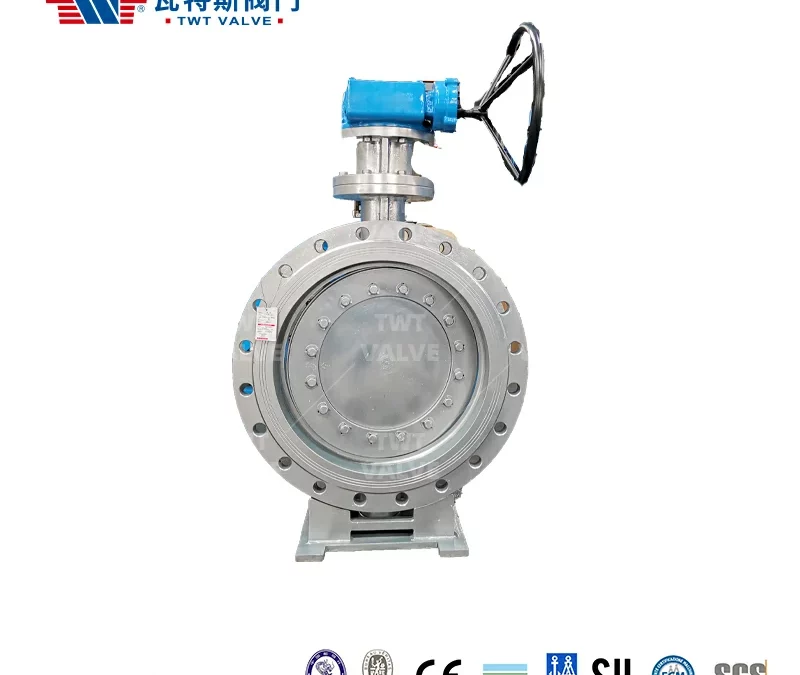
As leading ductile iron wafer butterfly valves factory in China, TWT provides quality ductile iron wafer butterfly valve and ductile iron gate valve.
Nov 16, 2023 | More information
CI butterfly valves offer several advantages:
Corrosion resistance: CI butterfly valves are typically coated or lined to enhance their resistance to corrosion.
Durability: Cast iron is known for its strength and durability, making CI butterfly valves suitable for handling various fluids.
Ease of installation and maintenance: CI butterfly valves are relatively lightweight and easy to install.
Lower Cost: Cast iron is a cost-effective material compared to alternatives like stainless steel, making CI butterfly valves an economical choice
As double flange butterfly valve manufacturer & supplier in China, we supplies ci butterfly valve, large size double flange butterfly valve and so on.

Nov 16, 2023 | News
Learn about the functionality and applications of butterfly valves in water supply systems. From understanding their definition and operation to exploring their role in different applications, this article provides a comprehensive overview of butterfly valves. Discover how these valves control the flow of water and their significance in ensuring efficient and reliable water supply.
What is a Butterfly Valve?
A butterfly valve is a type of valve used to regulate and control the flow of fluids, including water, in various industries and applications. Its design consists of a disc that rotates on a shaft, allowing or restricting the flow by adjusting the position of the disc.

Working Principle and Components
Butterfly valves operate on a simple yet effective principle. When the disc is perpendicular to the flow direction, it obstructs the passage, reducing or blocking the water flow. Conversely, when the disc is parallel to the flow direction, it allows unrestricted flow.
These valves comprise several key components, including the valve body, disc, shaft, and actuator. The valve body provides the housing, while the disc controls the flow. The shaft connects the disc to the actuator, which facilitates the rotation of the disc to adjust the flow.
Applications in Water Supply Systems
Butterfly valves find widespread use in water supply systems due to their versatility and reliability. Some notable applications include:
- Water Treatment Plants: Butterfly valves are popular in various stages of water treatment, such as regulating the flow during filtration processes or controlling chemical dosing.
- Pump Stations: These valves play an important role in pump stations to regulate the flow of water, ensuring efficient operation and preventing backflow.
- Distribution Networks: Butterfly valves play a crucial role in distribution networks, enabling the control of water flow, pressure management, and maintenance activities.
- Fire Protection Systems: Butterfly valves are essential components in fire protection systems, allowing for a quick and effective supply of water during emergencies.

Conclusion:
Butterfly valves play a significant role in water supply systems, offering precise flow control and reliable performance. With their simple yet robust design, these valves find applications in water treatment plants. Pump stations, distribution networks, and fire protection systems. By regulating water flow and maintaining system efficiency. Butterfly valves contribute to the smooth and reliable supply of water to communities and industries.



