
Fév 18, 2024 | Nouvelles
Gate valves and ball valves are two common types of flow control devices used in various industries. While both types of valves serve the same purpose of controlling the flow of fluids, there are several reasons why a gate valve might be preferred over a ball valve in certain situations.
1. Design and Functionality
Gate valves are designed to control the flow of fluids in a more precise and efficient manner compared to ball valves. Gate valves consist of a gate and a stem, whereas ball valves have a ball and a stem. The gate valve is operated by a lever or a handle, while the ball valve is operated by a handle or a rod.
2. Contrôle de flux
Gate valves offer more precise control over the flow of fluids compared to ball valves. Gate valves can be adjusted to allow for small changes in flow rates, while ball valves can only be adjusted in larger increments. This makes gate valves more suitable for applications where precise control over the flow rate is crucial.
3. Safety Features
Gate valves are considered safer than ball valves because they do not have a rotating component that can cause injury in case of a malfunction. En outre, gate valves are easier to maintain and repair compared to ball valves.
4. Durability
Gate valves are generally more durable than ball valves. They are made of materials that are resistant to corrosion and wear, making them more long-lasting.
5. Coût
Gate valves tend to be more expensive than ball valves, especially for high-pressure applications. Cependant, the increased cost is often justified by the improved safety and functionality of gate valves.

When to Use a Gate Valve Instead of a Ball Valve
If you need precise control over the flow rate of fluids, a gate valve might be the better choice. Gate valves are ideal for applications where small changes in flow rate are crucial, comme dans le traitement chimique, food and beverage manufacturing, and pharmaceutical production.
D'autre part, if you need a more straightforward and user-friendly flow control device, a ball valve might be the better choice. Ball valves are simpler to operate and maintain compared to gate valves, making them ideal for applications where simplicity and ease of use are paramount, such as in residential plumbing and HVAC systems.
Advantages of Gate Valves
There are several advantages of using a gate valve over a ball valve, y compris:
- Precise Flow Control: Gate valves provide more precise flow control, making them ideal for applications where consistent flow rates are required.
- Higher Pressure Rating: Gate valves are rated for higher pressures than ball valves, making them a better choice for high-pressure applications.
- Easier Maintenance: Gate valves are generally easier to maintain than ball valves, as the flat gate provides a larger surface area for cleaning and maintenance.
- Lower Cost: Gate valves are generally less expensive than ball valves, making them a more cost-effective option for many applications.
Applications of Gate Valves
Gate valves are commonly used in a variety of industrial and commercial applications, y compris:
- Traitement de l'eau: Gate valves are commonly used in water treatment plants to control the flow of water and chemicals.
- Pétrole et Gaz: Gate valves are used in oil and gas production to control the flow of fluids and gases.
- Traitement chimique: Gate valves are used in chemical processing plants to control the flow of chemicals and other fluids.
- CVC: Gate valves are used in heating, ventilation, and air conditioning systems to control the flow of water and air.

Conclusion
Gate valve vs ball valve which is better for your project? En conclusion, gate valves and ball valves are two different types of flow control devices with distinct advantages and disadvantages. While both types of valves serve the same purpose of controlling the flow of fluids, gate valves offer more precise control, safety features, durabilité, et la rentabilité.
Donc, if you need precise control over the flow rate of fluids, a gate valve might be the better choice. Cependant, if you need a more straightforward and user-friendly flow control device, a ball valve might be the better choice.
Fév 2, 2024 | Nouvelles
Cast steel gate valves and ductile iron gate valves serve different purposes and are suitable for various applications based on their material composition and performance characteristics. Cast steel gate valves excel in demanding applications requiring high strength and durability, while ductile iron gate valves offer good corrosion resistance and are cost-effective for general industrial use. By understanding the key differences between these two types of gate valves, engineers and professionals can make informed decisions to optimize flow control and system performance in their specific applications.
Cast Steel Gate Valve

Cast steel gate valves are manufactured using a casting process that involves pouring molten steel into a mold. This process allows for the creation of valves with complex shapes and high strength. Cast iron gate valves are known for their durability, high-pressure capabilities, and resistance to high temperatures. They are commonly used in demanding applications such as power plants, oil and gas industries, and chemical processing facilities.
Vanne à vanne en fonte ductile
Ductile iron gate valves are produced using a process that involves treating molten iron with magnesium or other elements to improve its properties. This results in a material that is stronger and more ductile than gray iron, making it less susceptible to breakage. Ductile iron gate valves offer good corrosion resistance, durabilité, and are suitable for a wide range of industrial applications. They are commonly used in water distribution systems, les stations d'épuration des eaux usées, and general industrial settings.
Comparison:
- Material Composition: Cast steel gate valves are made of steel, an alloy of iron and carbon, while ductile iron gate valves are made of ductile iron, a type of cast iron that has been treated to improve its strength and ductility.
- Strength and Durability: Cast steel gate valves are generally stronger and more durable than ductile iron gate valves due to the higher strength of steel. They can withstand higher pressure and temperature conditions.
- Corrosion Resistance: Ductile iron gate valves offer better corrosion resistance compared to cast steel gate valves, making them suitable for applications involving corrosive media.
- Coût: Cast steel gate valves are typically more expensive than ductile iron gate valves due to the higher cost of steel and the more complex manufacturing process.
- Application Suitability: Cast steel gate valves are ideal for high-pressure, high-temperature, and demanding applications, while ductile iron gate valves are suitable for general industrial applications, water distribution systems, and environments where corrosion resistance is important.
Fév 1, 2024 | Nouvelles
Les clapets anti-retour de type plaquette en acier inoxydable sont des composants essentiels dans les systèmes de contrôle de débit industriels, ensuring unidirectional flow and preventing backflow. Their corrosion resistance, design compact, low maintenance requirements, and versatility make them suitable for a wide range of applications across various industries. By understanding the design, opération, avantages, and diverse applications of stainless steel wafer type check valves, engineers and professionals can select the most appropriate valve for their specific requirements, ensuring efficient flow control and system performance.
Understanding Stainless Steel Wafer Type Check Valves

Stainless steel check valves by wafer check valve manufacturer China, are in-line valves designed to allow fluid flow in one direction only. They consist of a valve body, a disc or flapper, and a spring or gravity mechanism. The valve body is typically made of stainless steel, offering excellent corrosion resistance and durability.
Operation of Stainless Steel Wafer Type Check Valves
- Sens de l'écoulement: When fluid flows in the intended direction, the pressure of the fluid pushes the disc or flapper open, allowing the fluid to pass through the valve.
- Prévention du reflux: When the flow direction reverses, the pressure of the fluid causes the disc or flapper to close, empêcher le reflux. The spring or gravity mechanism assists in closing the valve tightly to ensure a leak-proof seal.
Advantages of Stainless Steel Wafer Type Check Valves
- Corrosion Resistance: Stainless steel construction provides excellent resistance to corrosion, making these valves suitable for various industrial environments and media.
- Compact Design: Wafer type check valves have a compact and lightweight design, making them easy to install and maintain.
- Low Maintenance: These valves require minimal maintenance, reducing operational costs.
- Versatile Applications: Stainless steel wafer type check valves are suitable for a wide range of industrial applications.
- Cost-Effective: They offer a cost-effective solution for flow control and backflow prevention.
Applications of Stainless Steel Wafer Type Check Valves
- Water Systems: Stainless steel wafer type check valves are used in water treatment plants, plumbing systems, and irrigation networks to prevent backflow and contamination.
- Systèmes CVC: These valves are employed in heating, ventilation, and air conditioning systems to ensure proper airflow direction and prevent backdraft.
- Traitement chimique: They are utilized in chemical processing plants to control the flow of corrosive fluids and prevent backflow into sensitive equipment.
- Industrie du pétrole et du gaz: Stainless steel wafer type check valves are used in oil and gas pipelines, raffineries, and petrochemical plants to prevent backflow and ensure safe operation.
- La production d'énergie: These valves play a vital role in power generation plants to control the flow of fluids and prevent backflow into critical systems.

Fév 1, 2024 | Nouvelles
Une vanne papillon à triple excentration est un dispositif polyvalent et largement utilisé dans diverses industries, y compris les produits chimiques, pétrochimique, et traitement pharmaceutique. Cependant, Comprendre le sens d'écoulement préféré de cette vanne est crucial pour un fonctionnement et une maintenance appropriés.. Dans cet article, nous entrerons dans les détails du sens d'écoulement préféré d'une vanne papillon à triple excentration.
Vannes papillon triple excentration sont largement utilisés dans diverses industries pour leur capacité à contrôler le débit de fluide et à isoler les systèmes. L'une des principales caractéristiques de ces vannes est leur capacité à gérer le flux bidirectionnel., mais quel est le sens d'écoulement préféré d'une vanne papillon triple excentration? Dans cet article, nous explorerons le sens d'écoulement préféré de ces vannes et pourquoi cela est important.
Vanne papillon à triple décalage
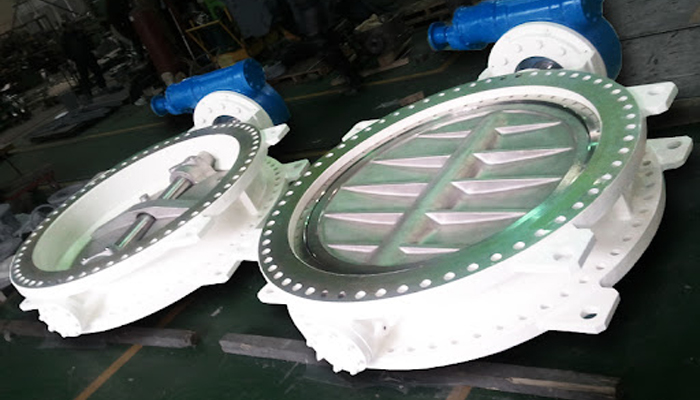
Une vanne papillon à triple excentration est un type de vanne qui utilise un clapet en forme de disque pour contrôler le débit de fluide.. Le clapet de la vanne est positionné de manière à créer trois décalages, lui permettant de tourner 90 degrés pour ouvrir ou fermer la vanne. Cette conception permet à la vanne de gérer un débit bidirectionnel, ce qui le rend adapté à un large éventail d'applications.
Direction d'écoulement préférée
Le sens d'écoulement préféré d'une vanne papillon à triple excentration est déterminé par la conception de la vanne et la manière dont elle est installée.. En général, le sens d'écoulement préféré va du côté amont de la vanne vers le côté aval. Cela signifie que la vanne doit être installée avec l'entrée du côté amont et la sortie du côté aval..
Il existe plusieurs raisons pour lesquelles la direction d'écoulement préférée est importante. Premièrement, cela aide à prévenir la cavitation, ce qui peut se produire lorsque le débit de fluide est restreint ou inversé. La cavitation peut endommager la vanne et la tuyauterie, et peut également entraîner une réduction des débits et une augmentation des niveaux de bruit. Deuxièmement, le sens d'écoulement préféré permet de garantir que le clapet de la vanne est correctement aligné, ce qui est important pour un fonctionnement fluide et pour éviter d'endommager la vanne.
Direction du débit et fonctionnement de la vanne
Le sens du débit affecte également le fonctionnement de la vanne. Lorsque la vanne est ouverte, le fluide s'écoule du côté amont vers le côté aval, et le clapet de la vanne tourne 90 degrés pour permettre l'écoulement. Lorsque la vanne est fermée, le débit de fluide est restreint, et le clapet de la vanne tourne 90 degrés pour bloquer le flux.
En résumé, le sens d'écoulement préféré d'une vanne papillon à triple excentration est du côté amont vers le côté aval. Cette direction aide à prévenir la cavitation, assure un bon alignement du clapet de la vanne, et affecte le fonctionnement de la vanne. En comprenant la direction d'écoulement préférée, les industries peuvent installer et faire fonctionner ces vannes plus efficacement, assurant un contrôle fluide et efficace du débit de fluide.
Facteurs affectant la direction d'écoulement préférée
Plusieurs facteurs peuvent affecter la direction d'écoulement préférée d'une vanne papillon à triple excentration, y compris la taille et la forme des vannes, l'orientation des vannes, et la chute de pression à travers les vannes. Une installation et un alignement corrects des vannes sont cruciaux pour garantir une bonne direction d'écoulement et éviter les blocages ou les fuites..
Exemples et applications
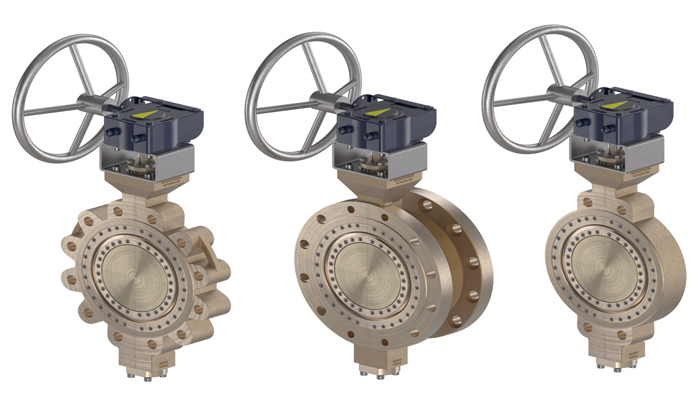
Les vannes papillon à triple excentration sont largement utilisées dans diverses industries, y compris le traitement de l'eau, traitement chimique, et production de pétrole et de gaz. Ils sont souvent utilisés dans les applications où des débits élevés et de faibles chutes de pression sont requis., comme dans les pipelines et les stations de pompage.
Par exemple, dans une usine de traitement d'eau, une vanne papillon à triple excentration peut être utilisée pour contrôler le débit d'eau à travers un processus de traitement. La vanne peut être installée en position horizontale, avec l'entrée du côté amont et la sortie du côté aval. Cela permet à l'eau de s'écouler à travers la vanne et dans le processus de traitement., où il peut être filtré et purifié.
Dans un autre exemple, une vanne papillon à triple excentration peut être utilisée dans une usine de traitement chimique pour contrôler le flux de produits chimiques à travers un processus de réaction. La vanne peut être installée en position verticale, avec l'entrée du côté amont et la sortie du côté aval. Cela permet aux produits chimiques de circuler à travers la vanne et dans le processus de réaction., où ils peuvent être mélangés et réagis.
Conclusion
En conclusion, le sens d'écoulement préféré d'une vanne papillon à triple excentration est une considération importante pour les industries qui utilisent ces vannes pour le contrôle du débit de fluide. En comprenant les raisons derrière le sens d'écoulement préféré et comment cela affecte le fonctionnement de la vanne, les industries peuvent optimiser leur utilisation de ces vannes et garantir un fonctionnement fluide et efficace. Que ce soit pour le traitement de l'eau, traitement chimique, ou d'autres applications, la vanne papillon triple excentration est une option polyvalente et fiable pour le contrôle du débit de fluide.

Jan 31, 2024 | Nouvelles
Triple offset butterfly valves and wafer butterfly valves serve different purposes and are suitable for various applications based on their design and performance characteristics. Triple offset butterfly valves excel in demanding applications requiring superior sealing, reduced wear, and reliability, while wafer butterfly valves are cost-effective solutions for general industrial applications and low-pressure systems.
By understanding the key differences between these two types of butterfly valves, engineers and professionals can make informed decisions to optimize flow control and system performance in their specific applications.
Vanne papillon à triple décalage
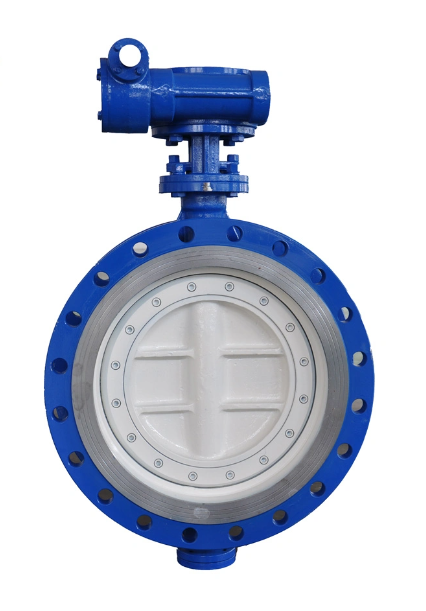
Vannes papillon triple excentration from Fabricant de vannes en Chine, incorporate a unique design that features three offsets: shaft offset, disc offset, and seat offset. This design provides superior sealing capabilities, usure réduite, and reliable operation. Triple offset butterfly valves are known for their high-performance characteristics and are often used in demanding applications such as chemical processing, pétrole et gaz, la production d'énergie, traitement de l'eau, and pharmaceutical industries.
Vanne papillon Wafer
China Wafer butterfly valves, also known as lug-type butterfly valves, have a more straightforward design compared to triple offset butterfly valves. They consist of a circular disc mounted on a shaft and are installed between two pipe flanges. Wafer butterfly valves are compact and lightweight, making them suitable for space-constrained applications. They are commonly used in general industrial applications, Systèmes CVC, water distribution systems, and irrigation networks.
Comparison:
- Sealing Performance: Triple offset butterfly valves offer superior sealing capabilities due to their unique offset design, which ensures a tight seal even under high-pressure conditions. Wafer butterfly valves provide adequate sealing for low-pressure applications but may not be suitable for high-pressure or critical processes.
- Wear and Tear: The offset design of triple offset butterfly valves reduces friction between the disc and seat, resulting in less wear and tear. This extends the valve’s lifespan and reduces maintenance requirements. Wafer butterfly valves experience more wear and tear due to the direct contact between the disc and seat, requiring more frequent maintenance or replacement.
- Entretien: Triple offset butterfly valves require minimal maintenance due to their reduced wear and tear. Wafer butterfly valves require more frequent maintenance, including periodic inspection and replacement of worn-out parts.
- Application Suitability: Triple offset butterfly valves are ideal for demanding applications where high-pressure sealing, reduced wear, and reliability are essential. Wafer butterfly valves are suitable for general industrial applications, Systèmes CVC, and low-pressure fluid handling.



