grudzień 7, 2023 | Aktualności
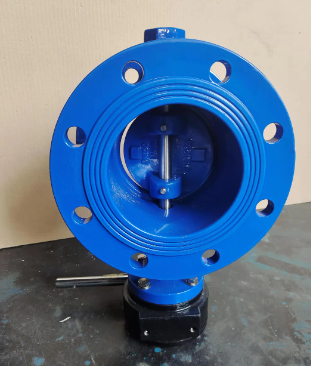
High performance eccentric butterfly valve, including DI butterfly valves and CI butterfly valves, offer reliable and efficient flow control solutions in industrial applications. Their unique design features, such as offset disc placement, low torque requirement, and pressure drop reduction, contribute to their superior performance. DI butterfly valves, made from ductile iron, provide robustness, corrosion resistance, and versatility, making them suitable for various industries. CI butterfly valves, constructed from cast iron, offer durability and a wide range of sizes, catering to different flow requirements.
Eccentric Butterfly Valves: An Overview

Eccentric butterfly valves are quarter-turn valves that utilize a disc with an offset shaft to control fluid flow. This design ensures that the disc is fully disengaged from the flow path when the valve is open, reducing turbulence and pressure drop. Here are some key features of high-performance eccentric butterfly valves:
A) Sealing Capability: Eccentric butterfly valves provide excellent sealing performance due to the eccentric disc design. The disc is positioned off-center, allowing a bubble-tight seal against the valve seat when closed, minimizing leakage.
B) Low Torque Requirement: The eccentric disc design reduces the torque required to operate the valve. This results in easier and more efficient valve actuation, reducing operational costs and enhancing system performance.
c) Pressure Drop Reduction: High-performance eccentric butterfly valves are designed to minimize pressure drop when fully open, ensuring efficient flow with minimal energy loss.
Z (Ciągliwy metal) Zawory motylkowe: Features and Applications
DI butterfly valves are constructed using ductile iron, a type of cast iron that offers enhanced strength, trwałość, i odporność na korozję. Here are some notable features and applications of zaworu motylkowego:
A) Solidna konstrukcja: Ductile iron provides exceptional mechanical strength, allowing DI butterfly valves to withstand high pressures and demanding industrial environments. They are resistant to impact, vibration, and thermal stress.
B) Odporność na korozję: DI butterfly valves have excellent corrosion resistance, making them suitable for various applications involving corrosive fluids. They find applications in water treatment, wastewater management, obróbka chemiczna, i systemy HVAC.
c) Wszechstronność: DI butterfly valves are available in various sizes and pressure ratings, allowing for flexibility in system design and installation. They can be used for both on-off and throttling applications.
d) Cost-Effective Solution: DI butterfly valves offer a cost-effective solution for flow control, combining durability and high performance at a competitive price point.
CI (Żeliwo) Zawory motylkowe: Features and Applications
CI butterfly valves are constructed using cast iron, a material known for its strength and durability. Here are some key features and applications of CI butterfly valve:
A) Sturdy Construction: Cast iron provides robustness and longevity to CI butterfly valves, enabling them to withstand high pressures and harsh operating conditions. They are suitable for applications involving water, air, gazy, and non-corrosive fluids.
B) Wide Range of Sizes: CI butterfly valves are available in a wide range of sizes, allowing for compatibility with various pipe diameters and flow rates. This versatility makes them suitable for diverse industrial applications.
c) Fire Protection Systems: CI butterfly valves are commonly used in fire protection systems, where they serve as control valves to regulate water flow. They play a crucial role in ensuring the effectiveness and reliability of fire suppression systems.
d) HVAC Systems: CI butterfly valves find extensive use in heating, ventilation, and air conditioning (HVAC) systems. They offer efficient flow control for chilled water, hot water, and other HVAC fluids.

grudzień 6, 2023 | Aktualności
Across waterworks projects, process flow control demands durable shut-off options for varied conditions. TWT Valve specializes in reliable designs optimizing maintenance accessibility and tight sealing.

Ideal for pipelines carrying raw slurries or sewage, TWT’s compact U type configuration wraps a one-piece disc body around the flow. Wafer and flanged ends secure directly between pipe flanges.
Lug-Type Butterfly Valve
Formed casing encloses the rotating disc, seated between extendable lug extensions for bolting between pipes or vessels. Convenient disassembly grants access without cutting pipe.
Double-Eccentric Butterfly Valve
Two offset disc shafts configure this specialized style to open and close tightly despite uneven erosive buildup on one side. Symmetric pressure distribution prevents binding.
Remotely actuated valves feature replaceable extended stems allowing installation in deeper trenches or small pits without needing excavation. Convenient gearbox actuation ensures tight shut-off.
Triple-Offset Butterfly Valve
Dynamic discs eliminate interference between stem and housing for an ultra-smooth motion and drip-tight shut-off relevant to gas or liquid transfer applications. Fire-tested designs rated for critical services.
With proven performance across corrosive slurries, boiler feedwater, chemicals and beyond, TWT zawór motylkowy pn16 manufactures versatile choice for shut-off and throttling process flow with maximum dependability. Robust engineering withstands the most extreme industrial demands.

grudzień 5, 2023 | Aktualności
In industrial applications, valves play a crucial role in regulating fluid flow and ensuring system efficiency and safety. Two commonly used valve types are butterfly valves and check valves. While both serve important functions in controlling flow, they have distinct designs and operating principles.
Zawory motylkowe: Function and Design

Butterfly valves are quarter-turn valves that use a disc-shaped closure element to control fluid flow. The disc is mounted on a shaft at the center of the valve body and can be rotated to open or close the flow passage. When the disc is fully open, it allows unobstructed flow, and when closed, it creates a tight seal to prevent flow. The key features of butterfly valves include:
A) Disc Design: The disc of a butterfly valve is typically flat or slightly curved, resembling the shape of a butterfly’s wings. This design allows for a compact valve profile and low-pressure drop when fully open.
B) Operacja: Butterfly valves are operated by a handle, lever, or actuator. They offer quick and easy operation, requiring only a quarter-turn to open or close the valve fully.
c) Applications: Butterfly valves are commonly used in large-scale industrial applications where fast, efficient flow control is required. They are suitable for controlling the flow of liquids, gazy, and slurries in various industries, including water treatment, Systemy HVAC, food processing, and chemical processing.
Sprawdź zawory: Function and Design
Check valves, also known as non-return valves or one-way valves, are designed to allow fluid flow in one direction while preventing backflow. These valves automatically open when the fluid flows in the desired direction and close to prevent backflow. The key features of check valves include:
A) Closure Mechanism: Check valves utilize different closure mechanisms, depending on the specific type. One common type is the tilting disc check valve, which we will focus on in this blog post.
B) Tilting Disc Check Valves: Tilting disc check valves have a disc that is hinged at one end and is free to pivot. The disc swings open to allow flow in the forward direction and closes due to fluid pressure when there is backflow. This design minimizes pressure drop and turbulence when the valve is open.
c) Applications: Check valve 6 inch are essential in preventing reverse flow and protecting equipment and piping systems from damage. They find applications in various industries, w tym ropę i gaz, obróbka chemiczna, wytwarzanie energii, and wastewater treatment.
Differences Between Butterfly Valves and Check Valves
Teraz, let’s explore the key differences between butterfly valves and check valves, focusing on the specific types mentioned earlier.
A) Operating Principle: Butterfly valves control flow by rotating a disc, while check valves allow flow in one direction and prevent backflow.
B) Flow Characteristics: Butterfly valves provide excellent flow control with low-pressure drop when fully open. Check valves, z drugiej strony, allow unidirectional flow and automatically close to prevent reverse flow.
c) Closure Mechanism: Butterfly valves use a disc that rotates on a shaft to open or close the valve. Tilting disc check valves, as the name suggests, have a disc that tilts or pivots to allow or block flow.
d) Pressure Drop: Butterfly valves generally have a lower pressure drop compared to zawór zwrotny z uchylną tarczą, as their design allows for a more direct flow path.
e) Backflow Prevention: Check valves, including tilting disc check valves, are specifically designed to prevent backflow and protect equipment downstream. Butterfly valves are not primarily intended for backflow prevention.
f) Installation Orientation: Butterfly valves can be installed in any orientation, including vertical, horizontal, or inclined positions. The installation of tilting disc check valves is typically limited to specific orientations to ensure proper functioning.
G) Zakres rozmiarów: Butterfly valves are available in larger sizes, making them suitable for applications involving larger flow rates. Tilting disc check valves are generally used in smaller to medium-sized pipelines.
h) Application Compatibility: Butterfly valves are versatile and find applications in a wide range of industries and systems. Check valves, including tilting disc check valves, are commonly used in systems where preventing backflow is critical, such as pump discharge lines, cooling systems, and piping networks.
As leading valves manufacturer and supplier in China, TWT supplies quality butterfly check valve with factory price.

grudzień 4, 2023 | Aktualności
Check valves and wafer butterfly valves are essential components in industrial fluid handling systems. Check valves ensure unidirectional flow, zapobieganie przepływom zwrotnym oraz ochrona sprzętu i procesów. Wafer butterfly valves offer versatile flow control capabilities, allowing precise regulation of fluid flow rates.
Sprawdź zawory: Zapewnienie przepływu jednokierunkowego

Check valves by Chiński producent zaworów, are essential components that allow fluid flow in one direction while preventing backflow. Here are the key aspects of check valves:
A. Operating Principle: Check valves from wafer check valve manufacturer China, operate based on the principle of a self-actuating mechanism. They use the flowing fluid’s pressure to open the valve and allow the flow, while the reverse flow causes the valve to close, effectively blocking the backflow.
B. Wafer Check Valve Design: Wafer check valves are designed to fit between two flanges in a pipeline, eliminating the need for additional connectors. They have a slim profile and are lightweight, making them suitable for applications with limited space or weight constraints.
c. Unidirectional Flow Control: Check valves ensure unidirectional flow, enabling fluid to flow freely in one direction while preventing reverse flow. This feature is vital in systems where backflow can cause damage, contamination, or inefficient operation.
d. Applications: Check valves find applications in various industries, w tym ropę i gaz, water treatment, obróbka chemiczna, i systemy HVAC. They are commonly used in pump discharge lines, steam systems, and applications requiring protection against backflow.
Wafer Type Butterfly Valves: Versatile Flow Control
Wafer type butterfly valves are versatile devices used for regulating or isolating the flow of fluids. Here are the key aspects of wafer butterfly valves:
A. Operating Principle: Zawór motylkowy waflowy z Chin operate by rotating a disc-shaped closure element (the butterfly disc) within the valve body. The disc is connected to a stem that can be turned to control the flow by opening or closing the valve.
B. Wafer Butterfly Valve Design: These valves have a compact design and are sandwiched between the flanges in a pipeline. They do not have a lug or flange on the valve body, allowing for easy installation and removal.
c. Kontrola przepływu: Wafer butterfly valves offer excellent throttling capabilities, allowing precise control of the flow rate. The disc can be positioned to vary the opening, providing flexibility in regulating the fluid flow.
d. Applications: Wafer butterfly valves are widely used in industries such as water treatment, HVAC, obróbka chemiczna, and food and beverage. They are suitable for applications requiring efficient flow control, such as cooling water systems, systemy nawadniania, and process pipelines.
Differences Between Check Valves and Wafer Butterfly Valves
While both check valves and wafer butterfly valves serve critical roles in fluid handling systems, they differ in several aspects:
A. Kontrola przepływu: Check valves only allow flow in one direction and prevent backflow, while wafer butterfly valves offer precise flow control by varying the disc position.
B. Projekt: Check valves have a slim profile and fit between flanges, while wafer butterfly valves are sandwiched between flanges and have a compact design.
c. Pressure Drop: Check valves typically have a lower pressure drop due to their straightforward design, while wafer butterfly valves may have a slightly higher pressure drop due to the disc design and flow path.
d. Applications: Check valves are primarily used to prevent backflow, while wafer butterfly valves are versatile and commonly used for flow regulation and isolation.

grudzień 4, 2023 | Aktualności
Zawór motylkowy typu Wafer vs Lug jest szeroko stosowany w różnych gałęziach przemysłu, a płytki i występy to dwa popularne typy zaworów motylkowych. Chociaż mają pewne podobieństwa, mają wyraźne różnice pod względem konstrukcyjnym, funkcjonalność, i zastosowanie. W tym artykule przedstawiono kompleksowe porównanie przepustnic płytkowych i przelotowych.
Zawory motylkowe waflowe są zaprojektowane z cienką, korpus zaworu w kształcie dysku zamontowany pomiędzy dwoma kołnierzami. Tarcza zaworu jest wyśrodkowana na trzpieniu i obraca się 90 stopni, aby otworzyć lub zamknąć zawór. Z drugiej strony, Zawory motylkowe z występami mają korpus zaworu w kształcie występów zamontowany na trzpieniu i obracający się 90 stopni, aby otworzyć lub zamknąć zawór. Główną różnicą między nimi jest konstrukcja korpusu zaworu i sposób jego montażu.

Zastosowanie i branże
Przepustnice płytkowe są powszechnie stosowane w zastosowaniach, w których przestrzeń jest ograniczona, jak w zakładach chemicznych, urządzenia do uzdatniania wody, i rafinerie ropy naftowej. Są również stosowane w zastosowaniach, w których wymagana jest odporność na wysokie ciśnienie i wysoką temperaturę.
Zawory motylkowe z końcówką, z drugiej strony, są powszechnie stosowane w zastosowaniach, w których wymagany jest większy zawór, jak w elektrowniach, okrętownictwo, i przemysł ciężki. Są również stosowane w zastosowaniach, w których wymagana jest odporność na niskie ciśnienie i niską temperaturę.
Zalety i wady
Zawory motylkowe waflowe mają kilka zalet, w tym:
- Kompaktowa konstrukcja, Idealny do zastosowań o ograniczonej przestrzeni
- Odporność na wysokie ciśnienie i wysoką temperaturę
- Łatwy w utrzymaniu i naprawie
Jednakże, mają też pewne wady, Jak na przykład:
- Ograniczony rozmiar i nośność
- Droższe niż zawory motylkowe
Zawory motylkowe z końcówką, z drugiej strony, mają kilka zalet, w tym:
- Większy rozmiar i nośność
- Niższy koszt niż zawory motylkowe płytkowe
- Łatwiejszy w instalacji i utrzymaniu
Jednakże, mają też pewne wady, Jak na przykład:
- Mniej kompaktowa konstrukcja, nie jest idealny do zastosowań o ograniczonej przestrzeni
- Niższa odporność na ciśnienie i temperaturę

Jak wybrać odpowiedni zawór motylkowy
Przy wyborze pomiędzy zaworem motylkowym i motylkowym, ważne jest, aby wziąć pod uwagę następujące czynniki:
- Wymagania aplikacyjne i branżowe
- Odporność na ciśnienie i temperaturę
- Rozmiar i nośność
- Koszty i wymagania konserwacyjne
Biorąc pod uwagę te czynniki, możesz podjąć świadomą decyzję i wybrać odpowiednią przepustnicę do swoich potrzeb.
Wniosek
Podsumowując, Zawory motylkowe płytkowe i przelotowe to dwa różne typy zaworów przeznaczone do różnych zastosowań i branż. Chociaż mają pewne podobieństwa, mają wyraźne różnice pod względem konstrukcyjnym, funkcjonalność, i zastosowanie. Poprzez zrozumienie różnic i uwzględnienie powyższych czynników, możesz podjąć świadomą decyzję i wybrać odpowiedni zawór do swoich potrzeb.



