
Jan 6, 2024 | Nouvelles
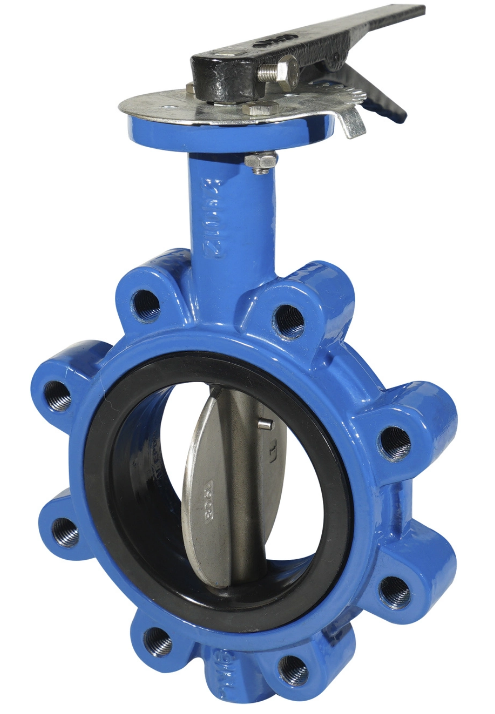
Les vannes papillon manuelles sont des composants essentiels dans les applications industrielles qui nécessitent un contrôle de débit fiable et efficace.. One popular type of manual butterfly valve is the wafer butterfly valve, known for its compact design, ease of installation, et la rentabilité.
Section 1: Comprendre les vannes papillon manuelles
1.1 What are Manual Butterfly Valves?
Manual butterfly valves from Fabricant de vannes en Chine, are quarter-turn valves that regulate or isolate the flow of fluids in pipelines. They consist of a circular disc, mounted on a shaft, which rotates to either fully open or completely close the valve. The simplicity of their design allows for quick and easy operation by hand.
1.2 Benefits of Manual Butterfly Valves
- Contrôle de flux efficace: Manual butterfly valves offer excellent throttling capabilities, allowing for precise flow control in various industrial processes.
- Compact Design: Their compact and lightweight design makes them ideal for applications with limited space or weight restrictions.
- Quick Operation: Manual butterfly valves can be rapidly opened or closed with a simple quarter-turn motion, enabling efficient shutdown or startup procedures.
- Rentabilité: Compared to other types of valves, manual butterfly valves are often more affordable, making them a cost-effective choice for many applications.
- Low Pressure Drop: The streamlined disc design of butterfly valves results in minimal pressure drop across the valve, contributing to energy savings and improved system efficiency.
1.3 Applications of Manual Butterfly Valves
- Systèmes CVC: Manual butterfly valves are commonly used in heating, ventilation, and air conditioning systems to regulate the flow of air or water.
- Water and Wastewater Treatment: These valves play a crucial role in water and wastewater treatment processes, including filtration, chemical dosing, and pumping systems.
- Process Industries: Manual butterfly valves find applications in a wide range of process industries, such as food and beverage, pharmaceuticals, chemicals, et production d'électricité.
- Industrie du pétrole et du gaz: They are utilized in oil and gas pipelines, raffineries, and storage facilities for flow control and isolation purposes.
- Fire Protection Systems: Manual butterfly valves are often installed in fire protection systems to control the flow of water or firefighting agents.
Section 2: Recommendations of Wafer-Type Manual Butterfly Valves
2.1 What are Wafer Butterfly Valves?
China wafer butterfly valves are a specific type of manual butterfly valve that features a wafer-style body. They are designed to fit between two flanges in a pipeline, held in place by bolts and nuts, without the need for additional flange gaskets.
2.2 Benefits of Wafer Butterfly Valves
- Compact and Lightweight: Wafer butterfly valves have a slim profile, taking up minimal space in the pipeline system. Their lightweight construction reduces stress on the piping infrastructure.
- Easy Installation: The wafer design allows for quick and straightforward installation, as they can be directly sandwiched between flanges, eliminating the need for separate flange gaskets.
- Solution rentable: Wafer butterfly valves offer cost savings in terms of materials and installation labor, making them an attractive choice for projects with budget constraints.
- Polyvalence: These valves are suitable for a wide range of applications, including water, gaz, and low-pressure steam systems.
- Good Flow Control: Wafer butterfly valves provide effective flow control capabilities, with the ability to handle high flow rates and low-pressure drops.
2.3 Recommended Applications of Wafer Butterfly Valves
- Systèmes CVC: Wafer butterfly valves are commonly used in HVAC systems for temperature and flow control of chilled water, hot water, or air.
- Water Distribution: They are suitable for water distribution systems, including water treatment plants, systèmes d'irrigation, and water supply networks.
- Industrial Processes: Wafer butterfly valves find applications in industrial processes, such as chemical processing, pulp and paper manufacturing, and mining operations.
- Systèmes de plomberie: These valves are employed in plumbing systems for residential, commercial, and institutional buildings, providing reliable flow control in water and wastewater management.
- Fire Protection Systems: Wafer butterfly valves are often used in fire protection systems to control the flow of water or fire suppression agents.
Jan 4, 2024 | Nouvelles
Les clapets anti-retour jouent un rôle essentiel dans le contrôle du débit des fluides et dans la prévention du reflux.. Parmi les différents types de clapets anti-retour, stainless steel wafer dual plate check valves stand out for their reliability, durabilité, et polyvalence. This comprehensive guide, presented by a leading wafer check valve manufacturer China, delves into the intricacies of stainless steel wafer dual plate check valves, exploring their design, opération, avantages, and diverse applications across various industries.

1. Understanding Stainless Steel Wafer Dual Plate Check Valves
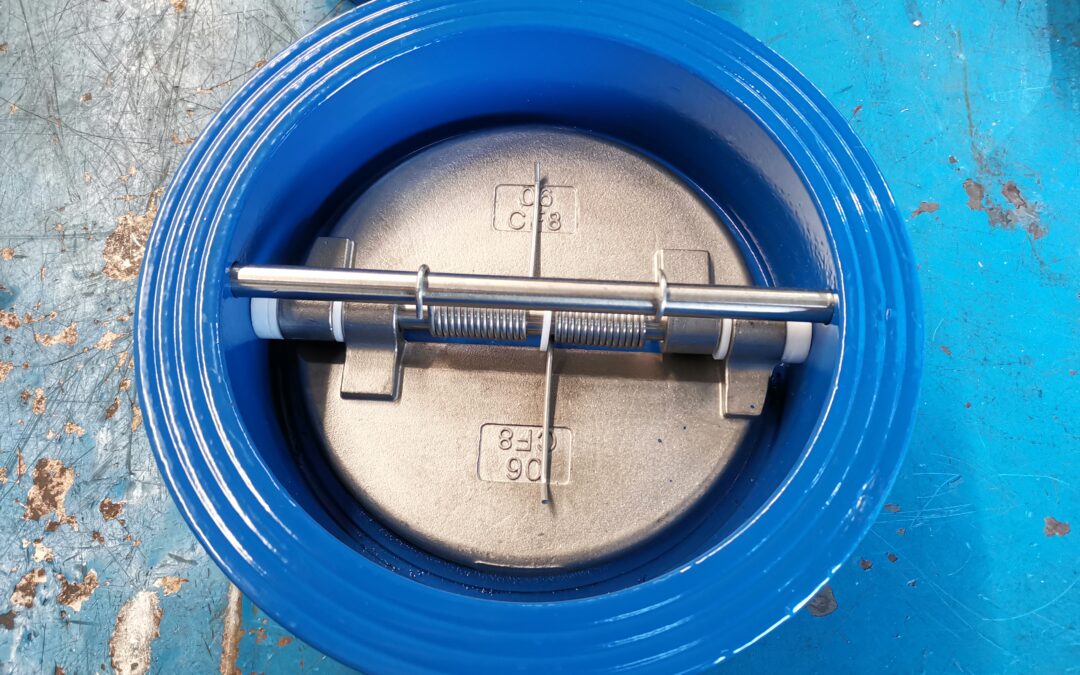
Stainless steel check valves wafer type are specialized valves designed to allow fluid flow in one direction while preventing reverse flow. They consist of two hinged plates or discs that open and close in response to the pressure of the flowing fluid. The term “wafer” refers to the valve’s streamlined design, which allows it to be sandwiched between two pipe flanges for easy installation and maintenance.
2. Design and Operation of Stainless Steel Wafer Dual Plate Check Valves
Acier inoxydable wafer dual plate check valves operate on a simple yet effective principle:
- Opening Mechanism: When fluid flows in the intended direction, it exerts pressure on the hinged plates, causing them to pivot and open, laisser passer le liquide.
- Closing Mechanism: When the fluid flow stops or reverses, the pressure on the plates decreases, causing them to swing shut due to gravity or spring force. This prevents backflow and ensures unidirectional flow.
3. Advantages of Stainless Steel Wafer Dual Plate Check Valves
Stainless steel wafer dual plate check valves offer several advantages that make them a preferred choice in various industries:
- Corrosion Resistance: Stainless steel construction provides excellent resistance to corrosion, making these valves ideal for harsh environments and corrosive fluids.
- Compact Design: The wafer design allows for a compact and space-saving installation, especially in areas with limited space.
- Low Pressure Loss: The streamlined design of the valve minimizes pressure loss, ensuring efficient fluid flow.
- Reliability and Durability: Stainless steel wafer dual plate check valves are known for their reliability and long service life, requiring minimal maintenance.
- Versatile Applications: These valves are suitable for a wide range of fluids, including water, huile, gaz, chemicals, et boues.
4. Applications of Stainless Steel Wafer Dual Plate Check Valves
Stainless steel wafer dual plate check valves find extensive use in various industries and applications, y compris:
- Water Treatment Plants: They are used to control the flow of water in treatment processes and prevent backflow into clean water supplies.
- Chemical Processing Plants: These valves are suitable for handling corrosive chemicals and preventing contamination.
- Industrie du pétrole et du gaz: Stainless steel wafer dual plate check valves are used in pipelines, raffineries, and storage facilities to control the flow of oil and gas.
- Centrales électriques: They play a crucial role in regulating the flow of water, steam, and other fluids in power generation systems.
- Systèmes CVC: These valves are used in heating, ventilation, and air conditioning systems to maintain proper airflow and prevent backflow.
5. Selection and Installation Considerations
When selecting and installing stainless steel wafer dual plate check valves, several factors should be considered:
- Valve Size and Pressure Rating: Choose a valve with the appropriate size and pressure rating to match the specific application requirements.
- Material Compatibility: Ensure that the valve material is compatible with the fluid being handled to avoid corrosion or contamination.
- Installation Orientation: Install the valve in the correct orientation to ensure proper operation and prevent backflow.
- Entretien: Regular inspection and maintenance, including cleaning and checking for wear or damage, are essential to maintain the valve’s performance and longevity.

Jan 3, 2024 | Nouvelles
Dans de nombreux processus industriels, les clapets anti-retour jouent un rôle crucial dans le maintien du bon débit des fluides et dans la prévention du reflux. Malgré leur importance, les clapets anti-retour peuvent mal fonctionner ou tomber en panne, causant toute une série de problèmes. Cet article explorera les principales raisons d'un clapet anti-retour défectueux et les signes avant-coureurs qui indiquent sa défaillance..
Il existe plusieurs raisons pour lesquelles un clapet anti-retour peut échouer ou mal fonctionner. Certaines des causes les plus courantes comprennent:
1. Usure normale: Au fil du temps, les pièces du clapet anti-retour peuvent s'user, provoquant la défaillance de la vanne. Ceci est particulièrement fréquent dans les systèmes où le fluide circulant à travers la vanne est abrasif ou corrosif..
2. Saleté et débris: De la saleté et des débris peuvent s'accumuler dans le clapet anti-retour, le faisant coller ou se coincer, et l'empêchant de fonctionner correctement.
3. Installation incorrecte: Si le clapet anti-retour n'est pas installé correctement, il se peut qu'il ne fonctionne pas correctement, conduisant à des pannes du système.
4. Haute pression: Une pression élevée dans le système peut entraîner la défaillance du clapet anti-retour, car il n'est peut-être pas conçu pour supporter une telle pression.
5. Rouille et corrosion: La rouille et la corrosion peuvent affaiblir les composants du clapet anti-retour, conduisant à l'échec.

Comment savoir si mon clapet anti-retour est défectueux?
Si votre clapet anti-retour fonctionne mal, plusieurs symptômes peuvent indiquer son échec. Certains de ces symptômes incluent:
1. Fuite: Si le clapet anti-retour fuit, cela peut être le signe que la valve est endommagée ou usée.
2. Bruit: Un mauvais clapet anti-retour peut faire du bruit, comme un claquement ou un coup, quand le fluide le traverse.
3. Difficulté à ouvrir ou fermer: Si le clapet anti-retour est difficile à ouvrir ou à fermer, cela peut être un signe que la valve est coincée ou coincée.
4. Débit réduit: Un mauvais clapet anti-retour peut restreindre le débit du fluide, conduisant à une réduction des performances du système.
5. Échec complet: Dans certains cas, un mauvais clapet anti-retour peut échouer complètement, provoquant une panne ou un arrêt du système.
Comment diagnostiquer un mauvais clapet anti-retour
1. Vérifier le fonctionnement de la vanne: Observer le fonctionnement de la vanne pour voir si elle fonctionne correctement. Si la vanne ne s’ouvre ou ne se ferme pas correctement, cela peut être le signe d'un problème.
2. Vérifier les fuites: Recherchez des signes de fuite autour de la valve. Si la valve fuit, cela peut être le signe que la valve est endommagée ou usée.
3. Vérifier le bruit: Écoutez tout bruit inhabituel provenant de la valve. Si la valve fait du bruit, cela peut être le signe d'un dysfonctionnement de la valve.
4. Vérifier le débit: Mesurer le débit du fluide circulant dans la vanne. Si le débit est réduit, cela peut être un signe que la vanne restreint le débit.
5. Inspecter la vanne: Inspectez la valve pour déceler tout signe de dommage ou d'usure.. Cherchez la rouille, corrosion, ou pièces usées.

Conclusion
Un mauvais clapet anti-retour peut causer des problèmes importants dans les processus industriels, conduisant à une efficacité réduite, augmentation des temps d'arrêt, et même une panne complète du système. Il est essentiel de reconnaître les symptômes d’un clapet anti-retour défectueux et de prendre rapidement des mesures pour le réparer ou le remplacer.. En comprenant les causes courantes de défaillance des clapets anti-retour et en reconnaissant les symptômes, vous pouvez éviter les pannes du système et assurer un fonctionnement fluide.

Jan 3, 2024 | Nouvelles
Vannes, largement utilisé dans les systèmes de tuyauterie industriels et commerciaux, servir de points de contrôle critiques pour réguler le débit de fluide. The choice of material for gate valves plays a significant role in determining their performance, durabilité, and suitability for specific applications. Dans ce guide complet, we delve into the properties, avantages, and differences between ductile iron and cast iron, two commonly used materials for gate valves, to help you make an informed decision.
1. Understanding Ductile Iron and Cast Iron
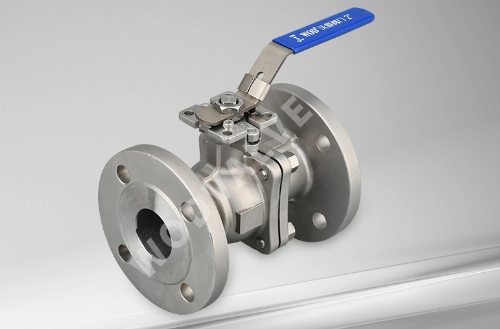
- Fonte ductile: Fonte ductile, also known as nodular iron, is a type of cast iron that undergoes a special heat treatment process to enhance its properties. This process involves adding magnesium or cerium to the molten iron, resulting in the formation of spherical graphite nodules within the iron matrix.
- Fonte: Cast iron is a ferrous alloy primarily composed of iron, carbon, and silicon. It is characterized by its high carbon content, which makes it brittle and susceptible to cracking.
2. Properties and Advantages of Ductile Iron Gate Valves
- Strength and Durability: Ductile iron gate valves offer superior strength and durability compared to cast iron valves. The presence of graphite nodules in ductile iron improves its resistance to shock, impact, and vibration, making it less prone to breakage.
- Ductility: Ductile iron exhibits greater ductility than cast iron, allowing it to deform under stress without fracturing. This ductility makes ductile iron gate valves more resistant to cracking and failure, especially under sudden pressure changes or seismic events.
- Corrosion Resistance: Ductile iron gate valves provide better corrosion resistance than cast iron valves. The graphite nodules act as corrosion inhibitors, slowing down the rate of corrosion and extending the valve’s lifespan.
- Pressure Rating: Ductile iron gate valves can withstand higher pressure ratings than cast iron valves. This makes them suitable for high-pressure applications, such as water distribution systems, oil and gas pipelines, and industrial process lines.
3. Properties and Advantages of Cast Iron Gate Valves
- Cost-effectiveness: Cast steel gate valves are generally more cost-effective than ductile iron valves. This makes them a preferred choice for applications where cost is a primary consideration.
- Compressive Strength: Cast iron gate valves have higher compressive strength than ductile iron valves. This property is beneficial in applications where the valve is subjected to high compressive loads, such as underground installations.
- Heat Resistance: Cast iron gate valves offer better heat resistance than ductile iron valves. This makes them suitable for applications involving high-temperature fluids or environments.
4. Choosing Between Ductile Iron and Cast Iron Gate Valves
- The choice between ductile iron and cast iron gate valves depends on the specific application requirements:
- For applications requiring high strength, ductility, and corrosion resistance, ductile iron gate valves are the preferred choice.
- For applications where cost is a primary concern and compressive strength or heat resistance is important, cast iron gate valves may be a suitable option.

Déc 29, 2023 | Nouvelles
Les clapets anti-retour jouent un rôle crucial dans le contrôle du débit de fluides dans les systèmes de tuyauterie, empêcher le reflux et assurer un fonctionnement efficace. Among the different types of check valves available, tilting disc and butterfly check valves are widely used throughout various industries. By understanding their design, Fonctionnalité, applications, and benefits, you can make informed decisions about incorporating these valves into your fluid handling systems.
Understanding Tilting Disc Check Valves

Tilting disc check valves are designed to allow fluid flow in one direction while preventing backflow. They consist of a disc that tilts on a hinge or pivot mechanism, allowing the disc to lift off the seat when fluid flows in the desired direction. Lorsque le flux inverse se produit, the disc returns to its closed position, sealing against the seat and preventing fluid from flowing backward.
These valves offer several advantages, y compris:
• Fast Closure: Tilting disc check valve provide rapid closure due to the disc’s design and the absence of springs or other closing mechanisms. This ensures quick response and minimizes the risk of water hammer.
• Low Pressure Drop: The streamlined design of the disc and the absence of obstructions in the flow path result in minimal pressure drop across the valve, allowing for efficient fluid flow.
• Durability: Tilting disc check valves are known for their robust construction and materials, providing reliability and long service life even in demanding applications.
• Versatility: These valves are suitable for a wide range of fluids, y compris les liquides, des gaz, et boues. They find applications in industries such as water supply, traitement des eaux usées, traitement chimique, and oil and gas.
Understanding Butterfly Check Valves
Butterfly check valves, also referred to as swing check valves, are another type of throughout check valve. They consist of a disc that swings on a hinge or pivot mechanism to allow fluid flow in one direction while preventing backflow. Lorsque le flux inverse se produit, the disc swings back into a closed position, sealing against the seat and blocking the flow.
Butterfly check valves offer several advantages, y compris:
• Compact Design: Butterfly check valves feature a compact and lightweight design, making them suitable for applications where space is limited.
• Low Pressure Drop: The streamlined disc design and minimal obstruction in the flow path result in low pressure drop, enabling efficient fluid flow and energy savings.
• Quick Response: Butterfly check valves offer fast response and closure due to the swinging disc design, minimizing the risk of water hammer and system damage.
• Versatility: These valves are suitable for a wide range of applications in industries such as water treatment, Systèmes CVC, irrigation, and fire protection. They can handle various fluids, including water, air, and compatible gases.
Applications Of Throughout Check Valves
Throughout check valves, including tilting disc and butterfly types, find applications in numerous industries and fluid handling systems. Certaines applications courantes incluent:
• Water and Wastewater Systems: Throughout check valves are essential components in water supply networks, les stations d'épuration des eaux usées, and pumping stations. They prevent backflow, maintain system integrity, and protect against water contamination.
• Oil and Gas Industry: Throughout check valves play a vital role in oil and gas production, refining, and distribution. They ensure safe and efficient flow control, preventing reverse flow in pipelines, réservoirs de stockage, and other critical equipment.
• Chemical Processing: Throughout check valves are utilized in chemical processing plants to control the flow of corrosive or hazardous fluids. They maintain system integrity, prevent contamination, and protect equipment from damage.
• HVAC Systems: Throughout check valves are incorporated into heating, ventilation, and air conditioning (CVC) systems to control fluid flow and prevent backflow. They contribute to system efficiency and maintain optimal performance.
Benefits Of Throughout Check Valves
Throughout check valves, such as tilting disc and butterfly types, offer several advantages, y compris:
• Reliable Backflow Prevention: These valves ensure reliable backflow prevention, maintaining the integrity of fluid handling systems and preventing cross-contamination.
• Efficient Flow Control: Throughout check valves minimize pressure drop and allow for efficient fluid flow, optimizing system performance and energy efficiency.
• Quick Response and Closure: The design of tilting disc and clapet anti-retour papillon enables fast response and closure, reducing the risk of water hammer and system damage.
• Versatility and Adaptability: Throughout check valves can handle a wide range of fluids and find applications in diverse industries, offering versatility and adaptability to different system requirements.
Design Of 6-Inch Check Valves
Check valve 6 inch is designed to accommodate larger piping systems that require higher flow rates. They typically feature a robust construction and are available in different designs, including swing check valves, lift check valves, and dual-plate check valves. These valves are specifically engineered to handle the demands of larger pipelines and provide reliable backflow prevention.



