
Jan 6, 2024 | Nachricht
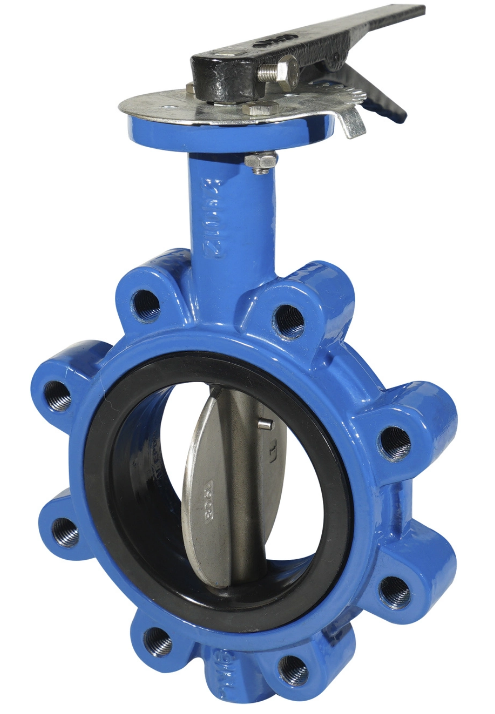
Manual butterfly valves are essential components in industrial applications that require reliable and efficient flow control. One popular type of manual butterfly valve is the wafer butterfly valve, known for its compact design, ease of installation, und Wirtschaftlichkeit.
Section 1: Manuelle Absperrklappen verstehen
1.1 What are Manual Butterfly Valves?
Manual butterfly valves from China-Ventilhersteller, are quarter-turn valves that regulate or isolate the flow of fluids in pipelines. They consist of a circular disc, mounted on a shaft, which rotates to either fully open or completely close the valve. The simplicity of their design allows for quick and easy operation by hand.
1.2 Benefits of Manual Butterfly Valves
- Efficient Flow Control: Manual butterfly valves offer excellent throttling capabilities, allowing for precise flow control in various industrial processes.
- Kompaktes Design: Their compact and lightweight design makes them ideal for applications with limited space or weight restrictions.
- Quick Operation: Manual butterfly valves can be rapidly opened or closed with a simple quarter-turn motion, enabling efficient shutdown or startup procedures.
- Cost-Effectiveness: Compared to other types of valves, manual butterfly valves are often more affordable, making them a cost-effective choice for many applications.
- Low Pressure Drop: The streamlined disc design of butterfly valves results in minimal pressure drop across the valve, contributing to energy savings and improved system efficiency.
1.3 Applications of Manual Butterfly Valves
- HVAC-Systeme: Manual butterfly valves are commonly used in heating, Belüftung, and air conditioning systems to regulate the flow of air or water.
- Water and Wastewater Treatment: These valves play a crucial role in water and wastewater treatment processes, including filtration, chemical dosing, and pumping systems.
- Process Industries: Manual butterfly valves find applications in a wide range of process industries, such as food and beverage, Arzneimittel, Chemikalien, und Stromerzeugung.
- Öl-und Gasindustrie: They are utilized in oil and gas pipelines, Raffinerien, and storage facilities for flow control and isolation purposes.
- Fire Protection Systems: Manual butterfly valves are often installed in fire protection systems to control the flow of water or firefighting agents.
Section 2: Recommendations of Wafer-Type Manual Butterfly Valves
2.1 What are Wafer Butterfly Valves?
China wafer butterfly valves are a specific type of manual butterfly valve that features a wafer-style body. They are designed to fit between two flanges in a pipeline, held in place by bolts and nuts, without the need for additional flange gaskets.
2.2 Benefits of Wafer Butterfly Valves
- Compact and Lightweight: Wafer butterfly valves have a slim profile, taking up minimal space in the pipeline system. Their lightweight construction reduces stress on the piping infrastructure.
- Easy Installation: The wafer design allows for quick and straightforward installation, as they can be directly sandwiched between flanges, eliminating the need for separate flange gaskets.
- Cost-Effective Solution: Wafer butterfly valves offer cost savings in terms of materials and installation labor, making them an attractive choice for projects with budget constraints.
- Vielseitigkeit: These valves are suitable for a wide range of applications, including water, Gas, and low-pressure steam systems.
- Good Flow Control: Wafer butterfly valves provide effective flow control capabilities, with the ability to handle high flow rates and low-pressure drops.
2.3 Recommended Applications of Wafer Butterfly Valves
- HVAC-Systeme: Wafer butterfly valves are commonly used in HVAC systems for temperature and flow control of chilled water, hot water, or air.
- Water Distribution: They are suitable for water distribution systems, including water treatment plants, Bewässerungssysteme, and water supply networks.
- Industrial Processes: Wafer butterfly valves find applications in industrial processes, such as chemical processing, pulp and paper manufacturing, and mining operations.
- Sanitärsysteme: These valves are employed in plumbing systems for residential, commercial, and institutional buildings, providing reliable flow control in water and wastewater management.
- Fire Protection Systems: Wafer butterfly valves are often used in fire protection systems to control the flow of water or fire suppression agents.
Jan 4, 2024 | Nachricht
Check valves play a vital role in controlling the flow of fluids and preventing backflow. Among the various types of check valves, stainless steel wafer dual plate check valves stand out for their reliability, Haltbarkeit, and versatility. This comprehensive guide, presented by a leading Hersteller von Wafer-Rückschlagventilen in China, delves into the intricacies of stainless steel wafer dual plate check valves, exploring their design, Betrieb, Vorteile, and diverse applications across various industries.

1. Understanding Stainless Steel Wafer Dual Plate Check Valves
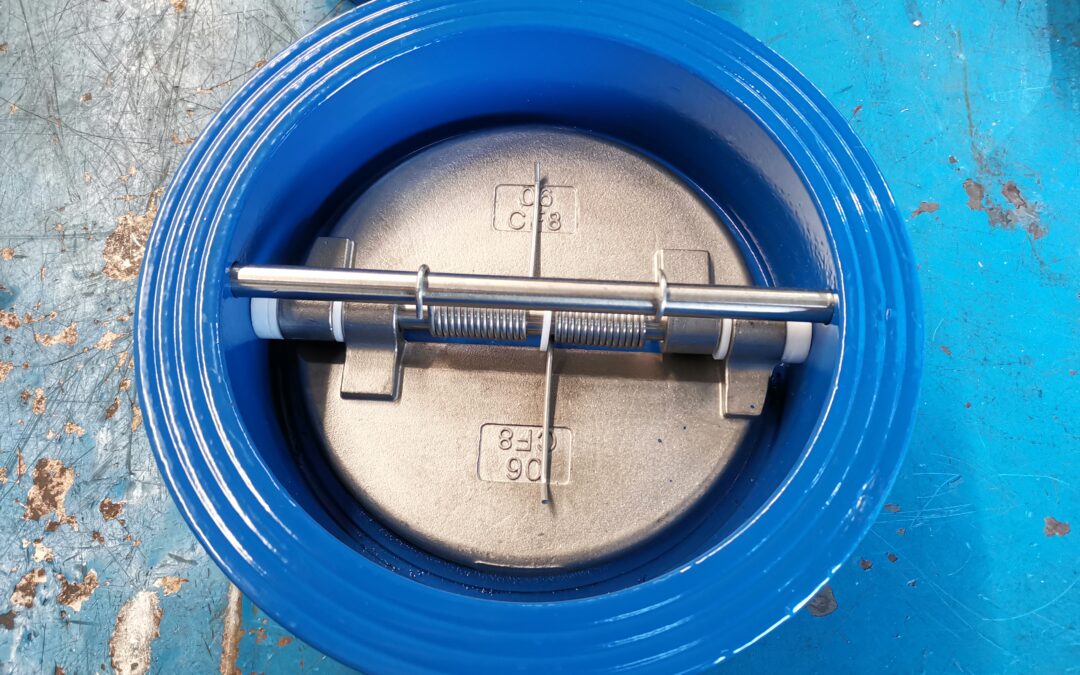
Rückschlagventile aus Edelstahl wafer type are specialized valves designed to allow fluid flow in one direction while preventing reverse flow. They consist of two hinged plates or discs that open and close in response to the pressure of the flowing fluid. The term “wafer” refers to the valve’s streamlined design, which allows it to be sandwiched between two pipe flanges for easy installation and maintenance.
2. Design and Operation of Stainless Steel Wafer Dual Plate Check Valves
Edelstahl wafer dual plate check valves operate on a simple yet effective principle:
- Opening Mechanism: Wenn Flüssigkeit in die vorgesehene Richtung fließt, it exerts pressure on the hinged plates, causing them to pivot and open, allowing the fluid to pass through.
- Closing Mechanism: When the fluid flow stops or reverses, the pressure on the plates decreases, causing them to swing shut due to gravity or spring force. This prevents backflow and ensures unidirectional flow.
3. Advantages of Stainless Steel Wafer Dual Plate Check Valves
Stainless steel wafer dual plate check valves offer several advantages that make them a preferred choice in various industries:
- Korrosionsbeständigkeit: Die Edelstahlkonstruktion bietet eine hervorragende Korrosionsbeständigkeit, making these valves ideal for harsh environments and corrosive fluids.
- Kompaktes Design: The wafer design allows for a compact and space-saving installation, especially in areas with limited space.
- Low Pressure Loss: The streamlined design of the valve minimizes pressure loss, ensuring efficient fluid flow.
- Reliability and Durability: Stainless steel wafer dual plate check valves are known for their reliability and long service life, requiring minimal maintenance.
- Vielseitige Anwendungen: These valves are suitable for a wide range of fluids, including water, Öl, Gas, Chemikalien, and slurries.
4. Applications of Stainless Steel Wafer Dual Plate Check Valves
Stainless steel wafer dual plate check valves find extensive use in various industries and applications, einschließlich:
- Water Treatment Plants: They are used to control the flow of water in treatment processes and prevent backflow into clean water supplies.
- Chemical Processing Plants: These valves are suitable for handling corrosive chemicals and preventing contamination.
- Öl-und Gasindustrie: Stainless steel wafer dual plate check valves are used in pipelines, Raffinerien, and storage facilities to control the flow of oil and gas.
- Power Plants: They play a crucial role in regulating the flow of water, steam, and other fluids in power generation systems.
- HVAC-Systeme: These valves are used in heating, Belüftung, and air conditioning systems to maintain proper airflow and prevent backflow.
5. Selection and Installation Considerations
When selecting and installing stainless steel wafer dual plate check valves, several factors should be considered:
- Valve Size and Pressure Rating: Choose a valve with the appropriate size and pressure rating to match the specific application requirements.
- Material Compatibility: Ensure that the valve material is compatible with the fluid being handled to avoid corrosion or contamination.
- Installation Orientation: Install the valve in the correct orientation to ensure proper operation and prevent backflow.
- Wartung: Regular inspection and maintenance, including cleaning and checking for wear or damage, are essential to maintain the valve’s performance and longevity.

Jan 3, 2024 | Nachricht
In zahlreichen industriellen Prozessen, Rückschlagventile spielen eine entscheidende Rolle bei der Aufrechterhaltung des ordnungsgemäßen Flüssigkeitsflusses und der Verhinderung eines Rückflusses. Trotz ihrer Bedeutung, Rückschlagventile können Fehlfunktionen aufweisen oder ausfallen, eine Reihe von Problemen verursacht. In diesem Artikel werden die Hauptgründe für ein fehlerhaftes Rückschlagventil und die Warnzeichen untersucht, die auf einen Ausfall hinweisen.
Es gibt mehrere Gründe, warum ein Rückschlagventil ausfallen oder eine Fehlfunktion aufweisen kann. Zu den häufigsten Ursachen gehören::
1. Verschleiß: Im Laufe der Zeit, die Teile des Rückschlagventils können verschleißen, was zum Ausfall des Ventils führt. Dies ist besonders häufig in Systemen der Fall, in denen die durch das Ventil fließende Flüssigkeit abrasiv oder korrosiv ist.
2. Schmutz und Ablagerungen: Im Rückschlagventil können sich Schmutz und Ablagerungen ansammeln, wodurch es klebt oder klemmt, und verhindern, dass es ordnungsgemäß funktioniert.
3. Falsche Installation: Wenn das Rückschlagventil nicht richtig installiert ist, es funktioniert möglicherweise nicht richtig, zu Systemausfällen führen.
4. Hoher Druck: Ein hoher Druck im System kann zum Ausfall des Rückschlagventils führen, da es möglicherweise nicht für einen solchen Druck ausgelegt ist.
5. Rost und Korrosion: Rost und Korrosion können die Komponenten des Rückschlagventils schwächen, zum Scheitern führt.

Woher weiß ich, ob mein Rückschlagventil defekt ist??
Wenn Ihr Rückschlagventil eine Fehlfunktion aufweist, Mehrere Symptome können auf ein Versagen hinweisen. Einige dieser Symptome umfassen:
1. Undicht: Wenn das Rückschlagventil undicht ist, Dies kann ein Zeichen dafür sein, dass das Ventil beschädigt oder abgenutzt ist.
2. Lärm: Ein defektes Rückschlagventil kann Geräusche verursachen, wie Klappern oder Klopfen, wenn die Flüssigkeit hindurchfließt.
3. Schwierigkeiten beim Öffnen oder Schließen: Wenn das Rückschlagventil schwer zu öffnen oder zu schließen ist, Dies kann ein Zeichen dafür sein, dass das Ventil festsitzt oder blockiert ist.
4. Reduzierte Durchflussrate: Ein defektes Rückschlagventil kann die Durchflussrate der Flüssigkeit einschränken, Dies führt zu einer verringerten Systemleistung.
5. Völliger Misserfolg: In manchen Fällen, Ein defektes Rückschlagventil kann vollständig ausfallen, Dies kann zu einem Systemausfall oder einer Systemabschaltung führen.
So diagnostizieren Sie ein defektes Rückschlagventil
1. Überprüfen Sie die Funktion des Ventils: Beobachten Sie den Betrieb des Ventils, um festzustellen, ob es ordnungsgemäß funktioniert. Wenn das Ventil nicht richtig öffnet oder schließt, es kann ein Zeichen für ein Problem sein.
2. Auf Undichtigkeiten prüfen: Suchen Sie nach Anzeichen von Undichtigkeiten rund um das Ventil. Wenn das Ventil undicht ist, Dies kann ein Zeichen dafür sein, dass das Ventil beschädigt oder abgenutzt ist.
3. Auf Geräusche prüfen: Achten Sie auf ungewöhnliche Geräusche vom Ventil. Wenn das Ventil Geräusche macht, Dies kann ein Zeichen dafür sein, dass das Ventil nicht richtig funktioniert.
4. Überprüfen Sie die Durchflussmenge: Messen Sie die Durchflussrate der durch das Ventil fließenden Flüssigkeit. Wenn die Durchflussmenge reduziert wird, Dies kann ein Zeichen dafür sein, dass das Ventil den Durchfluss einschränkt.
5. Überprüfen Sie das Ventil: Überprüfen Sie das Ventil auf Anzeichen von Beschädigung oder Verschleiß. Suchen Sie nach Rost, Korrosion, oder verschlissene Teile.

Abschluss
Ein defektes Rückschlagventil kann in industriellen Prozessen erhebliche Probleme verursachen, was zu einer verringerten Effizienz führt, erhöhte Ausfallzeiten, bis hin zum kompletten Systemausfall. Es ist wichtig, die Symptome eines defekten Rückschlagventils zu erkennen und umgehend Maßnahmen zur Reparatur oder zum Austausch zu ergreifen. Indem Sie die häufigsten Ursachen für den Ausfall von Rückschlagventilen verstehen und die Symptome erkennen, Sie können Systemausfälle verhindern und einen reibungslosen Betrieb gewährleisten.

Jan 3, 2024 | Nachricht
Absperrschieber, widely used in industrial and commercial piping systems, serve as critical control points for regulating fluid flow. The choice of material for gate valves plays a significant role in determining their performance, Haltbarkeit, and suitability for specific applications. In diesem umfassenden Ratgeber, we delve into the properties, Vorteile, and differences between ductile iron and cast iron, two commonly used materials for gate valves, to help you make an informed decision.
1. Understanding Ductile Iron and Cast Iron
- Sphäroguss: Sphäroguss, also known as nodular iron, is a type of cast iron that undergoes a special heat treatment process to enhance its properties. This process involves adding magnesium or cerium to the molten iron, resulting in the formation of spherical graphite nodules within the iron matrix.
- Gusseisen: Cast iron is a ferrous alloy primarily composed of iron, carbon, and silicon. It is characterized by its high carbon content, which makes it brittle and susceptible to cracking.
2. Properties and Advantages of Ductile Iron Gate Valves
- Stärke und Haltbarkeit: Absperrschieber aus duktilem Gusseisen offer superior strength and durability compared to cast iron valves. The presence of graphite nodules in ductile iron improves its resistance to shock, impact, and vibration, making it less prone to breakage.
- Ductility: Ductile iron exhibits greater ductility than cast iron, allowing it to deform under stress without fracturing. This ductility makes ductile iron gate valves more resistant to cracking and failure, especially under sudden pressure changes or seismic events.
- Korrosionsbeständigkeit: Ductile iron gate valves provide better corrosion resistance than cast iron valves. The graphite nodules act as corrosion inhibitors, slowing down the rate of corrosion and extending the valve’s lifespan.
- Druckstufe: Ductile iron gate valves can withstand higher pressure ratings than cast iron valves. This makes them suitable for high-pressure applications, such as water distribution systems, oil and gas pipelines, and industrial process lines.
3. Properties and Advantages of Cast Iron Gate Valves
- Cost-effectiveness: Absperrschieber aus Stahlguss are generally more cost-effective than ductile iron valves. This makes them a preferred choice for applications where cost is a primary consideration.
- Compressive Strength: Absperrschieber aus Gusseisen have higher compressive strength than ductile iron valves. This property is beneficial in applications where the valve is subjected to high compressive loads, such as underground installations.
- Heat Resistance: Cast iron gate valves offer better heat resistance than ductile iron valves. This makes them suitable for applications involving high-temperature fluids or environments.
4. Choosing Between Ductile Iron and Cast Iron Gate Valves
- The choice between ductile iron and cast iron gate valves depends on the specific application requirements:
- For applications requiring high strength, ductility, und Korrosionsbeständigkeit, ductile iron gate valves are the preferred choice.
- For applications where cost is a primary concern and compressive strength or heat resistance is important, cast iron gate valves may be a suitable option.

Dez 29, 2023 | Nachricht
Check valves play a crucial role in controlling the flow of fluids in piping systems, preventing backflow and ensuring efficient operation. Among the different types of check valves available, tilting disc and butterfly check valves are widely used throughout various industries. By understanding their design, Funktionalität, applications, and benefits, you can make informed decisions about incorporating these valves into your fluid handling systems.
Understanding Tilting Disc Check Valves

Tilting disc check valves are designed to allow fluid flow in one direction while preventing backflow. They consist of a disc that tilts on a hinge or pivot mechanism, allowing the disc to lift off the seat when fluid flows in the desired direction. Wenn ein Rückfluss auftritt, the disc returns to its closed position, sealing against the seat and preventing fluid from flowing backward.
These valves offer several advantages, einschließlich:
• Fast Closure: Rückschlagventil mit kippbarer Scheibe provide rapid closure due to the disc’s design and the absence of springs or other closing mechanisms. This ensures quick response and minimizes the risk of water hammer.
• Low Pressure Drop: The streamlined design of the disc and the absence of obstructions in the flow path result in minimal pressure drop across the valve, allowing for efficient fluid flow.
• Durability: Tilting disc check valves are known for their robust construction and materials, providing reliability and long service life even in demanding applications.
• Versatility: These valves are suitable for a wide range of fluids, einschließlich Flüssigkeiten, gases, and slurries. They find applications in industries such as water supply, wastewater treatment, chemische Verarbeitung, and oil and gas.
Understanding Butterfly Check Valves
Butterfly check valves, also referred to as swing check valves, are another type of throughout check valve. They consist of a disc that swings on a hinge or pivot mechanism to allow fluid flow in one direction while preventing backflow. Wenn ein Rückfluss auftritt, the disc swings back into a closed position, sealing against the seat and blocking the flow.
Butterfly check valves offer several advantages, einschließlich:
• Compact Design: Butterfly check valves feature a compact and lightweight design, making them suitable for applications where space is limited.
• Low Pressure Drop: The streamlined disc design and minimal obstruction in the flow path result in low pressure drop, enabling efficient fluid flow and energy savings.
• Quick Response: Butterfly check valves offer fast response and closure due to the swinging disc design, minimizing the risk of water hammer and system damage.
• Versatility: These valves are suitable for a wide range of applications in industries such as water treatment, HVAC-Systeme, irrigation, and fire protection. They can handle various fluids, including water, Luft, and compatible gases.
Applications Of Throughout Check Valves
Throughout check valves, including tilting disc and butterfly types, find applications in numerous industries and fluid handling systems. Some common applications include:
• Water and Wastewater Systems: Throughout check valves are essential components in water supply networks, Kläranlagen, and pumping stations. They prevent backflow, maintain system integrity, and protect against water contamination.
• Oil and Gas Industry: Throughout check valves play a vital role in oil and gas production, refining, and distribution. They ensure safe and efficient flow control, preventing reverse flow in pipelines, storage tanks, and other critical equipment.
• Chemical Processing: Throughout check valves are utilized in chemical processing plants to control the flow of corrosive or hazardous fluids. They maintain system integrity, prevent contamination, and protect equipment from damage.
• HVAC Systems: Throughout check valves are incorporated into heating, Belüftung, and air conditioning (HVAC) systems to control fluid flow and prevent backflow. They contribute to system efficiency and maintain optimal performance.
Benefits Of Throughout Check Valves
Throughout check valves, such as tilting disc and butterfly types, offer several advantages, einschließlich:
• Reliable Backflow Prevention: These valves ensure reliable backflow prevention, maintaining the integrity of fluid handling systems and preventing cross-contamination.
• Efficient Flow Control: Throughout check valves minimize pressure drop and allow for efficient fluid flow, optimizing system performance and energy efficiency.
• Quick Response and Closure: The design of tilting disc and butterfly check valve enables fast response and closure, reducing the risk of water hammer and system damage.
• Versatility and Adaptability: Throughout check valves can handle a wide range of fluids and find applications in diverse industries, offering versatility and adaptability to different system requirements.
Design Of 6-Inch Check Valves
Check valve 6 inch is designed to accommodate larger piping systems that require higher flow rates. They typically feature a robust construction and are available in different designs, including swing check valves, lift check valves, and dual-plate check valves. These valves are specifically engineered to handle the demands of larger pipelines and provide reliable backflow prevention.



