Déc 28, 2023 | Nouvelles
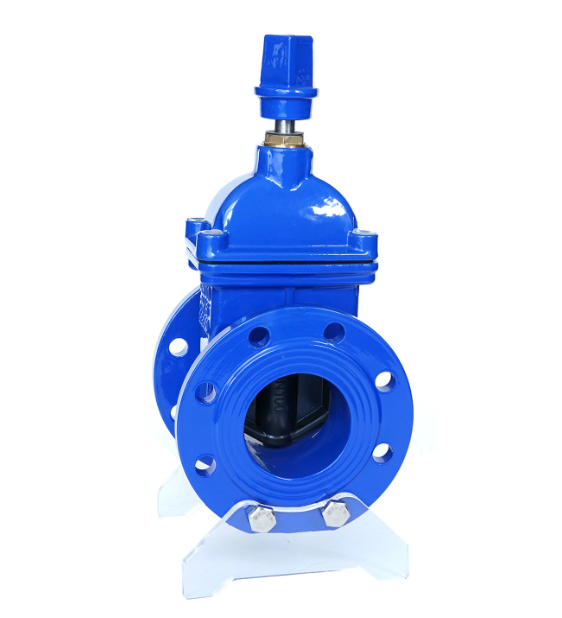
Les robinets-vannes sont des composants essentiels dans diverses applications industrielles, fournissant un contrôle et une isolation efficaces du flux de fluide. When it comes to resilient seated gate valves, two common materials used for their construction are cast iron and ductile iron. While both materials offer advantages in terms of durability and performance, they possess distinct characteristics that make them suitable for specific applications.
1. Cast Iron Resilient Seated Gate Valves

Fonte robinet-vanne à siège résilient have been widely used in industrial settings for many years. Here are some key features of cast iron gate valves:
un. Material Composition: Cast iron is a strong and durable material, known for its excellent resistance to wear and corrosion. It is composed of iron, carbon, and silicon, with small amounts of other elements.
b. Strength and Rigidity: Cast iron gate valve offer high strength and rigidity, making them suitable for applications where pressure and mechanical stress are significant factors.
c. Thermal Stability: Cast iron has good thermal stability, allowing it to withstand high temperatures without compromising its structural integrity.
d. Rentabilité: Cast iron gate valves are generally more affordable compared to other materials, making them a cost-effective option for various industrial applications.
e. Applications: Cast iron resilient seated gate valves are commonly used in water supply systems, les stations d'épuration des eaux usées, systèmes d'irrigation, and general industrial applications where the fluid media is non-corrosive.
2. Ductile Iron Resilient Seated Gate Valves
Ductile iron resilient seated gate valves are an advanced alternative to cast iron gate valves, offering several advantages. Here are the key characteristics of ductile iron gate valves:
un. Material Composition: Fonte ductile, also known as nodular cast iron, is created by adding small amounts of magnesium to the molten iron during the casting process. This results in a microstructure that provides enhanced mechanical properties.
b. Increased Strength and Ductility: Ductile iron gate valves exhibit higher strength and improved ductility compared to cast iron. They are capable of withstanding higher pressure and mechanical stresses.
c. Corrosion Resistance: Ductile iron gate valve have excellent corrosion resistance, making them suitable for applications involving aggressive or corrosive fluid media.
d. Impact Resistance: Ductile iron gate valves are highly resistant to impact and shock, making them suitable for applications where sudden pressure changes or water hammer effects may occur.
e. Applications: Ductile iron resilient seated gate valves are commonly used in water and wastewater treatment plants, municipal water systems, systèmes de protection incendie, and industries where the fluid media may contain corrosive elements or chemicals.
3. Key Differences Between Cast Iron and Ductile Iron Resilient Seated Gate Valves
While both cast iron and ductile iron gate valves share similarities, they differ in several aspects. Here are the key differences between the two:
un. Strength and Durability: Ductile iron gate valves offer higher strength and improved ductility compared to cast iron gate valves. This makes them more suitable for applications involving higher pressure or mechanical stress.
b. Corrosion Resistance: Ductile iron gate valves have better corrosion resistance compared to cast iron gate valves. They are particularly suitable for applications where the fluid media may contain corrosive elements.
c. Impact Resistance: Ductile iron gate valves have superior impact resistance compared to cast iron gate valves. This makes them more resilient to sudden pressure changes or water hammer effects.
d. Applications: Cast iron gate valves are commonly used in non-corrosive applications, while ductile iron gate valves are preferred in applications with corrosive fluid media or higher mechanical stress.
e. Coût: Cast iron gate valves are generally more cost-effective compared to ductile iron gate valves, making them a suitable choice for applications where cost is a significant factor.
The choice between cast iron and ductile iron resilient seated gate valves depends on the specific requirements of the application. Cast iron gate valves offer cost-effectiveness and durability for non-corrosive applications, while ductile iron gate valves provide enhanced strength, corrosion resistance, and impact resistance for applications involving corrosive fluid media or higher mechanical stress. Professionals and industry stakeholders should carefully evaluate their project needs, considering factors such as pressure, temperature, fluid media, and budget, to select the most appropriate gate valve material that ensures reliable and efficient fluid control.

Déc 28, 2023 | Nouvelles
Si vous êtes propriétaire d’un puits d’eau, vous avez peut-être entendu parler d'un clapet anti-retour pour puits d'eau, mais savez-vous ce que ça fait et pourquoi c'est important? Dans cet article, nous explorerons les fonctions d'un clapet anti-retour pour puits d'eau et son importance pour garantir la sécurité et l'efficacité de votre système de puits d'eau..
What is a Water Well Check Valve?
UN water well check valve is a device that is installed in the water well system to prevent backflow and ensure the safe and efficient operation of the system. It is typically installed on the discharge line of the well pump and is designed to open and close in response to changes in water pressure in the system.
How Does a Water Well Check Valve Work?
When the water well pump is turned on, the pressure in the discharge line increases, causing the check valve to open. As the pressure decreases, the check valve closes, preventing backflow into the well and maintaining the pressure in the system. This helps to prevent the well from becoming contaminated with sediment, debris, or other foreign substances that may be present in the water supply.

Why is a Water Well Check Valve Important?
There are several reasons why a water well check valve is important for the safe and efficient operation of your water well system. Some of the key benefits include:
- Empêche le reflux: By preventing backflow into the well, a water well check valve helps to maintain the integrity of the water supply and prevent contamination.
- Réduit l’usure: En empêchant le reflux, a water well check valve can help to reduce the wear and tear on the well pump and other system components, extending their lifespan and reducing maintenance costs.
- Improves Efficiency: By maintaining the pressure in the system, a water well check valve can help to improve the efficiency of the well pump and reduce energy consumption.
- Enhances Safety: By preventing backflow and maintaining pressure in the system, a water well check valve can help to enhance the safety of your water well system.
Types of Water Well Check Valves
There are several types of water well check valves available, y compris:
- Spring-Loaded Check Valves: These check valves are designed to open and close in response to changes in water pressure in the system.
- Pilot-Operated Check Valves: These check valves use a small pilot valve to regulate the pressure in the system and prevent backflow.
- Diaphragm-Type Check Valves: These check valves use a flexible diaphragm to separate the water supply from the well, preventing backflow and maintaining pressure in the system.

Installation and Maintenance
Installing a water well check valve is a relatively simple process that can be done by a qualified well driller or pump installer. It is important to ensure that the check valve is properly sized for your specific water well system and that it is installed according to the manufacturer’s instructions.
Regular maintenance is also important to ensure the proper functioning of your water well check valve. This may include checking the valve for proper operation, cleaning or replacing the filter, and ensuring that the well casing and surrounding area are free from debris and sediment.
Conclusion
En conclusion, a water well check valve is an essential component of a safe and efficient water well system. By preventing backflow and maintaining pressure in the system, a water well check valve can help to enhance the safety and longevity of your water well system, while also reducing energy consumption and maintenance costs.
If you’re considering installing a water well check valve, be sure to consult with a qualified well driller or pump installer to ensure that the proper type and size of the check valve is installed for your specific system.

Déc 27, 2023 | Nouvelles
Les vannes papillon à double bride de grande taille sont des composants indispensables dans les systèmes de contrôle de débit industriels, offrant une régulation efficace du débit, low-pressure drop, and reliable sealing. Their versatility makes them suitable for a wide range of applications across various industries. By carefully considering the selection criteria, engineers and technicians can ensure the optimal performance and longevity of these valves in large-scale industrial operations.
Understanding Large Size Double Flange Butterfly Valves

Large size double flange butterfly valves are specialized valves designed to manage the flow of fluids in pipelines with larger diameters. They feature a circular body with a centrally positioned disc that rotates on a shaft to control the flow. The term “double flange” refers to the presence of two flanges on the valve body, which facilitate secure bolting between the valve and the pipeline. These valves are typically manufactured from durable materials such as cast iron, acier inoxydable, or alloy steel to withstand the demands of large-scale industrial applications.
Advantages of Large Size Double Flange Butterfly Valves
The use of large size double flange butterfly valves offers several advantages:
Contrôle de flux efficace: The rotating disc allows for quick and precise regulation of fluid flow, enabling efficient control over fluid movement.
Low Pressure Drop: The streamlined design of the disc minimizes flow resistance, resulting in a low-pressure drop across the valve.
Tight Sealing: The resilient seat ensures a reliable seal, preventing leakage and maintaining system integrity.
Construction robuste: These valves are built to withstand the rigors of large-scale industrial applications, ensuring long-term reliability.
Versatile Applications: Large size double flange butterfly valves find use in a wide range of industries and applications.
Applications of Large Size Double Flange Butterfly Valves
The versatility of large size double flange butterfly valves makes them suitable for various industrial sectors, y compris:
Water and Wastewater Treatment: These valves are used to control the flow of water and wastewater in large-scale treatment facilities.
Industrie du pétrole et du gaz: They play a crucial role in regulating the flow of oil and gas in pipelines and processing facilities.
Chemical and Petrochemical Industry: Large size double flange butterfly valves are essential for handling corrosive and hazardous fluids in chemical and petrochemical plants.
La production d'énergie: These valves are employed in power plants to control the flow of water, steam, et autres fluides.
Mining and Mineral Processing: They are utilized in mining operations to manage the flow of slurries and abrasive materials.
Selection Criteria for Large Size Double Flange Butterfly Valves
Selecting the appropriate large size double flange butterfly valve for a specific application requires careful consideration of several factors:
Valve Size: The valve size should match the diameter of the pipeline to ensure proper flow control.
Pressure Rating: Choose a valve with a pressure rating that exceeds the maximum operating pressure of the system.
Temperature Rating: Consider the temperature range of the fluid to ensure the valve’s compatibility.
Material of Construction: Select a valve material that is resistant to the fluid being handled and the operating environment.
Seat Material: Opt for a resilient seat material that provides a tight seal and resists wear and tear.
Actuation Type: Choose between manual, pneumatic, or electric actuators based on the desired level of automation and control.
As leading valves manufacturer and supplier in China, TWT provides vanne papillon à étanchéité souple and vanne papillon à double excentrique, etc.. Please contact with us for more information.

Déc 26, 2023 | Nouvelles
Manual butterfly valves from Fabricant de vannes en Chine, sont largement utilisés dans diverses industries pour les applications de contrôle des fluides. Among the different types of butterfly valves, the wafer type stands out as a popular choice due to its compact design, ease of installation, and reliable performance. Understanding the functionality and versatility of manual wafer butterfly valves will enable professionals and industry stakeholders to make informed decisions when selecting the appropriate valve for their specific fluid control needs.
1. Overview of Manual Butterfly Valves

Manual butterfly valves are quarter-turn valves that regulate or isolate the flow of fluids in a pipeline. They consist of a circular disc or vane, which rotates perpendicular to the flow direction to control the fluid passage. The manual operation allows for precise control and quick shut-off when necessary. Butterfly valves are available in various types, including wafer, lug, and flanged valves, each offering unique features and advantages. Dans cet article, we will focus on the wafer type vanne papillon manuelle.
2. Features and Design of Wafer Butterfly Valves
Vanne papillon en plaquette de Chine are characterized by their compact and lightweight design. Here are some key features and design aspects of wafer butterfly valves:
un. Body Design: Wafer butterfly valves have a slim wafer-style body, which is sandwiched between two flanges using bolts. This design allows for easy installation between pipe flanges without the need for additional hardware.
b. Disc Configuration: The disc of a wafer butterfly valve is situated in the center of the flow path. It is mounted on a shaft and rotates 90 degrees to control the flow. The disc shape can vary, with options such as concentric, eccentric, or double-offset designs, each providing specific performance characteristics.
c. Sealing Mechanism: The wafer butterfly valve utilizes a resilient elastomer seat or liner, which provides a tight seal against the disc. This design ensures a bubble-tight shut-off and minimizes leakage.
d. Actuation Options: While wafer butterfly valves are primarily manual valves, they can also be equipped with actuators for automated operation. Actuators can be pneumatic, electric, or hydraulic, allowing for remote control and integration into automated systems.
3. Advantages and Benefits of Wafer Butterfly Valves (250 words)
Wafer butterfly valves offer several advantages that make them a preferred choice in various industries. Here are the key benefits of using wafer butterfly valves:
un. Compact Design: The wafer type design is compact and lightweight, making these valves suitable for applications with limited space or weight restrictions. Their slim profile also reduces the overall footprint and installation costs.
b. Easy Installation: Wafer butterfly valves are easy to install between pipe flanges. They require fewer bolts and gaskets compared to other valve types, resulting in simplified and cost-effective installation processes.
c. Solution rentable: Wafer butterfly valves are generally more cost-effective compared to other valve types. Their simple design and reduced material requirements contribute to lower manufacturing and maintenance costs.
d. Low Pressure Drop: The streamlined disc design of wafer butterfly valves minimizes pressure drop across the valve, allowing for efficient fluid flow and reduced energy consumption.
e. Quick Operation and Shut-Off: Manual wafer butterfly valves offer quick and quarter-turn operation, enabling fast response times for flow control. They can be easily opened or closed, making them suitable for applications that require swift shut-off in emergency situations.
f. Versatile Applications: Wafer butterfly valves find applications in a wide range of industries, y compris CVC (chauffage, ventilation, and air conditioning), traitement de l'eau, traitement chimique, nourriture et boisson, and pharmaceuticals. They are suitable for both on/off and throttling applications, handling various fluids such as water, air, des gaz, and non-abrasive liquids.
4. Applications of Manual Wafer Butterfly Valves (200 words)
Manual wafer butterfly valves are utilized in numerous industrial applications. Here are some common areas where they find application:
un. Systèmes CVC: Wafer butterfly valves are commonly used in heating, ventilation, and air conditioning systems for regulating the flow of air and controlling temperature.
b. Traitement de l'eau: These valves are employed in water treatment plants for flow control, isolation, and diversion of water in pipelines.
c. Process Industries: Manual wafer butterfly valves are widely used in chemical processing, food processing, pharmaceuticals, and other process industries for controlling the flow of fluids, des gaz, and non-abrasive liquids.
d. Système d'irrigation: Wafer butterfly valves are utilized in irrigation systems for controlling the flow of water to different sections of the irrigation network.
e. Fire Protection Systems: These valves serve as essential components in fire protection systemsto regulate water flow and activate sprinkler systems in case of fire emergencies.

Déc 26, 2023 | Nouvelles
Alors que la demande d’automatisation et de progrès technologiques continue d’augmenter en Inde, the need for reliable and efficient butterfly valves has grown significantly.Today, nous allons regarder les caractéristiques, avantages, et utilisations des vannes papillon à actionneur électrique en Inde.
What is a Butterfly Valve with an Electric Actuator?
An electric actuator butterfly valve is a type of valve that employs an electric motor to control the flow of fluids in a pipe system. The valve’s small size, conception légère, and ease of installation make it a popular choice for various industrial applications.
A Comprehensive Guide on Electric Actuator Butterfly Valves in India
In this section, we will discuss the electric actuator butterfly valve, its features, and its applications in India.
1. Electric Actuator Butterfly Valves Characteristics
2. Design that is both compact and lightweight
3. Simple installation and upkeep
4. Precision and dependability
5. Low energy usage and efficiency
6. Wide working temperature and pressure range
7. Longevity and durability

Applications in India
Butterfly valves with electric actuators are widely utilized in a range of sectors in India, y compris:
1. Generation and distribution of electricity
2. Petroleum and natural gas
3. Chemical synthesis
4. Pharmaceuticals for water treatment
5. Food and drink
Advantages of These Butterfly Valves
The following are some of the advantages of valves in India:
Automation and simplicity of us
- 2. Energy conservation and cost savings
- Precision and dependability
- Design that is both compact and lightweight
- Simple installation and upkeep
How to Choose the Best Electric Actuator Butterfly Valve
With so many options on the market, selecting the best electric actuator butterfly valve for your industrial needs might be difficult. Here are some things to think about while choosing an electric actuator butterfly valve in India:
1. Conditions of use and operation
2. Size and flow rate specifications
3. Material selection, type of actuator, and control
4. Power source and voltage specifications

Examples
In India, some examples of valves include:
1. TWT’s AVS series electric actuator butterfly valve is engineered for great performance and dependability in severe industrial situations.
2. Siemens SIVACON S8 low-voltage switchgear with an electric actuator butterfly valve for dependable and efficient medium-voltage control.
3. Emerson’s FisherTM brand electric actuator butterfly valve is well-known for its high quality and dependable performance across various sectors.
Conclusion
Enfin, due to its compact size, conception légère, and ease of installation, electric actuator butterfly valves are a popular choice for various industrial applications in India. These valves provide energy efficiency, cost savings, and ease of operation due to their excellent precision and reliability.
When selecting an electric actuator butterfly valve for your industrial needs, it is critical to examine the application and operating conditions, size and flow rate requirements, material selection, actuation type and control, and power source and voltage requirements. You may ensure optimal performance and efficiency in your industrial processes by considering these aspects and selecting the proper valve.



