Aug 23, 2023 | Nachricht
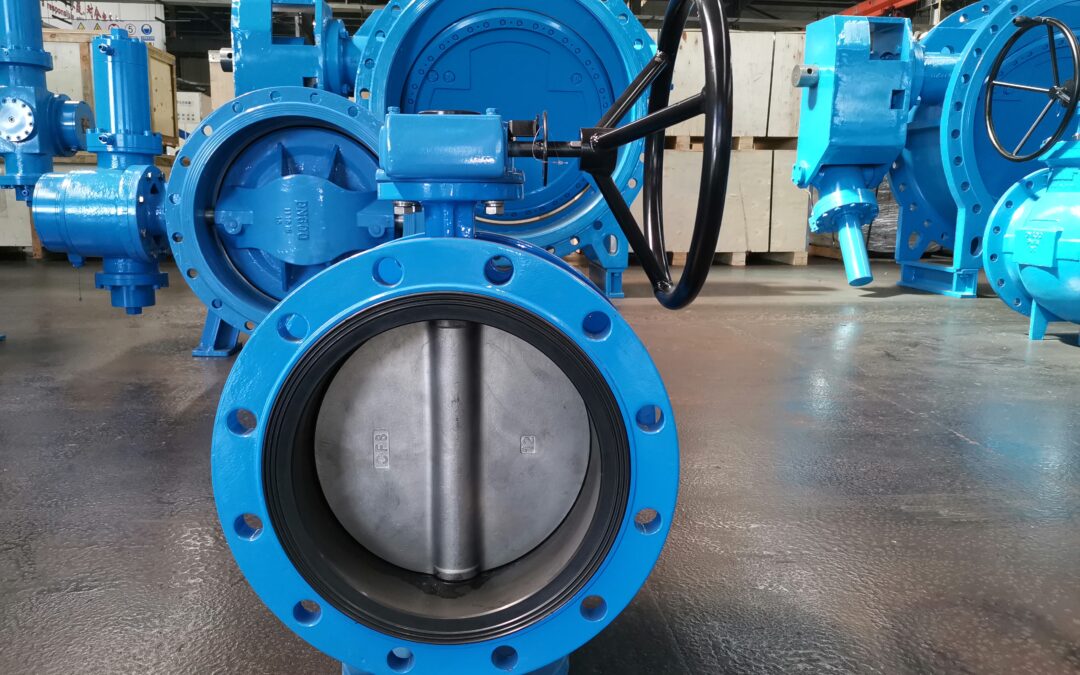
In the world of industrial flow control, valves play a crucial role in regulating the flow of fluids and gases. Among the various types of valves available, the triple offset butterfly valve stands out for its unique design and superior performance. In diesem Artikel, we will explore the features, Vorteile, and applications of triple offset butterfly valves, and why they are the ultimate solution for industrial flow control.
What is a Triple Offset Butterfly Valve?
A dreifach versetzte Absperrklappe is a type of valve that combines the benefits of a butterfly valve and a ball valve. It consists of a disk-shaped valve plug that rotates around a central axis, allowing for adjustable flow control. The valve plug has three offsets, which create a cam-like motion when rotated, providing a tight seal and smooth operation.

Features of Triple Offset Butterfly Valves
Triple offset butterfly valves offer several features that make them an ideal choice for industrial flow control.
- Adjustable flow control: The valve plug can rotate to any position between fully open and fully closed, providing precise control over the flow rate.
- High flow rates: Triple offset butterfly valves have a larger flow area than traditional butterfly valves, allowing for higher flow rates and lower pressure drops.
- Low maintenance: The design of the valve plug and the seat ring ensures that there is minimal wear and tear, reducing the need for maintenance and extending the lifespan of the valve.
- Kompaktes Design: Triple offset butterfly valves have a compact design. Making them ideal for applications where space limits.
Benefits of Triple Offset Butterfly Valves
The benefits of triple offset butterfly valves make them an excellent choice for industrial flow control.
- Energy efficiency: Triple offset butterfly valves provide efficient flow control, reducing energy consumption and costs.
- Haltbarkeit: The valve’s design ensures that it can withstand high pressure and temperature fluctuations, making it a durable option for industrial applications.
- Vielseitigkeit: Triple offset butterfly valves can applicate in a variety of applications, including gas, flüssig, and slurry flow control.
- Low emission: The valve’s design minimizes the risk of leakage, reducing emissions and ensuring a safer working environment.

Applications of Triple Offset Butterfly Valves
Triple offset butterfly valves have a wide range of applications in various industries.
- Chemische Verarbeitung: Triple offset butterfly valves are popular in controlling the flow of corrosive and abrasive chemicals, acids, and bases.
- Öl- und Gasförderung: The valves can applicate in controlling the flow of oil, and gas. And other hydrocarbons in production, transportation, and refining.
- Wasserversorgung: Triple offset butterfly valves are popular in controlling the flow of water. And wastewater in treatment plants, ensuring efficient and safe processing.
- Energieerzeugung: The valves are popular in power plants to control the flow of steam, Gas, and other fluids, ensuring efficient energy production.
Abschluss:
Abschließend, triple offset butterfly valves are the ultimate solution for industrial flow control. Their unique design and features provide efficient, dauerhaft, and versatile flow control, making them an excellent choice for various industries. By understanding the benefits and applications of triple offset butterfly valves, industries can optimize their flow control processes, reducing costs, improving efficiency, and ensuring a safer working environment.
Aug 23, 2023 | More information
TWT Valves as leading wafer type butterfly valve manufacturers in China, we always provide quality wafer type butterfly valves, no matter domestic or oversea market. There are 3 famous water projects by using TWT valves:
- East Water Diversion Project in Shenzhen,
- The South-to-North Water Diversion Project,
- The Left Bank Power Station of the Three Gorges of the Yangtze River
Also, Wafer type butterfly valve with flange own any features?
- A wafer type butterfly valve flange is a component used to install a wafer style butterfly valve between two pipeline flanges or fittings.
- Contains bolt holes that align with the pipeline flanges to join the valve in between.
- Usually made of steel or stainless steel to match the butterfly valve body material.
- Has a center opening that matches the size of the valve body.
- Comes in standard flange styles like ANSI, AUS, JIS.
- Allows the wafer valve to be bolted securely between two pipeline flanges.
- Contains grooves to accept elastomeric sealing gaskets on both sides.
- The gaskets provide a tight, leak-proof seal between the flanges.
- Flanges are sized to properly support the valve weight and sealing forces.
- Often provides tapped holes for jackscrews to facilitate installation and removal.
- Allows wafer valves to be used in flanged piping systems.

Aug 23, 2023 | Nachricht
Wenn es um Industriearmaturen geht, Es stehen viele Optionen zur Verfügung, Aber zwei der beliebtesten Typen sind Absperrventile und Absperrschieber. In diesem Artikel, Wir werden diese beiden Ventiltypen vergleichen und gegenüberstellen, ihre Eigenschaften besprechen, Vorteile, und Nachteile. Am Ende dieses Artikels, Sie werden besser verstehen, welches Ventil für Ihre industriellen Anforderungen am besten geeignet ist.
Sowohl Durchgangsventile als auch Absperrschieber werden häufig zur Steuerung des Flüssigkeitsflusses in industriellen Prozessen eingesetzt. Jedoch, Sie weisen hinsichtlich ihres Designs einige wesentliche Unterschiede auf, Funktionalität, und Anwendung.
Kugelventile sind kugelförmige Ventile mit einem rotierenden Stopfen, der den Flüssigkeitsfluss steuert. Sie sind beliebt bei Anwendungen, bei denen eine präzise Steuerung der Durchflussmenge erforderlich ist. Beispielsweise in der chemischen Verarbeitung, Ölraffinierung, und Stromerzeugung.
Absperrschieber, auf der anderen Seite, sind lineare Ventile mit einem Schieber, der sich öffnet und schließt, um den Flüssigkeitsfluss zu steuern. Sie sind beliebt bei Anwendungen, bei denen ein hohes Maß an Isolierung erforderlich ist, etwa bei der Wasseraufbereitung, Öl- und Gasförderung, und HVAC-Systeme.

Vor- und Nachteile von Durchgangsventilen
Kugelventile haben mehrere Vorteile, einschließlich:
- Präzise Steuerung der Durchflussmenge: Kugelventile zur präzisen Steuerung der Durchflussmenge, Damit eignen sie sich ideal für Anwendungen, bei denen es auf Genauigkeit ankommt.
- Einfache Wartung: Durchgangsventile zeichnen sich durch eine einfache Konstruktion aus, die eine einfache Wartung und Reparatur ermöglicht.
- Geringer Druckabfall: Durchgangsventile haben einen geringen Druckabfall, Das bedeutet, dass sie Hochdruckanwendungen problemlos bewältigen können.
Jedoch, Kugelventile haben auch einige Nachteile, einschließlich:
- Begrenzte Durchflussrate: Kugelventile haben eine begrenzte Durchflussrate, Dadurch eignen sie sich weniger für Anwendungen, bei denen hohe Durchflussraten erforderlich sind.
- Eingeschränkte Kompatibilität: Kugelventile sind nicht mit allen Arten von Flüssigkeiten kompatibel, und sie sind möglicherweise nicht für Anwendungen geeignet, bei denen korrosive oder abrasive Flüssigkeiten vorhanden sind.

Vor- und Nachteile von Absperrschiebern
Absperrschieber haben mehrere Vorteile, einschließlich:
- Ein hohes Maß an Isolation: Absperrschieber bieten ein hohes Maß an Isolierung, Damit sind sie ideal für Anwendungen, bei denen eine dichte Abdichtung erforderlich ist.
- Hohe Durchflussrate: Absperrschieber haben eine hohe Durchflussrate, Dadurch eignen sie sich für Anwendungen, bei denen hohe Durchflussraten erforderlich sind.
- Kompatibilität: Absperrschieber sind mit einer Vielzahl von Flüssigkeiten kompatibel, einschließlich korrosiver und abrasiver Flüssigkeiten.
Jedoch, Absperrschieber haben auch einige Nachteile, einschließlich:
- Begrenzte Kontrolle: Absperrschieber bieten nicht das gleiche Maß an präziser Steuerung wie Kugelventile, Dies kann bei manchen Anwendungen eine Einschränkung darstellen.
- Komplexere Wartung: Schieberventile sind komplexer aufgebaut als Kugelventile, was die Wartung und Reparatur erschweren kann.

Welches ist besser für Ihre industriellen Anforderungen??
Abschließend, Sowohl das Absperrventil als auch das Schieberventil haben ihre Vor- und Nachteile, Die Wahl zwischen beiden hängt von Ihren spezifischen industriellen Anforderungen ab. Wenn Sie eine präzise Kontrolle der Durchflussrate und Kompatibilität mit einer Vielzahl von Flüssigkeiten benötigen, Ein Kugelventil ist möglicherweise die bessere Wahl. Jedoch, wenn Sie einen hohen Isolationsgrad und eine hohe Durchflussrate benötigen, Ein Absperrschieber könnte die bessere Option sein.
Bei der Auswahl eines Ventils für Ihre industrielle Anwendung, Es ist wichtig, Faktoren wie die Durchflussrate zu berücksichtigen, Druck, Temperatur, und Kompatibilität mit den verwendeten Flüssigkeiten. Indem Sie diese Faktoren berücksichtigen und die Unterschiede zwischen Durchgangsventilen und Absperrschiebern verstehen. Sie können eine fundierte Entscheidung darüber treffen, welches Ventil für Ihre Anforderungen am besten geeignet ist.
Zusammenfassend, Absperrventile und Absperrschieber sind wichtige Ventiltypen, die in industriellen Prozessen eingesetzt werden. Obwohl sie einige Gemeinsamkeiten aufweisen, Sie weisen auch einige wesentliche Unterschiede im Design auf, Funktionalität, und Anwendung. Indem Sie diese Unterschiede verstehen und Ihre spezifischen industriellen Anforderungen berücksichtigen, Sie können das richtige Ventil für Ihre Anwendung auswählen.
Aug 22, 2023 | Nachricht
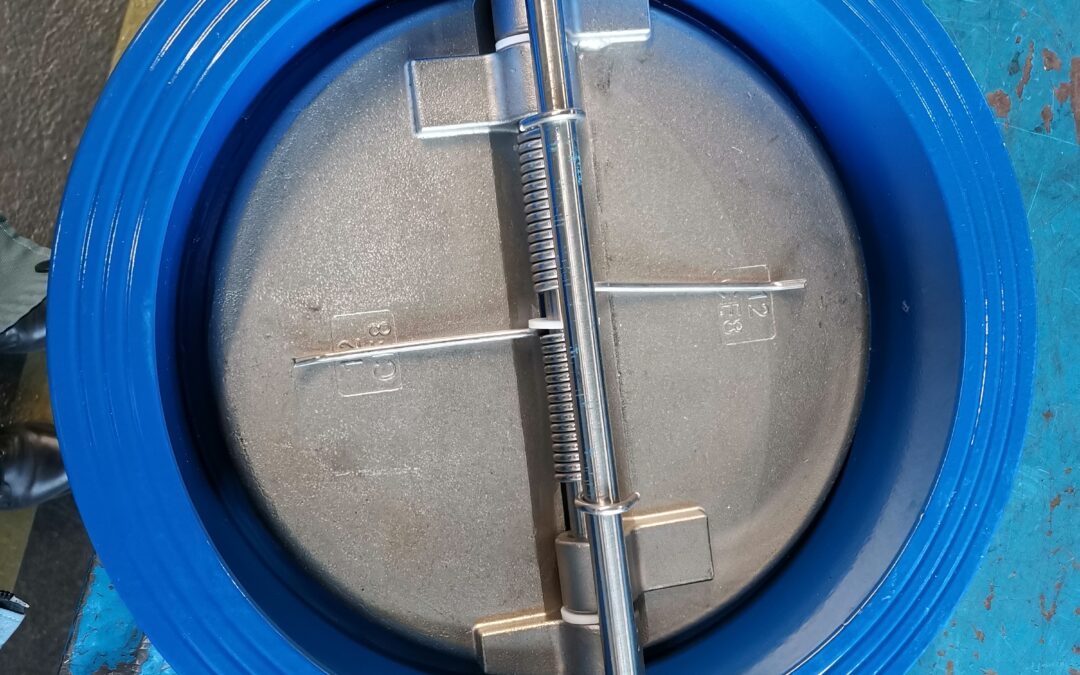
Ensuring efficient one-directional flow is a vital requirement in piping systems across many industries. To prevent problematic reverse flow and backflow leakage, dual plate check valves offer enhanced shutoff performance compared to standard single disc or swing checks. This article explores the operating principles, Vorteile, and applications of wafer dual plate check valves (Wafer-Doppeltür-Rückschlagventil).

Operating Principles
Wafer dual plate check valves contain two spring-loaded discs or closure plates within the valve body. Flow enters through the valve inlet, pushing both discs open. When forward flow stops, the springs force the discs closed against the seat. This forms a tight seal, Rückfluss verhindern.
The dual disc design provides multiple layers of protection by fully isolating the inlet from outlet. Having two independent discs and seats creates a doubly redundant block against leakage and contamination.
Common Design Variations
Dual disc check valve checks come in wafer, lug, and flanged models to suit different installation requirements. Wafer styles contain a thin valve body that installs between mating pipe flanges. Thicker lug body designs have bolt holes for attaching directly to piping.
Disc configurations include single-hinge double plate, dual-hinge quadruple plate, or tandem single plate with intermediate cavity. Quad plate models provide maximum redundancy. Various materials like nylon, 316 Edelstahl, Sphäroguss, and other alloys are utilized based on durability needs.
Benefits of Dual Plate Checks
Compared to single disc swing checks, dual plate models provide:
- Extremely low forward flow pressure loss
- Tight shutoff and minimal backflow leakage
- Reduced slam and water hammer effects
- Increased blocking capacity against back pressure
- Streamlined wafer body for compact retrofits
- Large internal flow area relative to orifice size
These benefits make wafer dual plate checks ideal for applications requiring tight backflow prevention and low forward flow resistance.
Typical Applications
Industries utilizing wafer dual plate check valves include:
- Wastewater treatment – Prevent backflows from discharge lines.
- Chemische Verarbeitung – Block backflows from feed lines.
- Kraftwerke – Eliminate condensate backflows in boilers.
- Fire suppression – Stop backflows in sprinkler systems.
- HVAC – Avoid reverse circulating flows in equipment loops.
- Wasserversorgung – Prevent water system contamination.
Reliable backflow prevention, minimal pressure loss, and robust shutoff make dual plate checks an essential component across water, Luft, steam, and process line applications. Compact wafer bodies allow easy retrofitting into existing systems.
For critical piping services that demand tight shutoff, wafer dual plate check valves enable reliable one-directional flow control. Their redundant sealing delivers peace of mind across industrial, commercial, and municipalflow applications.
Aug 22, 2023 | More information
TWT Valves As China-Wafer-Absperrklappe manufacturer and supplier, we may show you important information related to methods of wafer butterfly valve installation below:
- Inspect the valve and pipeline flanges to ensure surfaces are clean and undamaged.
- Place gaskets on both sides of the valve body. Ensure they are centered and evenly aligned.
- Insert the valve between the two pipeline flanges, aligning the bolt holes.
- Insert bolts through the aligned holes of the pipeline flanges and valve flanges/body.
- Hand tighten nuts in a crisscross pattern to initially secure the valve in place evenly.
- Use a calibrated torque wrench to tighten bolts to the specified torque value in multiple passes. Tighten in a star pattern.
- Check gasket compression and bolt torque values around the valve to ensure an even tight seal.
- Attach the valve actuator and test operation by rotating the disc fully open and closed.
- Measure disc clearance in the valve seat when fully closed on both sides. Adjust as needed.
- Insulate the valve as specified for the process conditions.
- Slowly introduce process flow and check for leaks. Tighten flange bolts further if leaks occur.
- Commission valve by performing several open/close cycles under process conditions.



