
Juil 29, 2023 | Nouvelles
Les vannes papillon sont un type courant de vanne industrielle utilisée pour contrôler le débit de liquides, des gaz, et boues. Contrairement à la porte, globe, et vannes à bille qui utilisent un mouvement linéaire pour s'ouvrir et se fermer, les vannes papillon utilisent un disque qui tourne 90 degrees to either allow or prevent flow. Le “papillon” term comes from the shape of the disc which resembles a butterfly’s wings.
Butterfly valves provide many advantages over other valve types including fast opening and closing, low torque requirements, low cost, and lightweight and compact design. They are an excellent choice for large diameter applications where linear motion valves would be impractical. Butterfly valves are available in a wide array of materials from bronze, fonte, and stainless steel to more exotic alloys for specialized applications. Valve discs are also available in various materials with different seal types.

While standard butterfly valves work well for basic on/off flow control, vannes papillon hautes performances are engineered for demanding applications that require tight shutoff, precise flow control, and reliability. Two designs that offer enhanced performance are double eccentric and vanne papillon double excentration.
Vannes papillon à double excentrique
UN vanne papillon à double excentrique utilizes two offset shafts or trunnions. Unlike a conventional butterfly valve which has two shafts coinciding with the centerline of the valve body, the shafts on a double eccentric valve are positioned slightly off the centerline.
This double offset configuration enables the disc to seat tightly against the downstream seat. The eccentric shaft mounting causes the upper and lower halves of the disc to contact the seat sequentially as the valve is being closed. This flexing action compensates for wear and allows the valve to maintain a tight seal even after years of service.
The double offset design also enables the disc to be larger than the inside diameter of the pipe. This reduces flow velocity around the disc which reduces pressure loss compared to a standard butterfly valve. Double eccentric butterfly valves are ideal for applications that require bi-directional tight shutoff.
Common applications of double eccentric butterfly valves include:
- As an economical substitute for ball, gate or plug valves when bi-directional shutoff is critical
- Severe service applications with fluctuating pressures and temperatures
- Process lines handling slurries or corrosive media
- Throttling services requiring precise flow control
- Larger diameter water and wastewater transport lines
Vannes papillon à double excentration
While similar in appearance to double eccentric valves, double offset butterfly valves have a slightly different design. Instead of offset shaft mounting, double offset valves utilize offset seats and seal surfaces. The disc centerline aligns with the centerline of the valve body but the upstream and downstream seats are offset.
This configuration seals the same way as a double eccentric valve – the disc contacts the downstream seat sequentially from the upper to lower edge as it closes. Again, the flexing action maintains a tight seal even after extensive wear. A key benefit of the double offset design is reduced torque requirements compared to a double eccentric valve.
Double offset butterfly valves offer superior bi-directional shutoff capability. Their uncompromising sealing ability makes them a top choice for the following challenging services:
- Critical isolation applications in the oil & gaz, chimique, and power industries
- Flow regulation of abrasive slurries in mining processes
- Block valves on LNG carriers and storage tanks
- Severe pressure, temperature, and cycling services
- Any application requiring zero leakage
Both double eccentric and double offset high performance butterfly valves provide substantial benefits compared to single offset, conventional butterfly designs:
- Bubble-tight bi-directional shutoff rated up to ANSI Class VI
- Lower pressure drop – higher CV ratings than conventional valves
- Quicker opening and closing with reduced operating torque
- Tight shutoff that withstands thermal distortion and wear
- More durable seats that resist erosion and leakage
- Compact, lightweight design compared to other shutoff valves
- Lower total cost of ownership over the long run
While the double offset configuration generally requires less torque and is more compact, double eccentric valves can handle higher pressure differentials. Both designs are vastly superior to standard butterfly valves when zero leakage and lasting tight shutoff are critical requirements. The advanced sealing capability of high performance double offset and double eccentric butterfly valves makes them a top choice for severe service applications across all process industries.
Juil 29, 2023 | Nouvelles
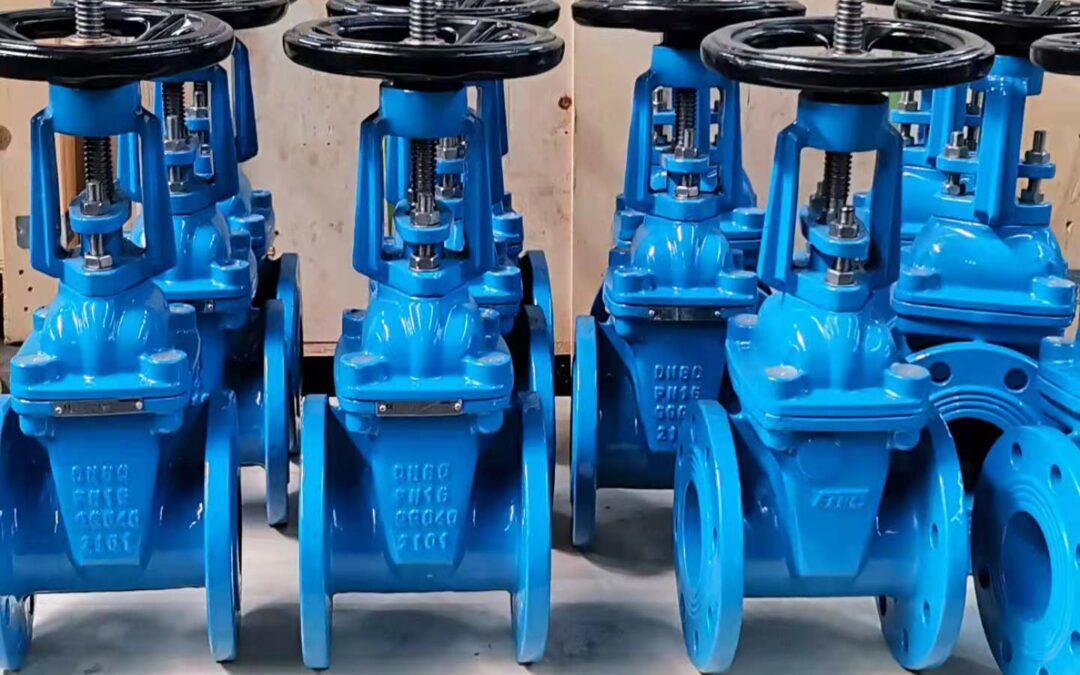
Les robinets-vannes sont l'un des types de vannes les plus couramment utilisés dans les applications industrielles telles que les usines chimiques, raffineries, et canalisations. Ce sont des vannes à mouvement linéaire qui contrôlent le débit de fluide en faisant glisser un disque ou une porte dans le chemin du flux. When the gate is fully closed, flow through the valve is completely obstructed. When the gate is fully open, the flow path through the valve is unobstructed. Gate valves are mainly used for on/off applications – they are not suitable for throttling or regulating flow.
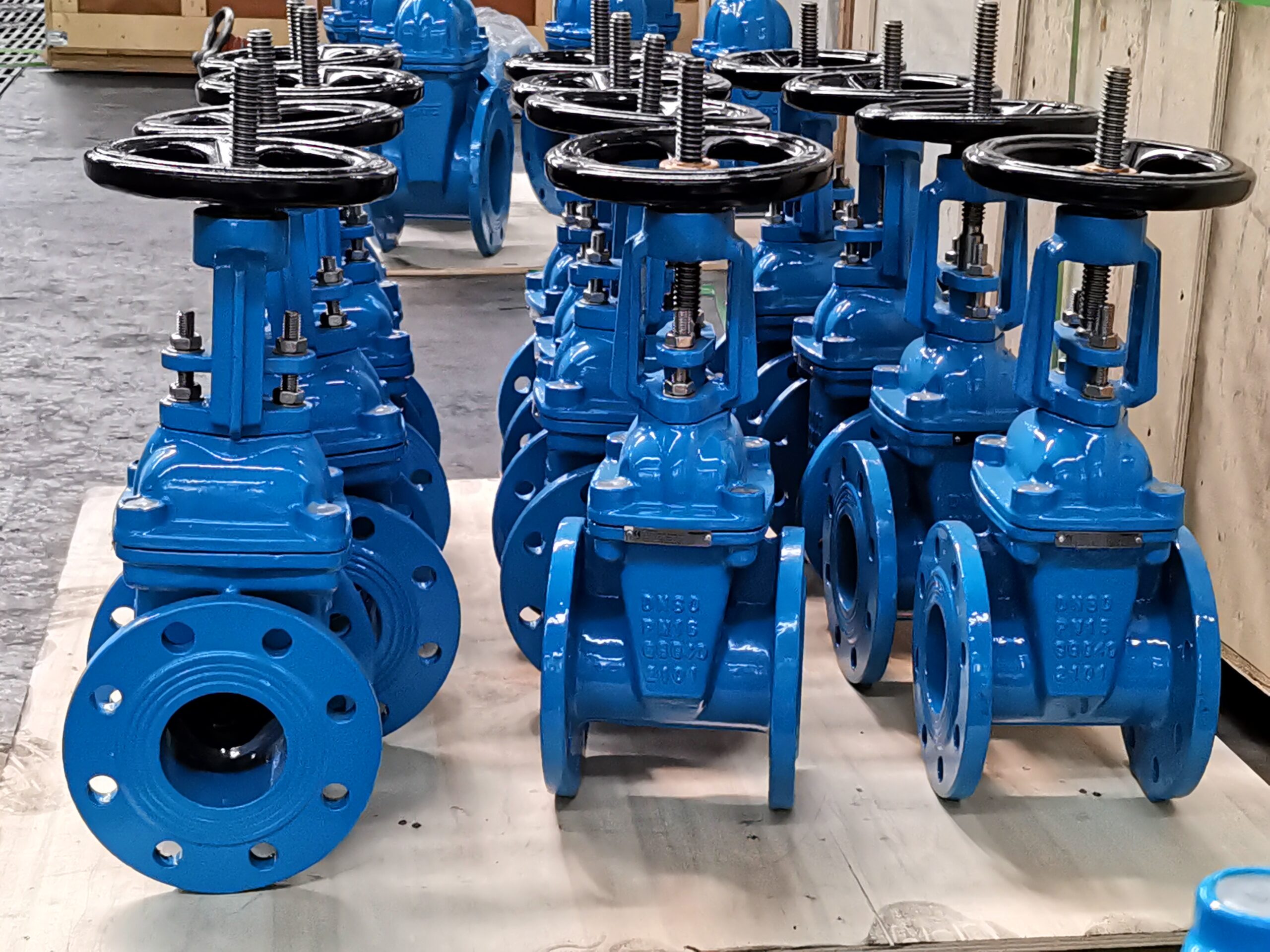
There are two main types of gate valves – rising stem and non-rising stem. In a rising stem gate valve, the stem is attached to the gate and rises up as the valve is opened. This allows visual confirmation that the valve is open because the stem is visible above the valve body. In a vanne à tige non montante, the stem is threaded separately from the gate. As the handwheel on the stem is turned to open and close the valve, the gate rises and lowers but the stem does not move up or down. Non-rising stem valves do not provide visual confirmation of valve position but have the advantage of maintaining a compact envelope.
Early gate valves used metal to metal seats which provided poor shutoff capability. Any scratches or wear on the seating surfaces allowed leakage through the valve when closed. Modern gate valves use resilient seated gates which provide superior shutoff performance. A resilient material such as an elastomer is fitted to the edges of the gate. Lorsque la vanne est fermée, the resilient seating material deforms to create a tight seal against the valve body, preventing leakage even at high pressures.
As the name suggests, this type of gate valve combines the non-rising stem design with a resilient gate seat. The threaded stem does not rise as the valve is operated. Turning the handwheel moves the gate up and down while the stem remains stationary. The gate has a resilient seating material such as rubber or thermoplastic fitted to the sealing faces.
Key features of non rising stem resilient seated gate valves:
- Compact Overall Envelope – Since the stem does not rise or lower, the valve takes up less space. This is advantageous in tight installations.
- No Visual Position Indication – Unlike rising stem valves, position of the gate is not externally apparent. The valve position must be verified by other means.
- Lower Operating Torques – Absence of lifting forces on the stem results in lower operating torques compared to rising stem.
- Bidirectional Shutoff – Resilient gate provides tight shutoff in both flow directions. Can be used on bi-directional lines.
- Bubble Tight Shutoff – Deformation of the resilient seat against the body provides bubble tight shutoff even on gas service.
- High Pressure Rating – Due to the full metal body and absence of dynamic stem seals, these valves can operate at very high pressures, up to 2,500 psi.
- Suitable for Throttling – The resilient seat is forgiving of any damage from the gate edge, allowing some use for throttling control.
- Non-rising stem resilient seated gate valves are rugged and provide reliable on/off control.
Their compact envelope makes them ideal for space constrained installations. The lack of visual indication of valve position is overcome by fitting an indicator or declutchable handwheel. The bidirectional shutoff and high pressure rating allow them to be used in the most arduous industrial applications.
Rising Stem Resilient Seated Gate Valves
In this type of valve, the stem is attached to the gate and rises up as the valve is opened. The gate has a resilient seating material to provide tight shutoff.
Key features of rising stem resilient seated gate valves:
- Visually Indicates Valve Position – The elevation of the stem shows whether the valve is open, closed or at an intermediate position. Useful for quick visual inspections.
- Stem Acts as Position Indicator – If fitted with a pointer, the stem can act as a position indicator. Useful for throttling control.
- Large Rangeability – Due to smooth rising of the stem, these valves can modulate over a wide flow range.
- Easy Automation – Rising stem makes it simple to mount actuators and controllers.
- Higher Operating Torques – Lifting the gate/stem requires more torque compared to non-rising designs.
- Unidirectional Shutoff – Resilient seat provides tight shutoff only in the flow direction opposite to the seat side.
- Prone to Stem Damage – Dynamic stem seals are subject to friction and wear. Stem binding can occur.
Rising stem resilient seated gate valves provide visual confirmation of valve position and are easier to automate. Cependant, the moving stem makes them less compact and subjects them to potential stem damage compared to non-rising designs. Maintenance of stem seals and lubrication is critical.
Juil 27, 2023 | Nouvelles
Les poches d'air emprisonnées et les gaz accumulés dans les systèmes de canalisations de liquide peuvent causer de nombreux problèmes opérationnels. L'air réduit la section efficace pour l'écoulement de liquide, augmentation de la perte de charge. Les poches d'air créent des perturbations hydrauliques qui entraînent des coups de bélier et des effets de coups de bélier.. Sous pression, les gaz dissous sortent de la solution, formant des bulles qui réduisent l'efficacité de la pompe et endommagent les composants. L'élimination de l'air accumulé nuisible et le maintien du système plein de liquide sont essentiels pour un transport hydraulique efficace.. Ceci est réalisé en installant des vannes de purge d'air à des endroits stratégiques du pipeline..
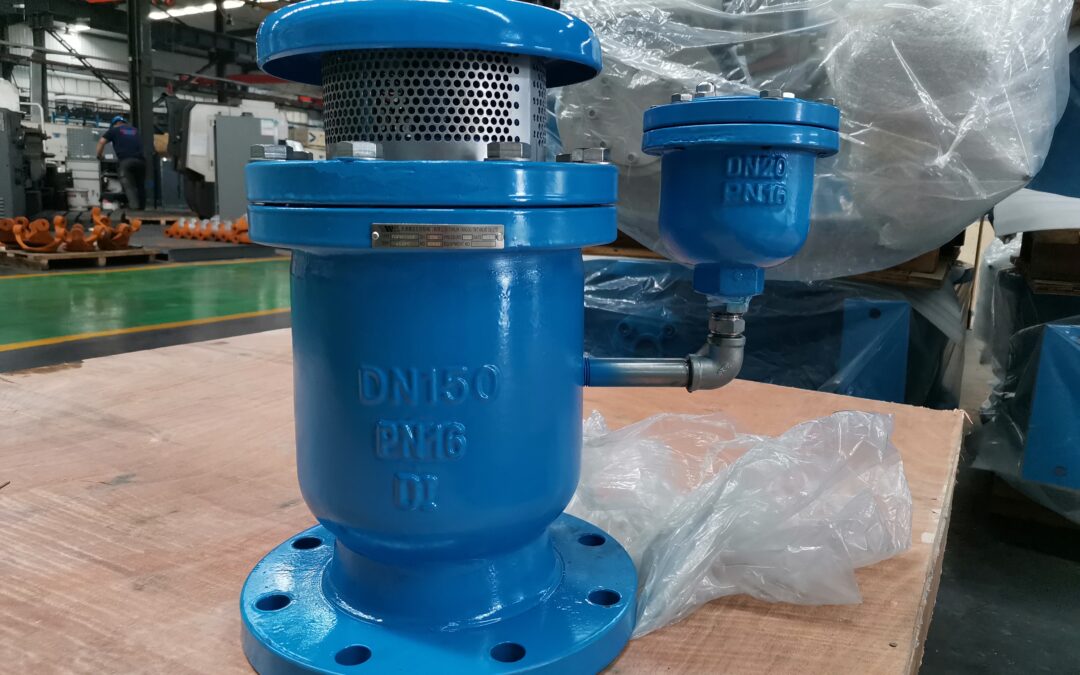
Soupape de décharge d'air combinée, aussi connu sous le nom Bouches d'aération triples fonctions, remplir les fonctions vitales de libération d’air, prise d'air, et réduction des surtensions dans un seul appareil compact. Ces vannes polyvalentes éliminent automatiquement l'air et les gaz accumulés pendant le remplissage et le fonctionnement du système.. Ils brisent également les conditions de vide pendant le drainage du pipeline et aspirent de l'air pour empêcher la séparation des colonnes.. Dans des conditions d'urgence, ils libèrent instantanément des poussées d'air et de fluide pour minimiser les effets néfastes des coups de bélier.

Principe de fonctionnement des soupapes de décharge d'air
Soupape de décharge d'air combinée fonctionne sur le principe de la pression différentielle entre le système de pipeline sous pression et l'atmosphère. Alors que le liquide remplit le pipeline vide, les poches d'air sont comprimées et se déplacent vers les points élevés le long de la ligne.
L'entrée de la vanne est reliée au sommet du tuyau à ces points hauts. Lorsque le niveau de liquide atteint l'entrée de la vanne, l'air comprimé est libéré. Les flotteurs à l'intérieur de la vanne montent avec le niveau de liquide, déloger l'orifice principal. L'air comprimé dépasse les flotteurs et se rejette dans l'atmosphère.. Les orifices d'évacuation d'air spécifiques au nettoyage s'ouvrent également pour évacuer les petites poches d'air.
Une fois le système rempli et mis sous pression, les gaz libérés de la solution s'accumulent à l'entrée de la vanne. Les flotteurs descendent et l'orifice principal se ferme. Les petits orifices de libération d'air continuent de s'aérer, éliminant progressivement les gaz accumulés.
Si la pression du liquide en amont chute en raison de la vidange ou de la séparation de la colonne, les flotteurs descendent aussi. Cela ouvre le grand orifice d'admission d'air, permettant à l'air d'entrer et d'éviter les conditions de vide.
En cas de surtensions soudaines, une pression accrue comprime instantanément la poche d'air sous les flotteurs. L'orifice principal libère rapidement l'air comme un amortisseur, limiter la montée en pression.
Principales caractéristiques de la soupape de décharge d'air combinée
- Libère l'air accumulé pendant le remplissage. Permet un remplissage rapide du système.
- Les évents libèrent des gaz pendant le fonctionnement sous pression. Maintient une efficacité hydraulique maximale.
- Empêche les conditions de vide destructrices et la séparation des colonnes.
- Atténue les coups de bélier pendant les transitoires. Minimise les dégâts causés par les coups de bélier.
- Gère de grands volumes d’air à des débits élevés. Résiste aux bouchons d’air et à la séparation des colonnes.
- Résiste à des pressions d'entrée élevées jusqu'à 150 psi. Conçu pour des températures de liquide allant jusqu'à 200 °F.
- Flotteurs et orifices conçus pour résister à l'encrassement, corrosion et abrasion.
- Compact et léger. Facile à installer dans des espaces exigus.
- Entretien minimum. Aucune alimentation ni contrôle requis.
Les soupapes de décharge d'air combinées sont des dispositifs de protection essentiels pour les systèmes de canalisations de liquides. En remplissant les fonctions cruciales de ventilation, entrée d'air et réduction des surtensions, ils améliorent l'efficacité hydraulique, éviter les dommages causés par le vide, et réduire les effets de coups de bélier. Leur fonctionnement automatique et leur enveloppe compacte en font un composant indispensable pour une exploitation fiable et sûre des pipelines.. Ils continuent de travailler 24/7 pour garder le système amorcé et prêt à fonctionner.
Vannes d'air à dégagement rapide
Tandis que les soupapes de décharge d'air combinées gèrent l'évacuation normale de l'air et des gaz, des valves à dégagement rapide plus spécialisées sont nécessaires pour évacuer rapidement de grands volumes d'air. Ces vannes évacuent rapidement les bouchons d'air à des débits extrêmement élevés., empêcher les transitoires de pression destructrices lors d'événements tels que le démarrage de la pompe et les pannes de courant.
Valve d'air à dégagement rapide possède une bille légère qui flotte à la surface du liquide à l'intérieur du corps de la vanne. En fonctionnement normal, la balle flotte à sa position la plus basse, sceller complètement la sortie de la vanne. En cas de décharge d'air d'urgence, la pression d'entrée pousse la balle vers le haut dans une cage. La balle ne se soulève que légèrement avant de venir reposer sur les butées de la cage. Ce mouvement découvre le siège et crée un espace étroit autour du ballon.
Le petit espace annulaire expose une très grande surface d'orifice de sortie compte tenu du grand diamètre de la vanne. Alors que les bouchons d'air se précipitent dans l'entrée de la valve, ils dépassent le ballon, accélérer à travers l'écart, et décharge à très haute vitesse. Débits de 15,000 Les GPM ou plus sont courants. La ventilation intense soulage rapidement la pression de l'air, minimiser les effets dommageables des coups de bélier.
En incorporant à la fois des valves combinées de libération d'air et des valves de libération rapide, les systèmes de canalisations peuvent être protégés des transitoires d’air interne et de pression tout au long de leur cycle de fonctionnement. L'action combinée maintient le pipeline amorcé pour des performances hydrauliques efficaces tout en évitant des dommages catastrophiques..
Juil 26, 2023 | Nouvelles
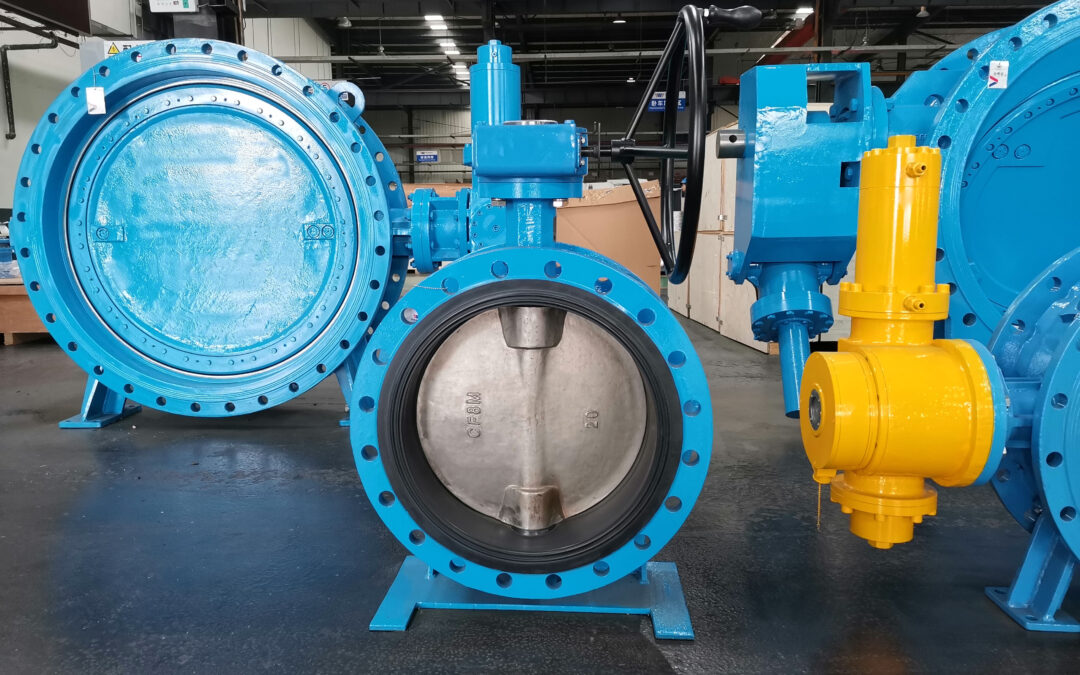
Butterfly valves are versatile throttling and shutoff valves used to control flow in a wide range of industrial piping systems. Typically actuated by manual gear, lever, or handwheel mechanisms, butterfly valves can also be automated with actuators that allow remote control. Electric and pneumatic actuators coupled to butterfly valves create smart, powered valves capable of precision flow control.
Electric actuators provide fast, precise valve positioning in response to electronic control signals. Pneumatic actuators deliver robust valve opening and closure using pressurized air as the power medium. Combining electric and pneumatic actuation creates hybrid valves with enhanced capabilities.

An electric pneumatic butterfly valve uses an electric actuator for accurate positioning control paired with a pneumatic actuator for fail-safe emergency shutdown. This hybrid approach harnesses the strengths of both technologies.
In normal operation, an electric motor or electric linear actuator with position feedback provides precise valve control in response to 4-20mA or network control signals. Fast response times, positioning accuracy, and PID functionality enable tight flow control.
For emergency shutdown, a pneumatic spring return actuator is mounted in parallel. This actuator remains pressurized during normal operation to hold the valve open. In an emergency, cutting off air pressure causes the spring return to snap the valve shut quickly and decisively.
Key Benefits Of Butterfly Valves:
• Precision flow control via electric actuation
• Fast emergency shutdown via pneumatic actuator
• Independent shutdown mechanism for safety
• Lower air consumption than fully pneumatic valve
• Position feedback for operational monitoring
• Capable of both throttle control and tight shutoff
The electric control circuit can sense if air pressure is lost and trigger a controlled shutdown sequence before the pneumatic actuator closes the valve. This prevents abrupt valve slam. Position transmitters track valve position continuously.
These hybrid valves are used for critical piping and transfer systems handling volatile or hazardous media. By combining electric and pneumatic functionality, they satisfy both precision control and emergency shutdown requirements.
Pneumatic butterfly valves use pressurized air to pneumatically position the valve and provide fail-safe shutdown capabilities. They are intrinsically safe since the air supply can be exhausted for emergency shutdown.
Quarter-turn pneumatic actuators are commonly used. They provide rotary torque to open or close the butterfly disc through 90°. Linear pneumatic cylinders are also able to automate larger valves.
Pneumatic systems provide fast response for both valve positioning and shutdown. Cependant, they lack the precision control and feedback available with electric automation. Positioners can be added to improve positioning accuracy.
Pneumatic actuators are also used for fail-in-place function where the valve maintains its position without air pressure. This avoids unsafe shutdowns, but loses emergency shutdown capability.
Butterfly valves typically use a centered circular disc as the throttling element. An offset disc that seals against an inclined seat can provide tighter shutoff. The triple offset disc design takes this further with multiple offsets to achieve zero seat contact in the open position.
The disc has two offset planes inclined relative to the shaft plane. When open, the disc tilts and lifts off the seat, eliminating rubbing and seat wear. The contoured seat provides tight shutoff when closed. Low torque requirements allow use of small, economical actuators.
Triple offset butterfly valves deliver precision throttling down to zero flow coupled with bubble-tight shutoff. This capability suits them for demanding control applications. Their compact wafer design permits easy automation while providing reliable performance.
Combining triple offset discs with electric and pneumatic actuation creates intelligent, powered butterfly valves. Electric control handles accurate flow modulation during normal operation. Pneumatic power provides emergency shutdown on demand. This dual functionality allows precision flow management along with fast, safe closure when required.
Electric pneumatic actuation, fail-safe shutdown mechanisms, and advanced disc designs enable butterfly valves to go beyond basic open/close duties. Precision flow control, tight shutoff, and intelligent functionality make them versatile automation candidates for critical industrial pipelines and processes.
Juil 25, 2023 | Nouvelles
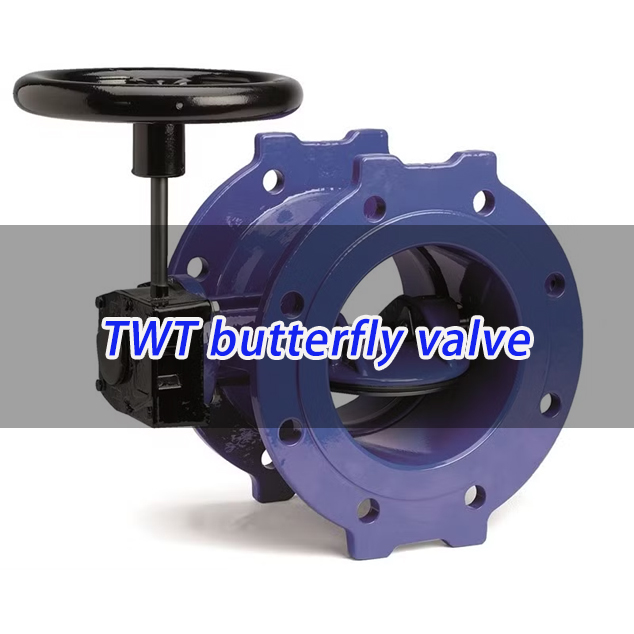
Dans le monde des vannes industrielles, TWT Butterfly Valve has emerged as a prominent player, renowned for its exceptional quality and innovative solutions. In this SEO article, we will delve into the core strengths of TWT Butterfly Valve, exploring how this brand has become a leader in the market and earned the trust of industries worldwide.
Extensive Expertise and Experience
One of the primary strengths of TWT Butterfly Valve lies in its extensive expertise. And years of experience in the valve manufacturing industry. With a rich heritage spanning several decades. The brand has continuously evolved to meet the dynamic demands of modern technology and industrial applications. Their seasoned engineers and technicians bring a deep understanding of valve design and production. Ensuring every TWT butterfly valve is a product of precision and reliability.

Cutting-edge Technological Advancements
TWT Butterfly Valve stays at the forefront of innovation by investing in cutting-edge technologies. From advanced CAD/CAM software for design to state-of-the-art machinery for manufacturing, the brand incorporates the latest tools and techniques to optimize valve performance and efficiency. By embracing innovation, TWT ensures that its valves can handle the most challenging industrial conditions with ease.
Comprehensive Product Range
Another key strength of the Valve is its comprehensive product range. Whether it’s a simple low-pressure application or a complex high-temperature industrial process, TWT offers a diverse selection of butterfly valves to cater to various needs. These include resilient seated, high-performance, and triple offset valves, each designed to deliver optimal performance and longevity.

Stringent Quality Assurance
TWT Butterfly Valve is synonymous with quality, and this reputation stems from its unwavering commitment to stringent quality assurance practices. Every valve undergoes rigorous testing at different stages of production to ensure compliance with international standards and customer expectations. The brand’s dedication to quality has earned it various certifications and accreditations, solidifying its position as a reliable and trusted valve manufacturer.
Global Reach and Customer Support
TWT Butterfly Valve has established a robust global presence, supplying its products to industries across continents. With a widespread distribution network and strategically located service centers, the brand can promptly address customer requirements and provide exceptional support. TWT’s customer-centric approach has resulted in strong relationships with clients, fostering loyalty and repeat business.

Sustainable and Environmentally-friendly Solutions
In an era where environmental consciousness is paramount, TWT Butterfly Valve stands out by offering sustainable and environmentally-friendly valve solutions. The brand is committed to minimizing its ecological footprint by adopting eco-friendly manufacturing practices and producing valves that adhere to the highest environmental standards.
Conclusion
En conclusion, TWT Butterfly Valve’s success can be attributed to its core strengths: extensive expertise and experience, commitment to technological advancements, a comprehensive product range, stringent quality assurance, global reach, and sustainable practices. As industries continue to evolve, TWT remains a reliable partner, providing innovative and high-quality butterfly valves that meet the ever-changing needs of diverse industrial applications. With a brand built on trust and excellence, TWT Butterfly Valve continues to soar in the global valve market.



