Apr 1, 2023 | Nachricht
A butterfly valve is a type of valve that is used to control the flow of fluids through a pipe. Moreover, high performance eccentric butterfly valve will perform excellent function. It is designed to be lightweight, compact, and easy to operate. The valve consists of a disc that rotates around a central axis, which controls the flow of fluid through the valve. Butterfly valves are commonly used in a wide range of applications, including water treatment, chemische Verarbeitung, und HVAC-Systeme.
One type of butterfly valve that has gained popularity in recent years is the eccentric butterfly valve. This valve is designed to provide high performance, Haltbarkeit, and reliability in a variety of applications. In this blog post, we will take a closer look at the high performance eccentric butterfly valve and its advantages.

What is an Eccentric Butterfly Valve?
An eccentric butterfly valve is a type of butterfly valve that has an offset disc. This means that the disc is mounted off-center, rather than directly in line with the valve body. When the valve is closed, the disc is in contact with only one side of the valve body, which reduces friction and wear.
Vorteile exzentrischer Absperrklappen
Improved Flow Characteristics
The eccentric design of the butterfly valve provides improved flow characteristics compared to other types of valves. The offset disc allows for a more streamlined flow of fluid through the valve, which reduces turbulence and pressure drop. This results in improved flow rates and better control over the flow of fluid.
Reduced Wear and Tear
The offset disc design of the high performance eccentric butterfly valve reduces wear and tear on the valve components. When the valve is closed, the disc is in contact with only one side of the valve body, which reduces friction and wear. This extends the life of the valve and reduces the need for maintenance and replacement.
Tight Shut-Off
Eccentric butterfly valves are designed to provide tight shut-off when the valve is closed. The offset disc ensures that the disc makes full contact with the valve seat, creating a seal that prevents any leakage. This makes high performance eccentric butterfly valve ideal for applications where tight shut-off is essential, such as in the chemical processing industry.
High-Performance
Eccentric butterfly valves are designed to provide high performance in a variety of applications. They are available in a range of materials and sizes, making them suitable for use in a wide range of industries. They are also easy to operate and maintain, which reduces downtime and improves productivity.

Guide To Double And Triple Type Eccentric Butterfly Valve
In addition to the standard eccentric butterfly valve, there are two other types of eccentric butterfly valves that are commonly used in industry: the double eccentric butterfly valve China and the triple eccentric butterfly valve.
Double Eccentric Butterfly Valve China
The double eccentric butterfly valve, also known as a high-performance butterfly valve, has two offsets. In addition to the offset disc, the stem is also offset from the centerline of the valve body. This design reduces friction and wear even further, allowing for even better performance and longer valve life.
Der double eccentric butterfly valve China is often used in applications where tight shut-off and high performance are required, beispielsweise in der Öl- und Gasindustrie. It is also commonly used in HVAC systems, Wasserversorgung, und chemische Verarbeitung.
Dreifach exzentrische Absperrklappe
Der dreifach exzentrische Absperrklappe has three offsets, making it the most advanced type of eccentric butterfly valve. In addition to the offset disc and stem, the sealing surface is also offset from the centerline of the valve body. This design provides a tight seal even at high pressures and temperatures, making it ideal for use in critical applications.
Beschädigen 31, 2023 | Nachricht
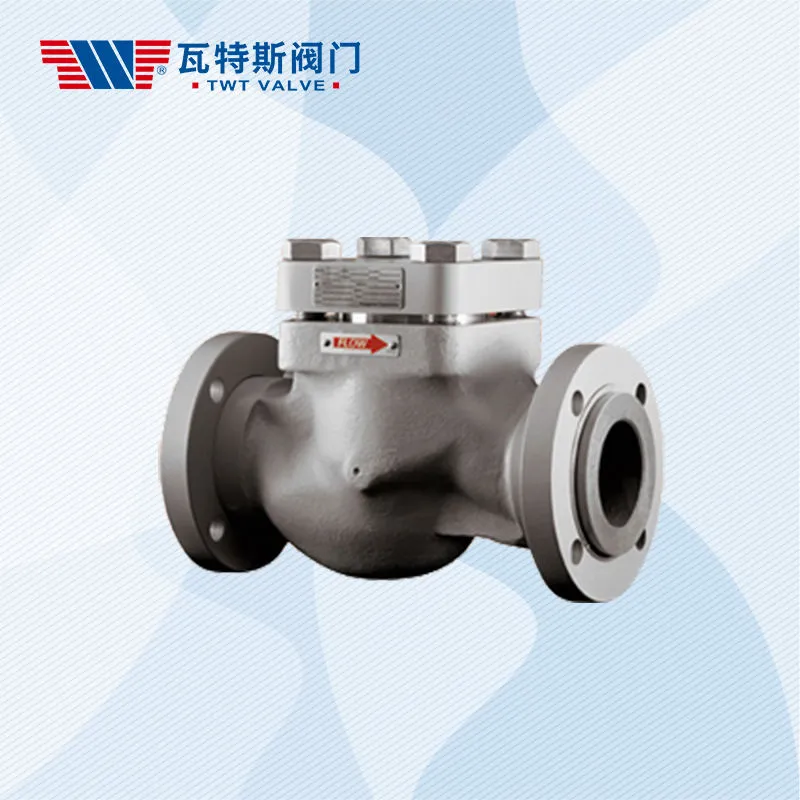
What are the Non-rising Stem Gate Valve, China Lift Check Valve, and Eccentric Butterfly Valve. And how do they operate? Now, we wll tell you all the questions. To regulate the flow of fluids and gases through pipelines, a wide variety of valves are essential in industrial processes. Valves of varying kinds are utilized in accordance with the distinct necessities of individual applications. This post will cover three varieties of valves namely, the non-rising stem gate valve, lift check valve, and eccentric butterfly valve.
Gate Valve With A Non-Rising Stem
A gate valve is a valve that is utilized for regulating the movement of fluids and gases. The gate valve variant known as the non-rising stem gate valve keeps the stem in a fixed position while the valve is being opened or closed. The mechanism of the gate valve involves a gate, shaped like a wedge, that is moved downwards onto the seat to cease the flow or upwards from the seat to enable the flow. The gate in a non-rising stem gate valve is lifted or lowered by rotating the threaded stem. Given its stationary characteristic, the valve body is well suited for limited-space underground applications.
China Life Check Valve Type
A China lift check valve serves the purpose of preventing backflow in pipelines. The valve permits unidirectional flow of fluid or gas and shuts automatically to avert backflow. The lift check valve includes a lift disk that is raised to permit flow and lowered to prevent flow by being placed on the seat. The pressure of the fluid or gas pushes the lift onto the seat once the flow ceases, which in turn, prevents any reverse flow. Der China-Heberückschlagventil finds frequent use in situations where fluid or gas flowing back could result in harm to the equipment or pipeline.
Butterfly Valve With Eccentric Design
A butterfly valve is a valve that is used for the purpose of controlling the flow of fluids or gases. The eccentric butterfly valve differs from the regular butterfly valve because its stem is not centered on the disc. The flow is controlled by the rotation of the butterfly, which is the disc of the Exzentrische Absperrklappe. The valve is closed when the butterfly is perpendicular to the flow, and fully open when it is parallel to the flow. By using an offset stem, the contact between the disc and seat can be reduced as the butterfly is positioned off-center. The eccentric butterfly valve is ideal for high-cycle applications because it experiences less wear and tear.
Summary About Kinds Of Valves
Critical to the functioning of industrial processes are valves, which serve as essential components. Valves of different types possess distinct features and qualities which allow them to be suitable for particular applications. The market offers numerous types of valves. It includes but not limited to the non-rising stem gate valve, China-Heberückschlagventil, and eccentric butterfly valve. Engineers and operators can make informed decisions on valve selection. This selection is for a given application by comprehending the various valve types and their functions.
Beschädigen 30, 2023 | Nachricht
A product flow in a pipeline is controlled by a butterfly valve, which is a valve that rotates a quarter-turn. The valve has multiple applications in industries such as pharmaceuticals, Herstellung, and food processing. It is capable of restricting the flow of solid, flüssig, or gas materials. Typischerweise, butterfly valves are classified into two categories known as lug-style and wafer-style. The advantages and applications of these mechanical components are distinct and they are not interchangeable. The guide provides an explanation of the distinctions between both butterfly valve categories. And offers assistance in choosing the Hochleistungs-Absperrklappen for one’s requirements.

How does a high performance butterfly valves operate and function?
A quarter-turn valve closely resembles a butterfly valve. By turning the handle 90 Grad (a quarter of one turn), you can either shut or open the valve at any time. These valves are primarily designed to control the flow of fluid through a conduit. Waste treatment systems commonly use butterfly valves.
Concentric butterfly valves operate in a similar manner to quarter-turn valves. It is quite easy to comprehend the functioning of a butterfly valve. You will be able to comprehend the diverse elements of valves.
A variety of components make up butterfly valves. Of utmost importance is the metal disc. The butterfly is a commonly used term for the metal disc. The fluid flow can be stopped by shutting the valve, which is connected to rods and holds the butterfly in place. Once the valve opens, a single rotation of the metal butterfly or disc occurs. The unobstructed passageway facilitates the circulation of air, fluids, or other liquids.
The disc’s movement is dependent on whether the valve is open or closed, and whether it is fully or partially closed. If the valve has not been fully rotated for a quarter turn due to being closed only partially, it will not allow unrestricted flow.
What is a double flanged butterfly valve?
A double flanged butterfly valve is a type of butterfly valve that is designed with flanges on both ends. The flanges are drilled to match the pipeline flange pattern, making it easy to bolt the valve to the pipeline. This design makes the Doppelflansch-Absperrklappe ideal for applications that require frequent installation and removal. The valve is also easy to maintain, making it a popular choice in industries such as water treatment, HVAC, und chemische Verarbeitung.
What is a lug type butterfly valve?
A lug type butterfly valve is a type of butterfly valve that is designed with threaded inserts, called lugs, on both sides of the valve body. The lugs are used to bolt the valve to the pipeline, making it a popular choice in applications that require a tight seal. The lug design also makes it easy to install and remove the valve from the pipeline without disturbing the other components. The valve is commonly used in industries such as oil and gas, Stromerzeugung, and petrochemical processing.
Advantages of Lugged Butterfly Valves
Lugged butterfly valves stand out among the variability of valves available in terms of versatility. Other valves can be surpassed by them in various applications, due to their numerous advantages. Five primary advantages of using lugged butterfly valves are presented here.
- They possess high durability and are capable of enduring high pressure and temperature.
- Their tight seal reduces the likelihood of leakage in comparison to other valve types.
- Their customization options are extensive.
- Their design is so compact that they are perfect for utilizing in confined areas.
Both double flanged butterfly valves and lug type butterfly valves have their unique features that make them suitable for different applications. The choice of valve type depends on the specific application requirements. Such as pressure rating, installation, and maintenance requirements. It is important to consult with a valve specialist when selecting the right type of high performance butterfly valves for your application.
Beschädigen 24, 2023 | Nachricht
Installation test and adjustment of hard seal butterfly valve
What tests and adjustments need to be made before installing the hard seal butterfly valve? Before installing the hard seal butterfly valve, you need to confirm the product performance and media flow arrows are consistent with the movement conditions, and scrub the inside of the valve. No impurities are allowed on the seal ring and ball plate. The ball plate shall not be closed before cleaning to avoid damaging the seal ring. The flange of hard seal butterfly valve should be special flange for butterfly valve. The best installation position on the pipeline is vertical installation, not inverted installation.
Installation test and adjustment of hard seal Absperrklappe.
1.The pneumatic, hydraulic, manual and electric components of the hard seal butterfly valve are strictly debugged before leaving the factory. When testing the sealing performance, users should repair the unified inlet and outlet surfaces of the valve body, close the butterfly valve and pressurized inlet hard seal butterfly valve, observe whether there is leakage at the outlet end, and open the CD to prevent damage to the crown ring type safety valve, spring type safety valve, auxiliary air compressor pipeline strength test before the micro-open safety valve, stainless steel safety valve and steam safety valve.
2. Although the hard seal butterfly valve in the factory after strict inspection and testing, but it is inevitable that some products in the process of transportation will appear automatic screw displacement, which requires readjustment, pneumatic and hydraulic. Please read carefully the use of the supporting drive 3. When the hard seal butterfly valve is shipped from the factory, the opening and closing stroke of the control mechanism has been adjusted. In order to prevent the power up direction is not correct, the user first power up, first open manual to half open position.
D343H worm gear flange type hard seal butterfly valve
The daily maintenance method of hard seal butterfly valve
1. The hard seal butterfly valve should be kept clean frequently during use. The transmission thread must be lubricated regularly. If any fault is found, it should be stopped immediately to find out the cause of the fault.
2. The bolts of the packing gland should be tightened evenly and should not be pressed into a bent state to avoid damaging the valve stem movement or causing leakage.
3. The valve can be installed directly on the pipeline according to the connection method. Generally can be installed in any position of the pipeline, but easy to operate and maintain. Note that the flow direction of the medium of the globe valve should flow from the bottom of the vertical valve flap to the top, and the lift check valve can only be installed horizontally.

4. Hard seal butterfly valve in use, only for full open or full closed, not allowed to adjust the flow, so as not to erode the sealing surface and accelerate wear. Der gate valve and the upper threaded globe valve are equipped with a counter-seal device. The handwheel is fixed in the top position with screws to prevent the medium from leaking from the packing.
5. When the hard seal butterfly valve opens and closes, the handwheel should be used. Do not use levers or other tools to avoid damage to valve parts. The handwheel is closed in clockwise direction and vice versa.
6. The pressure and diameter of the valve mark must be carefully checked before installation to see if it meets the requirements for use, to eliminate defects caused during transportation, and to remove dirt from the valve parts.
7. For long-term storage of the valve, should be regularly inspected. Exposed processing surface should be kept clean and remove dirt. During storage, both ends of the ball valve should be in the blocked and open state. Pneumatic butterfly valve and channel ends should be blocked and closed. It should be stored in an orderly manner in a ventilated and dry place indoors, and open-air stacking or storage is strictly prohibited.
Beschädigen 14, 2023 | Nachricht
Another name for butterfly valve is flap valve, which is a kind of regulating valve with simple structure. According to the driving method, electric butterfly valve can be divided into various types. The one we are going to explain today is the electric butterfly valve. It is a very common type, easy to operate and simple in structure. Let’s take a look at the functions and advantages of this butterfly valve.

Elektrisch Absperrklappe consists of electric actuator and butterfly valve, so it has the advantages of simple operation and simple structure of butterfly valve. The function principle of electric butterfly valve: through the electric device to drive the valve stem, the butterfly plate produces 90° rotational movement to open and close the valve. The principle of electric actuator is actually very simple. Just like the scraper used in daily life, the energy source is electric power, which drives the valve plate to open and close the valve and circulate or stop the fluid.
The electric actuator of electric butterfly valve can be divided into switching type and regulating type. The switching type electric butterfly valve plays the role of switching; the regulating type electric butterfly valve plays the role of regulating the flow, which can accurately adjust the flow to the thousandth degree, and is also a kind of valve with higher price. Valve as a device installed in the pipeline, if the field check its switching status seems unrealistic, so there is a feedback signal. The regulating type itself has a feedback signal, and the switching type can choose whether to install a feedback signal according to the specific needs of the customer.
Advantages of electric type butterfly valve
1.Electric multi-turn actuator:Electric multi-turn actuator is one of the commonly used and reliable actuator types. It uses a single-phase or three-phase motor to drive the gear or worm gear to drive the stem nut, and the stem nut makes the stem move to open or close the valve. The main advantage of this type of actuator is that all components are installed in one housing and all basic and advanced functions are integrated in this waterproof, dustproof and explosion-proof housing.
2.Electric single rotary actuator: This actuator is similar to electric multi-turn actuator. The main difference is that the actuator finally outputs 1/4 turn to record 90 degrees of motion. The single rotary actuator is compact and can be installed on small size valves, and the output torque is usually up to 800 kg. Zusätzlich, due to the small power supply required, batteries can be installed for fail-safe operation.
3. Fluid-driven multi-rotary or linear output actuators:This type of actuator is often used to operate straight-through valves (globe valves) and gate valves, which use pneumatic or hydraulic operation. Simple construction, zuverlässiger Betrieb, and easy to implement fail-safe operation mode.
Vorteile:Electric actuators have the advantages of easy energy access, fast signal transmission, long transmission distance, convenient centralized control, high sensitivity, high precision, easy coordination with electric regulators, and simple installation and wiring. The disadvantages are complex structure, small thrust, higher average failure rate than pneumatic actuators, and suitable for places with low explosion-proof requirements and insufficient gas source.



