
Jan 25, 2024 | Nachricht
Rückschlagventile anheben, wafer double door check valves, and flange double door check valves represent distinct solutions for diverse industrial applications. Each design offers unique advantages and considerations. By understanding the characteristics, applications, and selection criteria of these check valve types, engineers and technicians can optimize fluid systems, ensuring efficient operation, reliable flow control, and prevention of backflow.
China-Heberückschlagventil: Simplicity and Reliability

China-Heberückschlagventil, also known as vertical check valves, are characterized by their simple design and reliable operation. They feature a hinged disc that opens and closes in response to the flow of fluid, Rückfluss verhindern. Lift check valves are commonly used in:
Residential and commercial plumbing systems
1. HVAC-Systeme
2. General industrial applications
3. Agricultural irrigation systems
Wafer-Doppeltür-Rückschlagventile: Compact and Space-Saving
Wafer double door check valve, also known as sandwich check valves, are compact and space-saving, making them ideal for installations where space is limited. They consist of two hinged doors mounted between two valve body flanges, allowing for easy installation between pipe flanges. Wafer double door check valves are commonly found in:
• Industrial piping systems
• Water treatment plants
• Wastewater treatment facilities
• Pharmaceutical manufacturing
Flange Double Door Check Valves: Robust and Heavy-Duty
Flange double door check valves are robust and heavy-duty, designed for demanding industrial applications. They feature two hinged doors mounted between two flanged valve bodies, providing a secure and leak-free connection. Flange double door check valves are commonly used in:
• Oil and gas industry
• Chemical processing
• Power generation
• Mining and mineral processing
Comparative Analysis: Choosing the Right Check Valve
When selecting the appropriate check valve for a specific application, several factors must be considered:
Durchflussrichtung: All three check valve types ensure unidirectional flow, but the installation orientation may vary. Lift check valves require vertical installation, while wafer and flange double door check valve can be installed horizontally or vertically.
Druckstufe: Consider the maximum pressure rating of the check valve to ensure it can withstand the system pressure.
Temperaturbereich: Check the temperature range compatibility of the valve material with the operating temperature of the fluid.
Application Requirements: Evaluate factors such as fluid compatibility, Korrosionsbeständigkeit, and maintenance requirements to ensure the selected check valve meets the specific application demands.

Jan 24, 2024 | Nachricht
Extension stem, center line, and eccentric butterfly valves represent distinct solutions for diverse industrial applications. Each design offers unique advantages and considerations. By understanding the characteristics, applications, and selection criteria of these butterfly valve types, engineers and technicians can optimize fluid control systems, ensuring efficient operation, zuverlässige Leistung, and long-term durability.
Extension Stem Butterfly Valves: Extended Reach and Accessibility

Extension stem butterfly valve feature a stem that extends beyond the valve body, allowing for remote operation in hard-to-reach or confined spaces. This design provides greater accessibility and convenience, making it ideal for applications such as:
• Remote valve actuation
• Overhead installations
• Underground installations
• Hazardous environments
Mittellinien-Absperrklappen: Compact and Streamlined
Center line butterfly valve, also known as in-line butterfly valves, are characterized by their compact design and streamlined flow path. The valve seat is positioned directly in the center of the valve body, ensuring minimal pressure drop and efficient flow control. Center line butterfly valves are commonly used in:
• HVAC systems
• Plumbing applications
• General industrial settings
• Water treatment plants
Eccentric Butterfly Valves: Enhanced Sealing and Durability
Exzentrische Absperrklappe incorporate an offset disc that rotates on an axis shifted from the valve’s center. This eccentricity creates a wiping action between the disc and seat, providing superior sealing capabilities and reduced wear and tear. Eccentric butterfly valves are well-suited for demanding applications, einschließlich:
• Pulp and paper industry
• Chemical processing
• Mining and mineral processing
• Power generation
Comparative Analysis: Choosing the Right Butterfly Valve
When selecting the appropriate butterfly valve for a specific application, several factors must be considered:
Accessibility and Reach: Extension stem butterfly valves offer extended reach for remote operation, while center line butterfly valves provide a compact design for confined spaces.
Flow Efficiency: Center line butterfly valves minimize pressure drop due to their streamlined flow path, making them ideal for applications requiring efficient flow control.
Sealing Performance: Eccentric butterfly valves excel in sealing applications due to their offset disc design, ensuring a tight seal even under high-pressure conditions.
Application Requirements: Consider factors such as pressure rating, temperature range, fluid compatibility, and actuation method to ensure the selected valve meets the specific application demands.

Jan 23, 2024 | Nachricht
Double eccentric, U-type, and concentric disc butterfly valves represent distinct solutions for diverse industrial applications. Each design offers unique advantages and considerations. By understanding the characteristics, applications, and selection criteria of these butterfly valve types, engineers and technicians can optimize fluid control systems, ensuring efficient operation, zuverlässige Leistung, and long-term durability.
Doppelexzentrische Absperrklappen: Precision and Tight Sealing

Double eccentric butterfly valves are renowned for their exceptional sealing capabilities and precise flow control. Their unique design features an offset disc that rotates on an axis shifted from the valve’s center. This eccentricity creates a wiping action between the disc and seat, ensuring a tight seal even under high-pressure conditions. Double eccentric butterfly valves are commonly used in demanding applications, wie zum Beispiel:
• Pulp and paper industry
• Chemical processing
• Mining and mineral processing
• Power generation
U Type Butterfly Valves: Robust and Versatile
U type butterfly valve, also known as resilient-seated butterfly valves, offer a robust and versatile solution for flow control. They feature a U-shaped resilient seat that provides a positive seal against the valve disc. This design allows for bi-directional flow and is well-suited for applications involving slurries, viscous fluids, and solids in suspension. U-type butterfly valves are commonly found in:
• Water treatment plants
• Wastewater treatment facilities
• Food and beverage processing
• Pharmaceutical manufacturing
Concentric Disc Butterfly Valves: Cost-Effective and Reliable
Concentric disc butterfly valve represent a cost-effective and reliable option for general-purpose flow control. Their straightforward design features a disc positioned at the center of the valve body, ensuring a tight seal against the valve seat. Concentric disc butterfly valves are widely used in:
• HVAC systems
• Plumbing applications
• General industrial settings
• Irrigation systems
Comparative Analysis: Choosing the Right Butterfly Valve
When selecting the appropriate butterfly valve from double eccentric butterfly valve China, for a specific application, several factors must be considered:
Sealing Performance: Double eccentric butterfly valves provide superior sealing compared to U-type and concentric disc valves, making them ideal for high-pressure and critical sealing applications.
Flow Characteristics: U-type butterfly valves excel in handling slurries and viscous fluids due to their resilient seat design, while concentric disc valves offer low-pressure drop for efficient flow control.
Cost and Maintenance: Concentric disc butterfly valves are generally more cost-effective and require less maintenance compared to double eccentric and U-type valves.
Application Requirements: Consider factors such as pressure rating, temperature range, fluid compatibility, and actuation method to ensure the selected valve meets the specific application demands.

Jan 22, 2024 | Nachricht
In diesem Artikel, Wir werden die neuesten Trends und Technologien in der Absperrschieberherstellung erkunden, Hervorheben, wie diese Innovationen dazu beitragen können, Abfall zu reduzieren, Effizienz steigern, und Nachhaltigkeit fördern. Wir werden auch die Vorteile des Einsatzes von Absperrschiebern in verschiedenen Branchen diskutieren und Beispiele für erfolgreiche Anwendungen liefern.
Gate valves are an essential component in various industries, einschließlich Öl und Gas, chemische Verarbeitung, und Wasseraufbereitung. These valves are designed to control the flow of fluids and gases, ensuring safe and efficient operations. Jedoch, with the increasing demand for sustainability and environmental protection, gate valve manufacturers must innovate to meet these challenges.
Sustainability is becoming increasingly important in all aspects of life, including industry. As the world grapples with climate change, pollution, and resource depletion, companies must adopt sustainable practices to ensure their long-term survival. Gate valve manufacturers are no exception. They must innovate to create products that are not only reliable but also environmentally friendly.
One of the key areas where gate valve manufacturers can make a difference is by reducing waste. Traditional gate valves often require frequent maintenance and replacement due to wear and tear. Jedoch, new technologies have emerged that enable gate valves to last longer without needing repairs or replacements. For example, some gate valves use advanced materials that are more durable and resistant to corrosion, reducing the need for maintenance.
Another area where gate valve manufacturers can innovate is by improving energy efficiency. Modern gate valves are designed to operate at lower temperatures, which reduces energy consumption and minimizes greenhouse gas emissions. This not only helps reduce carbon footprints but also saves money on energy costs.

Benefits of Using Gate Valves in Different Industries
Gate valves are used in a variety of industries, each with its unique requirements and benefits. Here are some examples:
Öl-und Gasindustrie
In the oil and gas industry, gate valves play a crucial role in controlling the flow of fluids and gases. They are used in pipelines, storage tanks, and other equipment to ensure safe and efficient operations. By using gate valves, companies can reduce the risk of accidents, improve productivity, and protect the environment.
For example, in the offshore oil and gas industry, gate valves are used to regulate the flow of oil and gas from wells to production platforms. These valves are designed to withstand harsh conditions, including high pressure and temperature fluctuations. By using gate valves, companies can ensure the safety of personnel and equipment while maximizing production levels.
Chemical Processing Industry
In the chemical processing industry, gate valves are used to control the flow of chemicals and other hazardous substances. These valves are designed to prevent leaks and spills, ensuring the safety of personnel and the environment. By using gate valves, companies can reduce the risk of accidents and improve productivity.
For example, in the pharmaceutical industry, gate valves are used to control the flow of raw materials and finished products. These valves are designed to ensure the quality and purity of the final product while minimizing the risk of contamination.

Water Treatment Industry
In the water treatment industry, gate valves are used to control the flow of water and wastewater. These valves are designed to remove impurities and contaminants, ensuring safe drinking water for consumers. By using gate valves, companies can reduce the risk of waterborne illnesses and improve water quality.
For example, in the municipal water treatment plant, gate valves are used to control the flow of treated water into the distribution system. These valves are designed to ensure the safety of the water supply while minimizing the risk of contamination.
Abschluss
Abschließend, gate valve manufacturers must innovate to meet the challenges of sustainability and environmental protection. By reducing waste, improving energy efficiency, and promoting sustainability, these manufacturers can create products that are not only reliable but also environmentally friendly.
The benefits of using gate valves in different industries are numerous, from reducing the risk of accidents in the oil and gas industry to improving water quality in the water treatment industry. As the world becomes more aware of the importance of sustainability, gate valve manufacturers will continue to play a critical role in shaping the future of the industry.
Jan 22, 2024 | Nachricht
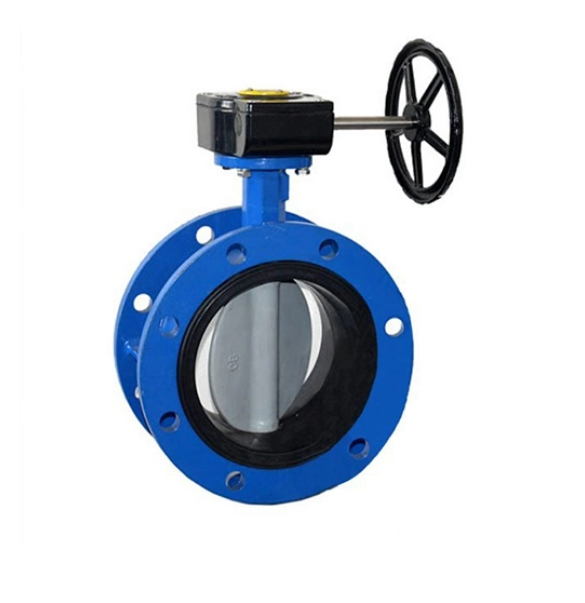
Double flanged butterfly valves play a pivotal role in industrial fluid control systems, offering a combination of compact design, efficient flow regulation, und Wirtschaftlichkeit. Understanding their advantages, Konstruktion, Typen, actuation methods, and selection criteria empowers engineers and technicians to make informed decisions when specifying and maintaining these valves. By carefully considering the application requirements and adhering to proper maintenance practices, Doppelflansch-Absperrklappe ensure reliable and efficient fluid management, contributing to the overall success of industrial operations.
Understanding Double Flanged Butterfly Valves

Double flanged butterfly valves, also known as wafer-style butterfly valves, are characterized by their compact design and ease of installation. They consist of a circular disc (butterfly) that rotates on a central shaft to regulate fluid flow. The valve body features two flanges on either side, allowing for secure bolting between pipe flanges, ensuring a leak-free connection. This design simplifies installation and maintenance, reducing downtime and operational costs.
Advantages of Double Flanged Butterfly Valves
The popularity of double flanged butterfly valves stems from their numerous advantages:
Compact and Lightweight: Their streamlined design minimizes space requirements, making them ideal for installations where space is at a premium.
Quick Operation: The quarter-turn operation of the butterfly disc enables rapid flow control, facilitating efficient system response.
Low Pressure Drop: The streamlined flow path and minimal obstruction by the butterfly disc result in low pressure drop, reducing energy consumption and optimizing system efficiency.
Vielseitige Anwendungen: Double flanged butterfly valves find application in a diverse range of industries, including water treatment, chemische Verarbeitung, HVAC-Systeme, and industrial automation.
Kosteneffizient: Compared to other valve types, double flanged butterfly valves offer a cost-effective solution for flow control, making them an attractive choice for budget-conscious projects.
Construction and Materials
Double flanged butterfly valves are typically constructed from various materials to suit different application requirements:
Gusseisen: Robust and durable, cast iron valves are commonly used in water treatment and industrial applications.
Sphäroguss: Offering enhanced strength and corrosion resistance, ductile iron valves are suitable for demanding environments.
Edelstahl: For applications requiring high corrosion resistance and durability, stainless steel valves are the preferred choice.
Bronze: Bronze valves are corrosion-resistant and well-suited for marine environments and systems handling seawater.
Types of Double Flanged Butterfly Valves
Double flanged butterfly valves come in two primary types:
Concentric Disc: In concentric disc valves, the butterfly disc is positioned at the center of the valve body, ensuring a tight seal against the valve seat.
Eccentric Disc: Eccentric disc valves feature a butterfly disc that is offset from the center, creating a slight eccentricity. This design provides improved sealing performance and reduced wear and tear.
Actuation Methods
Double flanged butterfly valves can be actuated manually or automatically:
Manual Actuation: Manual valves are operated by a hand lever or gear operator, providing direct control over the valve position.
Automatic Actuation: Automatic valves utilize actuators, such as pneumatic or electric actuators, to remotely control the valve position based on process signals or automation systems.
Selection and Maintenance Considerations
When selecting and maintaining double flanged butterfly valves, several factors must be considered:
Valve Size and Pressure Rating: Ensure the valve size aligns with the required flow rate and that the pressure rating meets or exceeds the maximum system pressure.
Material Compatibility: Choose the appropriate valve material based on the fluid being handled and the operating environment.
Temperaturbereich: Consider the temperature range of the fluid to ensure the valve material can withstand the operating temperatures.
Actuation Method: Determine whether manual or automatic actuation best suits the application requirements.
Regular Maintenance: Periodic inspection, cleaning, and lubrication of the valve are essential to ensure optimal performance and longevity.
As leading valves manufacturer in China, WTSTWT-Valve provides quality concentric disc butterfly valve Und ggg50 Absperrklappe with factory price, Please contact with us for more information.



