
июль 25, 2023 | Новости
This article provides a comprehensive overview of gate valves, exploring their definition, строительство, and operational principles. A gate valve is a crucial device used in fluid control systems, regulating the flow of liquids and gases. By understanding the inner workings of gate valves, their advantages, и ограничения, readers can grasp the significance of these valves in various industries. This article aims to shed light on the essential role of gate valves and their applications, offering insights into the mechanics behind smooth and efficient fluid flow control.
Introduction to Gate Valves
TwT Gate valves are essential components in fluid control systems. Designed to regulate the flow of liquids and gases within pipelines and other industrial applications. These valves operate by using a sliding gate or wedge that moves perpendicular to the flow direction. Allowing or blocking the passage of fluids. As a fundamental part of modern engineering. Gate valves play a crucial role in various industries. Including oil and gas, очистка воды, химический, and manufacturing.
Кроме того, understanding the mechanics and applications of gate valves is crucial for engineers and technicians to ensure efficiency. And reliable fluid flow control in complex systems. В этой статье, we will delve deeper into anatomy and working principles. Design variations, and practical applications of gate valves. Offer valuable insights into their significance and versatility in diverse engineering processes.

The Anatomy of Gate Valves
Gate valves consist of several key components that work together to control fluid flow effectively. Understanding the anatomy of gate valves is essential for comprehending their operational principles. And the role they play in fluid control systems.
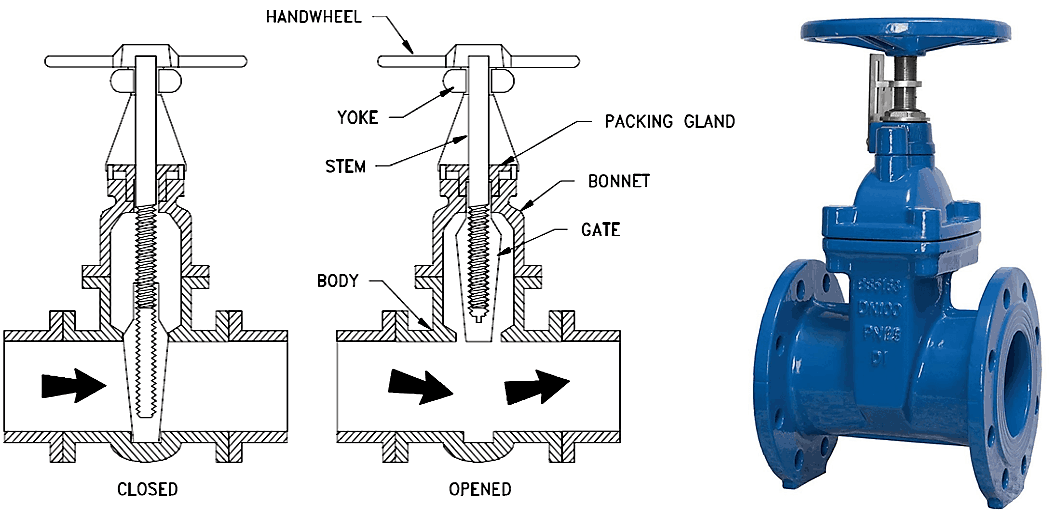
- Корпус клапана: The valve body serves as the main casing that houses all the internal components of the TwT gate valve. It provides the structure and strength required to handle the pressure and flow of fluids.
- Ворота: The gate is the central element of the valve responsible for controlling the flow. It is a flat or wedge-shaped obstruction that moves up. And down within the valve body to allow or block the passage of fluids.
- Корень: The stem is a vertical shaft that connects to the gate, enabling its movement. Когда шток поворачивается, it raises or lowers the gate, determining the degree of fluid flow.
- Капот: The bonnet is a cover that secures the stem and the gate. Preventing leakage and ensuring a tight seal when the valve closes.
- Seats: The seats are seals located on both sides of the gate. When the gate is in the closed position. It comes into contact with the seats, creating a watertight closure and preventing fluid from flowing through the valve.
- Привод: In some Twt gate valves, an actuator is popular for automating the opening and closing of the valve. The actuator can be manual, электрический, пневматический, or hydraulic, providing efficient control and remote operation.
How Gate Valves Work
Gate valves operate on a simple yet effective mechanism that allows for precise control of fluid flow. Understanding how gate valves work is key to utilizing them effectively in fluid control systems.
- Opening the Valve: To open a gate valve, the operator turns the handwheel or activates the actuator. The stem connected to the gate rises vertically. This upward movement lifts the gate, creating an unobstructed passage for the fluid to flow through the valve.
- Fully Open Position: When the gate fully raising. The valve is in the fully open position, allowing the maximum flow rate through the pipeline. Gate valves are popular for their full-bore opening. Which minimizes pressure drop and turbulence in the system.
- Closing the Valve: To close the gate valve, the operator reverses the handwheel rotation or actuator action. The stem lowers, bringing the gate down to its fully closed position. In this state, the gate comes in contact with the seats on both sides. Forming a watertight seal that prevents any fluid from passing through the valve.
- Fully Closed Position: When the gate fully closing. The valve is in the fully closing position. Completely blocking the flow of fluid. Gate valves often use in on/off applications, where fluid flow needs to be halted entirely.
The sliding gate or wedge-like mechanism within gate valves ensures smooth and precise operation, allowing for quick and reliable flow control. The ability to provide a full-bore opening and complete closure makes gate valves ideal for applications that require efficient fluid regulation.
Types of Gate Valves
- Задвижки с выдвижным штоком: Rising stem gate valves have a stem that moves upward as the valve is opened. This design provides a visual indication of the valve’s position, making it easier to determine whether the valve is fully open or closed. Rising stem TwT gate valves are commonly used in applications where clear visibility of the valve’s status is crucial, such as in fire protection systems.
- Задвижки с невыдвижным штоком: In non-rising stem gate valves, the stem does not move vertically when the valve is operated. Вместо, the stem threads through the bonnet, remaining in a fixed position as the gate moves up and down. This type of gate valve is ideal for applications with limited vertical space, as it requires less clearance above the valve.
- Wedge Gate Valves: Wedge gate valves feature a gate with a wedge-shaped design, which allows for a tighter seal as the gate is lowered onto the seats. The wedge shape enhances the valve’s ability to prevent leakage and ensure a secure closure, making it suitable for applications with high-pressure and high-temperature conditions.
- Parallel Gate Valves: Parallel gate valves have a gate with a flat, parallel design, providing a straight-through flow path when the valve is fully open. These valves are often used in low-pressure applications, offering minimal pressure drop and smooth flow control.
- Solid Wedge vs. Flexible Wedge: Within the category of wedge gate valves, there are two subtypes: solid wedge and flexible wedge. Solid wedge gate valves have a one-piece, rigid gate that offers excellent sealing but may be susceptible to jamming under certain conditions. Flexible wedge gate valves, с другой стороны, have a two-piece gate with slight flexibility, making them more resistant to jamming and suitable for varying temperatures.
Преимущества
- Full-Bore Opening: One of the primary advantages of gate valves is their full-bore opening when fully open. The gate retracts completely into the valve body, creating an unobstructed passage for fluid flow. This characteristic minimizes pressure drop and turbulence, ensuring efficient flow through the pipeline.
- Bi-Directional Flow: Gate valves provide bi-directional flow, meaning they can handle fluid flow in both directions. This feature makes gate valves versatile and suitable for applications where fluid flow may need to change direction.
- Быстрая работа: Gate valves are designed for quick and easy operation. With just a few turns of the handwheel or activation of the actuator, the gate can be fully opened or closed. This rapid operation is especially advantageous in emergency shut-off situations.
- High Pressure and Temperature Resistance: Gate valves are well-suited for handling high-pressure and high-temperature applications. The solid construction and wedge-shaped gate design allow gate valves to withstand extreme conditions without compromising the seal.
Limitations of Gate Valves
While gate valves offer many advantages, they also have certain limitations that engineers and operators should consider when selecting valves for specific fluid control applications. Understanding these limitations is crucial for ensuring the optimal performance and reliability of the entire system.
- Limited Flow Control: Gate valves primarily design for on/off control. Making them less suitable for applications that require fine-flow regulation. Attempting to use TwT gate valves for throttling or partially closing the valve can lead to excessive wear and damage, compromising their efficiency.
- Slow Operation: Compared to some other valve types, gate valves have a slower opening and closing mechanism. Turning the handwheel or operating the actuator to fully open or close the valve may take more time, which can be a concern in emergencies that require immediate shut-off.
- Susceptible to Jamming: Gate valves with a solid wedge design can be susceptible to jamming in applications where there are solid particles or debris present in the fluid. This can hinder the smooth operation of the valve and may require additional maintenance to keep the valve functioning properly.
- Not Ideal for Low Flow Rates: Gate valves suit for applications with high flow rates. When used in low-flow scenarios, TwT gate valves may experience chattering or vibration, resulting in premature wear of the valve components.

Common Applications
Gate valves find widespread use in numerous industries, thanks to their unique advantages and ability to handle various fluids and operating conditions. Understanding their common applications provides valuable insights into the significance of gate valves in modern engineering processes.
- Нефтяная и газовая промышленность: The oil and gas industry heavily relies on gate valves for controlling the flow of crude oil, натуральный газ, и продукты нефтепереработки в трубопроводах, нефтеперерабатывающие заводы, and storage facilities. Gate valves ensure efficient and reliable operations, even in high-pressure and high-temperature environments.
- Водоочистные сооружения: На водоочистных сооружениях, gate valves play a crucial role in managing the flow of water during different treatment stages, such as filtration, дезинфекция, и распространение. These valves provide precise control to ensure a continuous supply of clean water to consumers.
- Химическая обработка: Gate valves are popular in chemical plants to regulate the flow of various chemicals and abrasive fluids. Their ability to handle corrosive and hazardous materials makes them a suitable choice for critical processes in the chemical industry.
- Выработка энергии: На электростанциях, gate valves control the flow of steam and cooling water in boilers and condensers. Their efficient flow regulation and reliable shut-off capabilities contribute to the safe and efficient operation of power generation facilities.
Заключение
В заключение, gate valves are essential devices to control fluid flow in various industries. Their straightforward construction and reliable operation make them indispensable in fluid control systems. By understanding how gate valves work and their applications, engineers, and technicians can make informed decisions in designing and maintaining efficient fluid flow processes. Emphasizing their advantages and acknowledging their limitations, gate valves continue to play a crucial role in modern engineering and everyday life.
июль 23, 2023 | Новости
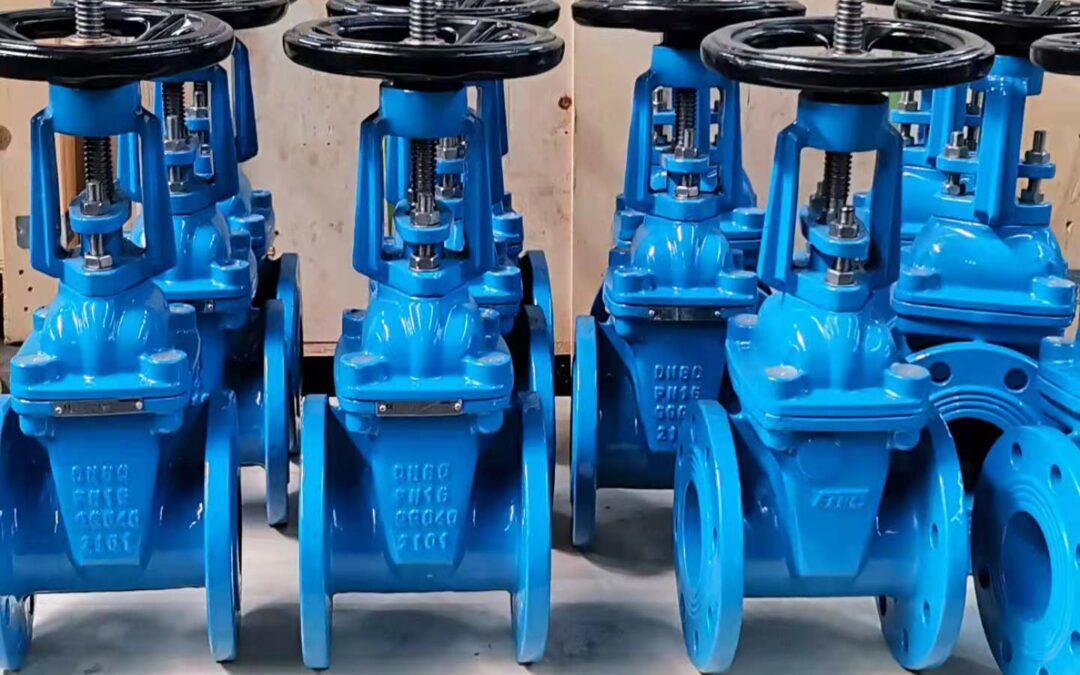
• Задвижка BS5163 pn16 are widely used for fluid flow control in industrial piping systems. Manufactured according to British Standard BS5163, these gate valves offer reliable performance for applications across various industries.
• BS5163 covers specifications for 3-piece bolted bonnet, rising stem, solid wedge gate valves for steam, water and general services. Key components include a metal body, a wedge-shaped gate and a stem that opens and closes the gate. BS5163 valves are available with an oscillating or non-oscillating stem as per the standard.

Common Types Of BS5163 Gate Valves
• Wedge Gate Valve: The most basic type with a wedge-shaped gate that opens and closes the valve by sliding vertically along sealing surfaces. These are suitable for low-medium pressure applications up to 600 пси.
• Double Eccentric Gate Valve: Features two off-centre discs that rotate to open and close the valve. They offer high durability and can handle higher pressures up to 2000 пси.
• BS5163 Resilient Seated Gate Valve: Utilizes an elastomeric seal for leak-free operation and easy maintenance. Suitable for higher pressures up to 2500 psi and corrosive mediums.
• Pressure Seal Gate Valve: Employs an o-ring seal that functions without external pressure. Allows zero leakage and high sealing efficiency under high-pressure conditions.
• Anti-Static Gate Valve: Ideal for applications involving flammable liquids and gases. The antistatic components prevent build-up of electrostatic charges for increased safety.
• Cryogenic Gate Valve: Designed for extremely low temperatures using special materials like stainless steel and monel that withstand cryogenic services.
Key Features Of BS5163 Gate Valves
• Rugged Construction: Ковкий чугун, cast steel or stainless steel body capable of withstanding high pressures and mechanical stresses.
• Metal Seating: Pinned and bolted metal seats provide tight sealing at high differential pressures.
• Bolted Bonnet: Bonnet bolted to the main valve body for easy maintenance without disconnecting piping.
• Rising Stem: Provides mechanical advantage and easy handling of the valve especially at higher pressures.
• Anti-Static Design: Static conductive surface finishes prevent build-up of electrostatic charges inside the valve.
• Wide Range of End Connections: Фланцевый, threaded or welding ends as per ANSI, DIN or JIS standards.
• Tight Shut-off: Efficiency class VI as per BS5163 ensures zero leakage when the valve is fully closed.
• Certifications: Manufacturing complying with ISO 9001 for quality assurance.
Reputed Manufacturers Offer Reliable BS5163 Gate Valve
BS5163 gate valves from reputed manufacturers offer reliable and durable performance for industrial fluid control applications. Their rugged design, metal sealing surfaces and bolted bonnet construction ensure leak-free operation and long service life. BS5163 gate valves are available in different designs to suit wide-ranging operational requirements and industrial processes. Industries that commonly utilize BS5163 gate valves include power, масло & газ, добыча, water treatment and chemical processing.
июль 22, 2023 | Новости
Обратные клапаны, также известный как односторонний клапан, допускать поток жидкости только в одном направлении через систему трубопроводов. Они открываются, чтобы обеспечить прямой поток, и пассивно закрываются, чтобы предотвратить обратный поток.. При правильном выборе обратного клапана, системы получают защиту, поддерживать перепад давления, изолировать разделы, и обеспечить эффективную перекачку.

Обратные клапаны являются важными компонентами в различных промышленных применениях, включая:
• Насосы: Для предотвращения обратного потока после выключения насоса
• Компрессоры: Чтобы избежать обратного потока, который может повредить лопасти
• Котлы и сосуды под давлением: Чтобы остановить дренаж системы
• Технологические линии: Обеспечить одностороннюю переброску между судами и частями.
• Линии водоснабжения: Для предотвращения загрязнения из обратного потока
Обзор фланцевых двухдверных обратных клапанов
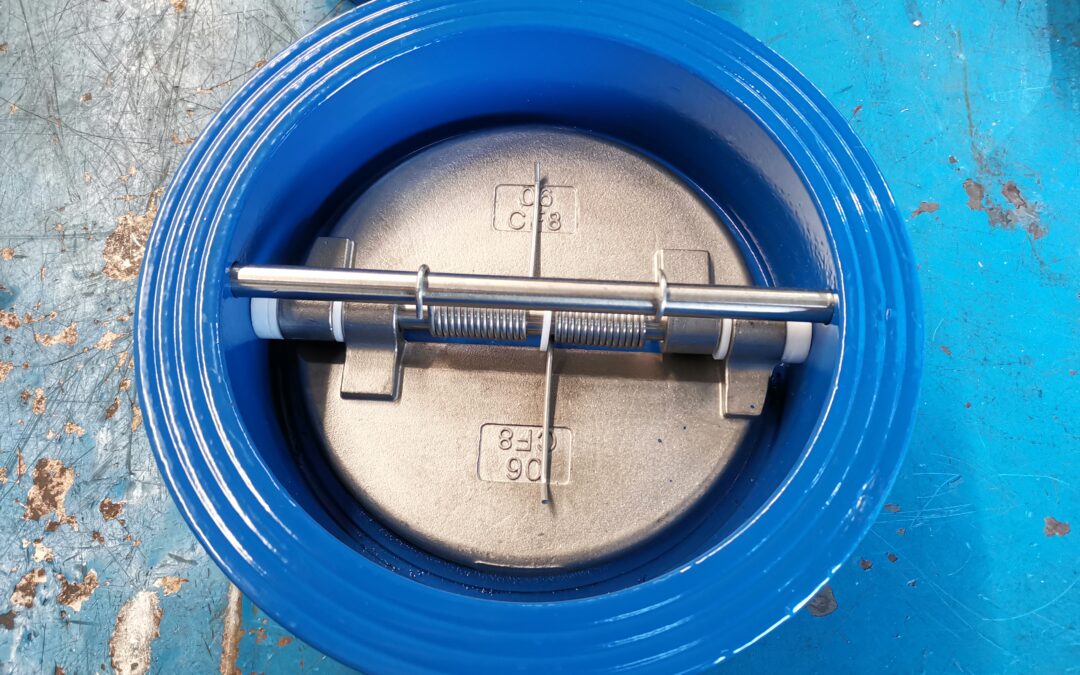
Фланцевый двухдверный обратный клапан состоит из корпуса с двумя закрывающими пластинами или дверцами, установленными внутри на петлях. Когда жидкость попадает в клапан, двери распахиваются, обеспечивая беспрепятственный поток через полный проход. Когда поток пытается повернуть вспять, двери быстро закрываются, чтобы блокировать обратный поток. Предложение обратных клапанов с двойной дверью:
• Поток по всему диаметру трубы для минимального падения давления.
• Возможность работы с волокнистыми материалами без засорения.
• Легкий доступ для осмотра и обслуживания внутренних дверей.
• Такие опции, как двойные пластины для критически важных служб, требующих резервирования.
Подъемные обратные клапаны и их работа
Китай Подъемный обратный клапан содержит диск и шарнирный узел, прикрепленный снаружи к корпусу клапана. Когда начинается прямой поток, диск поднимается вверх, позволяя пройти через клапан. Пружина обеспечивает быстрое закрытие диска при изменении направления потока.. Основные характеристики подъемных обратных клапанов:
• Компактная и легкая конструкция с внешними движущимися частями.
• Более низкое давление открытия для высокой чувствительности.
• Пружины, адаптированные к условиям давления
• Подходит для вертикальной или горизонтальной установки.
Межфланцевые обратные клапаны имеют один круглый запорный диск, удерживаемый между двумя фланцами корпуса.. Диск плотно прилегает к седлу выше по потоку.. Их ключевые свойства:
• Тонкий межфланцевый корпус, предназначенный для установки между фланцами.
• Отсутствие полостей в корпусе минимизирует задержку жидкости и загрязнение.
• Часто используется в фармацевтических целях высокой чистоты.
• Подходит для размеров до 8″ и номинальное давление до 300 пси
Рекомендации по выбору обратного клапана
Правильный подбор размеров и выбор прочной конструкции от надежных производителей гарантируют надежность., длительная работа обратного клапана. Выбор оптимального типа обратного клапана, учитывать:
• Давление применения, температура, и характеристики СМИ
• Желаемая чувствительность к давлению открытия
• Требуемая пропускная способность и минимальная потеря давления
• Вертикальная и горизонтальная установка
• Частота проверок и необходимости технического обслуживания
• Ограничения по стоимости и ожидаемый срок службы.
июль 21, 2023 | Новости
Поворотные затворы — это универсальные промышленные клапаны, используемые для изоляции и регулирования потока в различных системах трубопроводов.. На основе их дизайна диска, butterfly valves can be classified as double eccentric, высокая производительность, and double offset high performance types. Each has unique characteristics suited for certain applications.

Double eccentric valves are ideal for tight shutoff duties. High performance valves suit throttling and high temperature media. Double offset valves provide the best of both capabilities. Partnering with a manufacturer experienced in all three technologies ensures access to the ideal butterfly valve for the service conditions. This article will outline the key differences between these butterfly valve varieties in terms of their construction, performance attributes, and suitable applications.
Двойные эксцентриковые дисковые затворы
Double eccentric butterfly valve China has the disc center offset on both sides of the shaft centerline. This allows the use of resilient seating material which conforms to seal against the disc edge despite misalignment from pressure or temperature effects. The offset also reduces disc rubbing and wear. Double eccentric valves provide reliable bi-directional shutoff even after thousands of operation cycles. They handle moderate temperature applications.
High Performance Eccentric Butterfly Valves
Высокопроизводительный эксцентриковый дроссельный клапан has the disc and shaft centers aligned. The disc edges press against metal seats on both sides to achieve bubble-tight shutoff through metal-to-metal contact. They use disc materials like stainless steel to provide low leakage across a wide temperature range. Their metal seats allow operation up to 800°F. High performance valves provide precise flow control and can be used for throttling applications.
Double Offset High Performance Butterfly Valve
Double offset high performance butterfly valve combines the benefits of both double eccentric and high performance designs. They have the eccentric offset disc for soft sealing as well as metal seats for temperature resistance. The metal-to-resilient dual seating enables zero-leakage shutoff as well as extended service life. They offer high precision flow control capabilities spanning cryogenic to elevated temperature applications.
Performance Comparison
- Shutoff ability: Double offset high performance valves offer best shutoff. High performance valves can have minor seat leakage.
- Temperature range: High performance handles over 800°F. Double eccentric suits lower temperatures. Double offset is in between.
- Flow control: High performance and double offset types allow excellent throttling control. Double eccentric mainly for on/off use.
- Cycle life: Double eccentric offers longest seat life of up to 100,000 cycles. Double offset gives moderate life.
Типичные области применения
- Двойной эксцентрик: Вода, масло, газ, and chemical lines for tight shutoff against differential pressure.
- High performance: Steam lines, электростанции, and high temperature processing where precise flow control is critical.
- Двойное смещение: LNG and cryogenic services along with steam and chemical lines needing temperature resistance and low leakage.

июль 21, 2023 | Новости
Поворотные затворы широко применяются в промышленных трубопроводах для регулирования и перекрытия потоков жидкостей и газов.. They feature a circular disc (called a ‘butterfly’) that rotates within the valve body to open or close the flow path. Butterfly valves offer simple design, low cost, easyoperation and quick opening/ closing action. As reputy valves manufacturer and supplier in China, today, we will comment about butterfly valves in various types:

The Three Main Types Of Butterfly Valves Based On Body Construction Are:
Lug Type (Flanged Valves)
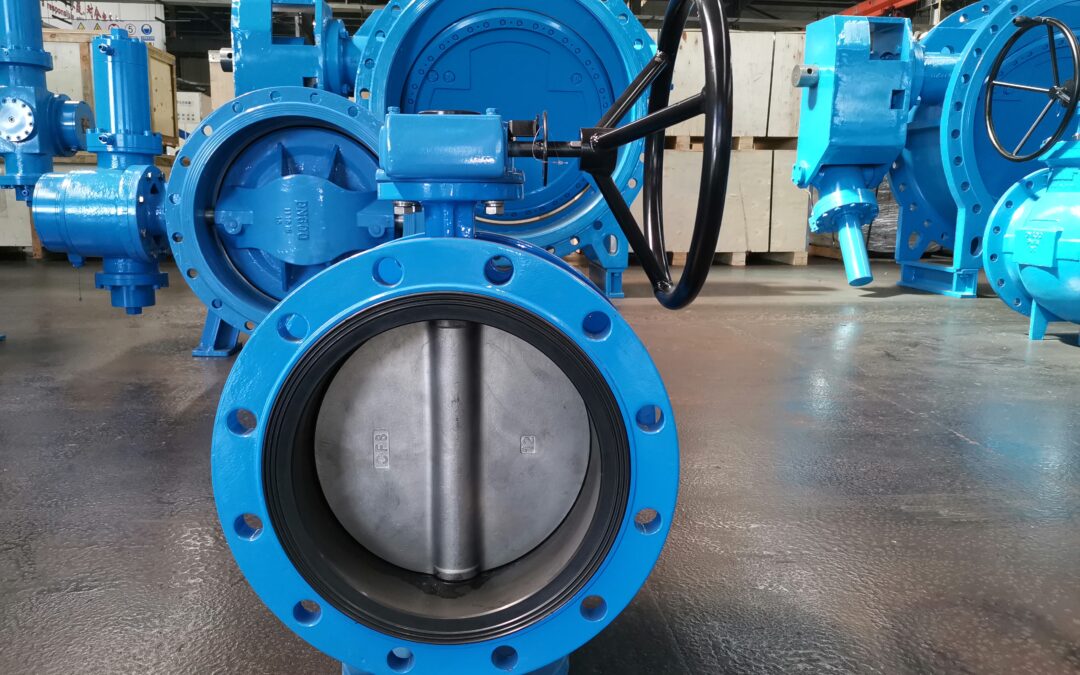
Lug type butterfly valves feature a body with integral flanges or lugs. The butterfly disc is fitted between two ‘lugs’ extending from the body.The disc seals against the face of the lugs or flanges. Обычно, we call it двухфланцевый дроссельный клапан.
These valves are suitable for larger NPS sizes, higher pressures and severe services. The double-flanged construction allows easy installation between adjacent flanges of the pipeline.
Lug type butterfly valves are available in a wide range of dimensions as per international standards such ANSI, ОТ,JIS and BS. Large size double flange butterfly valve with discs up to 120 inches in diameter are used for high-flow industrial applications.
Wafer Type
Wafer butterfly valves have a body designed to be sandwiched between flanges of the adjacent pipeline. The body has Wafer-style ports that match the flange drilling of adjoining pipes.
Since межфланцевый дроссельный клапан does not have integral flanges, they offer compact design and lower cost compared to lug type valves. They are mainly used for smaller NPS sizes and light-medium duty applications.
The wafer body is compressed between two ANSI/ASME or other standard flanges to complete the pipeline connection. Special gaskets are used to seal the body between the flanges.
Lugged Wafer Type
Lugged wafer butterfly valves combine features of lug and wafer type bodies. They have integral lugs with drilled holes to facilitate bolted installation between flanges.
The lugged wafer design offers advantages of bolted connections as well as compact size. As the body sits between the adjoining flanges, shorter length of pipe is required compared to lug type valves.
These valves are commonly used for medium-heavy duty industrial applications having NPS sizes between 2 к 40 inch and ANSI pressureclass ratings up to 2500.
Key Factors To Consider For Selecting Butterfly Valves
• Valve Duty – Indicating required flowrate, pressure rating and close-off class for proper valve sizing.
• Temperature and Media – Type of fluid and operating temperature range for suitable material selection.
• Pipe Connection – АНСИ, DIN or JIS flanges; threaded or grooved ends as perspecific piping system.
• Actuator Type – Руководство,pneumatic or electric actuators based on requirements for automated or remote operation.
• Sealing – Suitable sealing for prevention ofcasing leakage in high-pressure applications.
• Other Factors – Space requirements, maintenance access, vacuum compatibility, double shut-off capability and more.
Leading butterfly valve manufacturers offer standard as well as custom designed valves with various options to meet project-specific needs. They provide valve materials, pressure ratings and sizes as per different international standards for global applicability.



