
Août 10, 2023 | Nouvelles
Les robinets à tournant sphérique sont un type de vanne utilisé pour contrôler le débit de liquides, des gaz, et boues dans un système de tuyauterie. Ils se composent d'un creux, perforated ball that sits inside a valve body. When the valve handle is turned to open the valve, the ball rotates so that the hole becomes aligned with the inlet and outlet ports, allowing fluid to flow through. When closed, the hole becomes perpendicular to the ports, blocking flow. Ball valves are used in many industrial applications thanks to their efficient on/off control, conception à passage intégral, and tight sealing capabilities.
There are a few main types of ball valves, including full bore, reduced bore, trunnion mounted, floating ball, and top entry. They come in sizes ranging from 1/8″ to 72″ and pressure classes from 150 à 4500 psi. Ball valve bodies are made from materials like brass, acier inoxydable, Acier Carbone, and other alloys for corrosion resistance. Seats and seals are usually teflon, nylon, delrin, viton, or other elastomers.

China Ball Valves
China has become one of the world’s largest manufacturers and exporters of industrial valves and piping components. This includes a full range of ball valves in carbon steel, acier inoxydable, bronze, brass, aluminum, fonte, and other materials. There are over 5000 valve and pipe fitting factories throughout China producing these products.
The main benefits of China ball valves include:
- Price – Labor costs are lower in China, so pricing is very competitive. Valves can be 20-50% cheaper than European and American brands.
- Custom options – Chinese factories are willing to customize valves to your exact requirements. This includes non-standard materials and dimensions.
- Range of types – Chinese factories make every type of ball valve such as standard port, port complet, reduced port, flanged, threaded, high pressure, cryogenic, aseptic, et plus.
- International standards – Many manufacturers comply with API, ANSI, BS, DEPUIS, and other standards and can provide the required certification.
- Large production capacity – Highly efficient factories can produce huge volumes of valves to suit large projects and bulk orders.
When sourcing from China, it’s recommended to use an established manufacturer who can provide quality and performance guarantees. There are some low quality valves on the market, so purchasing through a trusted supply chain is key.
Ball Check Valves From China Market
A ball check valve is a specialized type of check valve which uses a ball to block reverse flow. It acts similar to swing check valves with the added benefit of full bore and minimal pressure loss. Ball check valves consist of a free floating ball inside which sits on a seat when flow stops. Flow entering the valve lifts the ball off the seat and holds it against a stop. If flow tries to reverse, the ball is pushed onto the seat, closing the valve. This prevents backflow without the use of springs or moving parts.
Key benefits of ball check valves include:
- Full bore design – The ball retracts to the side during forward flow, leaving the entire pipe bore open. This reduces pressure loss compared to other check valves.
- Straightforward operation – There are no flappers, springs, or moving parts. The ball simply seats and unseats automatically based on flow.
- Tight sealing – The spherical ball provides a complete seal when fully seated on the valve body. This prevents leaks.
- Low maintenance – Without springs and moving parts, these valves require very little maintenance.
- Design compact – Ball check valves fit into tight spaces and have a small footprint compared to swing and lift checks.
- Low slam and surging – The ball closes more gently than a swing check, reducing water hammer.
Ball check valves are commonly used in water systems, chemical handling, CVC, steam lines, and other non-critical backflow protection applications. They come in sizes from 1/4″ to 12″ NPS in steel, brass, plastic, and stainless steel. Always follow the pressure and temperature limits when selecting these valves.
Ball Valves As Brass Materials
Brass ball valves offer excellent corrosion resistance, machinability, and strength. The main types of brass alloys used include:
- 85-5-5-5 brass: 85% copper, 5% zinc, 5% lead, 5% tin – The most common and inexpensive brass for ball valves. Good strength and corrosion resistance. The lead improves machinability.
- Ecos brass: 99% copper, 1% silicon – A more eco-friendly lead-free brass alloy that machines well. It offers excellent corrosion resistance.
- 230 brass: 70% copper, 30% zinc – A strong brass alloy with high zinc content. It has good corrosion resistance in water services. The lower copper content reduces cost.
- Naval brass: 60% copper, 39% zinc, 1% tin – This high strength alloy resists dezincification and is suited for high pressure lines. It has excellent corrosion resistance in salt water environments.
- 360 brass: 60% copper, 40% zinc – The highest zinc brass alloy. It has the highest strength but lower corrosion resistance than other brasses.
The main benefits of brass ball valves include:
- Corrosion resistant – Forms a protective patina layer and resists weathering and chemical corrosion. Good for water and chemical services.
- Biofouling resistance – The smooth surface inhibits microbial growth and buildup compared to iron valves.
- Machinable – Easy to machine and thread for adding end connections. Allows economical manufacture.
- Strong – Brass has good tensile strength and pressure rating. Suitable for pressures up to 3000 psi.
- Non-sparking – The copper in brass makes it non-sparking. Useful in flammable gas lines and hazardous areas.
Brass ball valves are an excellent choice for commercial plumbing systems, marine applications, CVC, gas handling, and general industrial uses. They provide long service life and reliable operation.
Août 9, 2023 | Nouvelles
Fixed cone valves have proven themselves as reliable and versatile pressure retaining valves for over a century. As one of the earliest pressure vessel isolation devices developed, their design advantages still make them the prudent choice for critical applications today. This post examines the operation and uses of fixed cone valves, with a focus on Hilton’s hall-bungar design which set the standard over 100 years ago.

Fixed Cone Valve Operation
Fixed cone valves consist of a truncated conical shape attached to the pressure vessel wall, known as the “fixed cone.” A mating conical shaped closure piece, or “movable cone,” shifts over the fixed cone to seal the opening. Gaskets between the cones maintain the pressure-tight seal.
To open the valve, the movable cone piece shifts laterally along guides to clear the fixed cone opening. Hydraulic or pneumatic actuators provide the linear force to shift the movable cone as needed. An internal sealing arrangement prevents leakage during the shifting operation, which takes only seconds to complete. Once open, full bore flow capacity is maintained comparable to the pipe size.
As pressure increases inside the vessel, it exerts a preloading force between the cones that enhances the seal’s integrity. This self-energizing sealing principle allows fixed cone valves to achieve zero leakage in either flow direction, making them ideal for critical service applications. Proper material selection and lapping the conical surfaces during manufacturing ensures bubble-tight shut-off for the life of the valve.
Established in the late 19th century, Hilton Limited has long been an industry leader in manufacturing high-integrity fixed cone valves with their proprietary “Hall Bunger” conception. Named after the engineers who invented the variation, fixed cone hall bunger valve improved upon the fixed cone concept with innovative features that advanced safety and reliability.
Key improvements included filleted transitions between the cones and gasket housing for reduced stress concentrations. Generously radiused sealing surfaces enhance load distribution and improve fatigue performance. En outre, dynamically aligned actuators ease shifting loads on the cones. These design refinements still serve as the benchmark in fixed cone valve performance today.
Applications Of Fixed Cone Valve
Critical services demand absolute reliability from valves under extreme conditions. Fixed cone valves like Hall-Bunger designs meet these challenges:
- Nuclear Power Plants: Isolation of primary coolant circuits, steam generators, pressurizers and other nuclear process systems require the utmost in safety and leak-tightness.
- Petrochemical Plants: Isolation of high pressure/temperature process streams, distillation columns and other refining units handling hazardous hydrocarbons.
- LNG Terminals: Containment of cryogenic natural gas during transport, storage and regasification require valves proven to handle thermal cycling.
- Industrial Boilers: High integrity isolation of pressurized steam circuits generating power for factories and other facilities.
- Usines de pâtes et papiers: Control of high pressure flows carrying wood chips, black liquor and other unit process fluids.
- Offshore Oil Rigs: Valves must operate flawlessly in space-constrained and hazardous offshore environments.
Benefits From Fixed Cone Hall Bunger Valve
Fixed cone valve advantages make them ideal for critical duty isolation applications, y compris:
- Zero leakage – Self-energizing seal operation provides assured shut-off for the life of the valve.
- Full bore flow – No obstruction when open to minimize pressure drop.
- Strength – Conical sealing surfaces distribute stresses evenly for long fatigue life.
- Fiabilité – Simple design results in fewer parts prone to wear or malfunction.
- Actuation – External hydraulic actuation removes actuator from high pressure area.
- Maintainability – Cones easily accessible for refurbishment without disrupting piping.
- Material Options – Wide variety of alloys available to match corrosive service conditions.
- Sécurité – Fully tested and globally certified for use in highly hazardous applications.
When absolute reliability is mission-critical, engineers trust fixed cone valves like Hilton Hall-Bunger designs to safely isolate high-risk systems and protect people, equipment and the environment. Their time-proven sealing principle delivers zero-leak performance that offshore platforms, nuclear plants and critical process industries demand.
Août 5, 2023 | Nouvelles
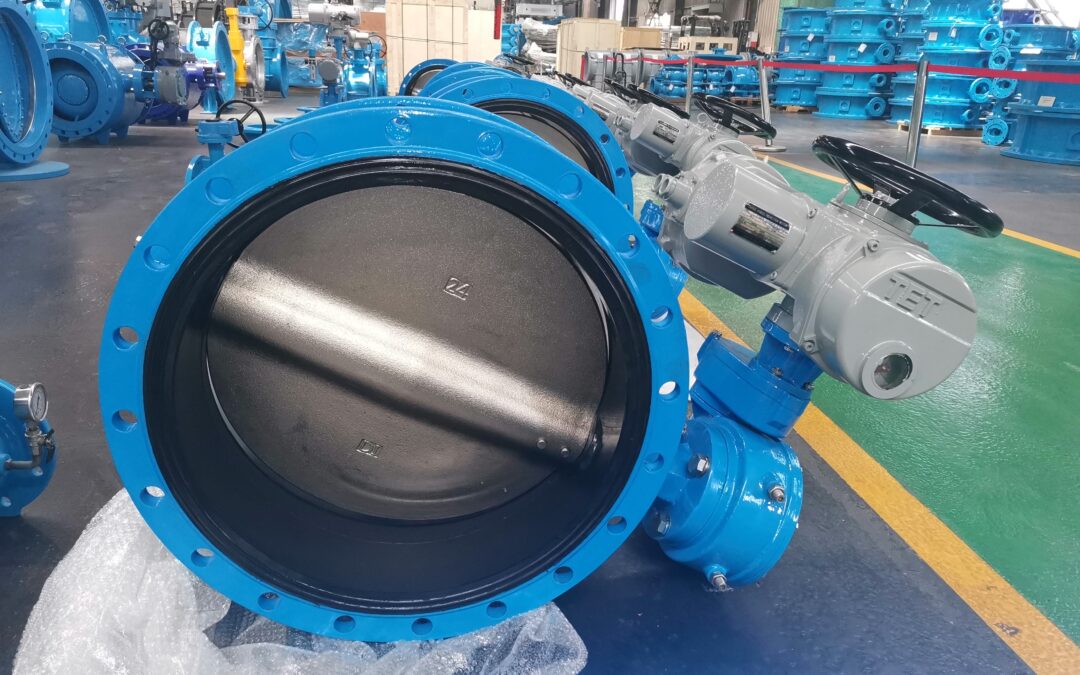
Butterfly valves are used in a wide range of industrial applications to control the flow of liquids, des gaz, et boues. The circular disc rotates on an axis to either allow or prevent flow through the pipe. Butterfly valves are valued for their simple operation, grande fiabilité, low cost, and low pressure drop.
China is a leading global manufacturer of high-performance butterfly valves for industrial use. Chinese manufacturers utilize innovative butterfly valve designs and robust materials to create valves that outperform traditional designs.

Types Of Butterfly Valves Made In China
There are several main designs of butterfly valves produced by Chinese manufacturers:
U Type Butterfly Valve
The disc on a u-type butterfly valve is attached on the upper end of the pivot axis. The u-shape allows for unrestricted flow when the valve is open. This makes u-type designs well-suited for applications that require low pressure drop across the valve. They can handle high flow capacity while generating little turbulence.
Concentric Disc Butterfly Valve
A concentric butterfly valve has a pivot axis located at the center of the disc. This allows the disc to align perfectly with the flow when fully open yet still seal tightly when closed. Concentric discs provide optimal flow control and are easy to operate from fully closed to fully open.
Double Eccentric Butterfly Valve China
Double eccentric butterfly valves have the pivot axis located above and offset from the center of the disc. When open, the disc seals against an elastomer gasket inside the pipe to create a bubble-tight shutoff. The offset pivot gives double eccentric valves the tight shutoff capabilities of eccentric valves with the high capacity of concentric types.
Advantages of Butterfly Valves from China
Butterfly valves from China offer several advantages over traditional designs:
- Advanced Disc Seals – Improved elastomer and metal disc seals prevent leakage even after thousands of open/close cycles.
- Durable Disc Materials – Discs made from stainless steel, fonte, alloy steel, or other exotics resist corrosion, erosion, and high temperatures.
- Rangeability – Advanced disc profiles provide precise flow control over a wide range of flow rates.
- Low Torque Operation – Optimized bearings and seals reduce the torque required to operate the valve.
- Format compact – Innovative designs allow substantial flow capacity through a compact valve body.
- Custom Configurations – Chinese factories can provide custom butterfly valves modified for specialized applications.
Ideal for Tough Industrial Applications
Thanks to their innovative features and robust construction, butterfly valves from China excel in harsh industrial environments, y compris:
- Traitement chimique – Corrosion-resistant exotic alloys handle volatile chemicals and acids.
- Slurry Transport – Heavy-duty seals withstand abrasive wear from slurries.
- Huile & Gaz – High bidirectional shutoff protects against dangerous leaks.
- La production d'énergie – Precise flow control regulates steam, fuel oils, and combustion gases.
- Mining – Durable valves stand up to contaminated slurry flows and high differential pressures.
- Water Systems – Compact, high-capacity valves optimize municipal water distribution.
China butterfly valves outperform the competition in demanding industrial environments while providing substantial cost savings. With fast delivery times and responsive customer service, Chinese manufacturers make it easy to upgrade your piping systems with innovative butterfly valve technology. Evaluating Chinese suppliers on quality, testing, matériaux, and design is worthwhile to access butterfly valves engineered for optimal durability, performance, and safety.

Août 4, 2023 | Nouvelles
Clapets anti-retour, également connu sous le nom de vannes unidirectionnelles, sont un élément crucial dans de nombreux systèmes de traitement des fluides industriels. Ces vannes permettent au fluide de s'écouler dans une direction mais empêchent le reflux. Il existe de nombreux types de clapets anti-retour utilisés dans différentes applications, but wafer check valves and flanged check valves are two of the most common types used in industrial settings.
China has become one of the leading manufacturers of high-quality check valves for industrial applications. Chinese manufacturers like Chine clapet anti-retour d'ascenseur produce a wide range of check valves including wafer, double door, and flanged designs. The quality of China-made check valves rivals that of top manufacturers around the world while being available at more competitive prices.

Clapets anti-retour Wafer
Wafer check valves from China are sandwiched between two pipeline flanges in a piping system. Wafer double door check valve designs utilize a dual-door configuration with spring-loaded flappers. This allows fluid to flow smoothly in the forward direction while providing a tight seal to prevent backflow.
Wafer check valves are compact and lightweight with a slim body. This makes them ideal for applications where space is limited. The wafer style also allows for easy installation and maintenance since you can access the internals by simply removing the valve from between the pipeline flanges.
Double door wafer check valves are maintenance-free and provide reliable backflow prevention even in low-pressure systems or applications handling contaminated fluids. The dual flappers ensure good sealing even with low backpressure.
Flanged Check Valves
Flange double door check valve designs have flanged ends that bolt directly to mating flanges on the pipeline. This makes them ideal for larger pipe diameters and high-pressure applications. The flanged ends provide a robust, leak-proof seal with the pipe flanges.
Double door flanged check valves provide the same benefits as wafer designs. The dual flappers provide tight sealing and prevent backflow even at low pressures. The flanged design allows these valves to handle higher pressures than wafer types.
Flanged check valves are available in cast iron, Acier Carbone, acier inoxydable, alloy steels, and other materials for compatibility with various fluids. Exotic alloys can handle caustic, corrosive, or high-temperature applications.
Benefits of China Check Valves
There are several important benefits of specifying China-made check valves for industrial applications:
High Quality Manufacturing – China has continually improved its manufacturing standards. Check valves from China often meet or exceed the quality levels of American and European brands.
Innovative Designs – Chinese valve manufacturers have invested heavily in R&D. They often improve upon standard check valve designs for better performance.
Cost Savings – Labor and manufacturing costs are lower in China. This allows Chinese suppliers to offer check valves at very competitive pricing.
Custom Options – China makers can provide custom valves with non-standard connections, matériaux, seals, and other modifications for special applications.
Fast Turnaround – Large manufacturing capabilities allow Chinese factories to fulfill orders faster with short lead times.
Responsive Customer Service – Language barriers are shrinking. Many Chinese suppliers have English-speaking sales engineers to handle technical questions.
With the combination of innovative designs, high manufacturing quality, and low costs, China has become a top source for check valves used in industrial plants, traitement chimique, la production d'énergie, mining, pétrole et gaz, traitement des eaux usées, and other fluid handling applications. By specifying China-made check valves, engineers can improve the performance of their piping systems while staying within budget.
The next time you need to source check valves for an industrial project, don’t overlook quality manufacturers based in China. Wafer and flanged check valves from China provide the performance and reliability required for critical applications while delivering substantial cost savings compared to American or European brands. Do your due diligence to verify the quality level and capabilities of the supplier. Then take advantage of China’s manufacturing strengths to get the best check valves to protect your piping systems from reverse flow.
Août 3, 2023 | Nouvelles
Les vannes papillon sont un type courant de vanne de régulation de débit utilisé dans une variété d'applications industrielles. Cependant, les vannes papillon standard ont certaines limites en ce qui concerne l'efficacité et les performances d'étanchéité. This is where double offset butterfly valves come in.

• What is a double offset butterfly valve?
• How do they provide improved performance?
• Main features and benefits
• Typical applications
• Best uses
• Factors to consider when choosing a double offset butterfly valve
What Is A Double Offset Butterfly Valve?
A double offset butterfly valve as high performance butterfly valve, has a similar design to a standard butterfly valve, featuring a disc that rotates within a valve body to control the flow of liquids and gases. Cependant, instead of a disc that fits directly against the seat, a double offset butterfly valve’s disc is offset from the seat in two directions:
- The disc is offset radially outward from the center of the valve.
- The disc is also offset vertically away from the seat.
- This double offset design provides several performance benefits when compared to standard butterfly valves.
How Do They Provide Improved Performance?
The double offset design provides three main advantages:
Improved sealing – As the disc approaches the seat, fluid is squeezed out from the sides due to the radial offset. This creates an enhanced seal between the disc and seat for a better shut-off.
Reduced torque – Since the disc does not touch the seat, friction is reduced. This allows the valve to be operated with lower torque and less wear on stem seals and bearings.
Lower pressure drop – The vertical offset provides more clearance for fluid to flow through when open, resulting in a lower pressure drop across the valve when compared to standard butterfly valves.
• Bubble-tight shutoff – Eliminates fluid leakage common to traditional butterfly valves
• Low stem friction – Minimal stem thrust and bearing wear enables long service life
• Low operating torque – Easy open/close operation even on large valves
• High flow efficiency – Pressure drop of just 2-5% when fully open
• Compatible with a range of fluids – Suitable for liquids, des gaz, slurries and steams
• Fewer moving parts – Simple and robust design still provides excellent performance
Typical Applications
Some common applications for double offset butterfly valves include:
• Pulp and paper plants – For process control of pulp stock, white and black liquor
• Centrales électriques – Used in boiler feedwater, condensate and circulation water systems
• Petrochemical plants – Found in distillation towers, process lines and aromatics plants
• Oil and gas facilities – Deployed in LNG terminals, pipelines and offshore platforms
• General industrial – For flow control of liquids, slurries, gases and steam in manufacturing plants
• Wastewater treatment – Regulating flow in primary sedimentation, aeration and other systems
Best Uses for Double Offset Butterfly Valves
The best applications for double offset butterfly valves are those requiring:
• Tight shutoff – Nearly zero leakage, especially for isolating or throttling compressible fluids
• Low operating torque – Where stem loads and actuator sizing are a concern
• Minimal pressure drop – Where efficiency is important to reduce pumping loads and costs
• Ability to handle particles – Suitable for slurries and other fluid streams with entrained solids
• Infrequent operation – Recommended for predominantly on/off service as opposed to modulating
Factors To Consider When Choosing
Look for a valve with:
• Proper pressure/temperature ratings for your system
• Disc and seat materials compatible with your fluid type and properties
• An actuator able to provide the torque required for valve operation
• Suitable connection types that match your line piping
• Optional features like a lockable handwheel for manual valves and an internal coating for abrasive fluids
• Third-party certification from an organization like ASME or ISO



