
Août 29, 2023 | Nouvelles
Moving high volumes of water reliably requires robust pipeline valves sized appropriately for the flows and pressures involved. For demanding water transmission and treatment applications, British Standard BS5163 establishes stringent quality and performance benchmarks for large PN16 gate valves.

Higher flow pipelines call for correspondingly sized valves. Consider large diameter gate valves when:
- Pipe diameters exceed 500mm – Valves should match pipes for full unobstructed flow.
- High flow demands – Larger gates are required for efficient bulk liquid transfer.
- Quick isolation needs – Large valves close faster than smaller ones when sealing off flows.
- Thick fluids – Viscous media needs bigger valves to avoid high pressure drops.
Oversized valves also provide spare capacity to accommodate future system expansions.
Understanding PN16 Ratings
PN designations define a valve’s maximum working pressure capacity:
- PN16 = 16 bar (~230 psi)
- Suitable for high pressure water transmission lines and treatment plant piping
- Accommodates occasional pressure surges above normal operating pressures
- Enables future relocation to higher pressure service if needed
- Higher PN40 or PN64 ratings offer more headroom but cost more. Choose ratings appropriate for current and future demands.
BS5163 Compliance Matters
BS5163 is the British standard for large diameter water pipeline valves (BS5163 gate valve). Compliance demonstrates quality for municipal water authorities.
To achieve BS5163 certification, valves must meet stringent benchmarks for:
- Matériaux – Corrosion-resistant bronze and stainless steel internals
- Essai – Seat and shell leak tightness verified via air testing
- Workmanship – Dimensional accuracies and surface finishes
- Functionality – Smooth opening/closing and wedge sealing
- Certificat – Third-party validation testing
Insist on BS5163 paperwork from suppliers to ensure large valves meet water industry needs.
En résumé, when your project’s reliable water transmission depends on robust large diameter valves, turn to Vanne à vanne BS5163 PN16 sized appropriately for the application. Their certified quality will provide lasting leak-free performance.
Août 26, 2023 | More information
TWT as leading valves manufacturer in Tianjin, Chine, provides quality valves since 1956 years till now. We have involved in valves industry almost 80+ years experiences; owned intelligent producing euqipment; De plus, we are the industry pioneer in domestic as specializing in valves R&D and manufacturing. Above benefits make us to win the foreign customers and orders. Certainement, vanne papillon de type plaquette always the popular product to oversea market to match our customers demand, such as the market from East Europe, Middle-east, South Africa, Southeast Asia and North Amercia, etc..
UN wafer style butterfly valve is a type of flow control device commonly used in industrial applications to regulate or isolate the flow of fluids. It is named “wafer style” due to its compact and thin design, resembling a wafer.
Some key details about wafer type butterfly valves:
- Designed to be installed between two pipeline flanges or fittings.
- Do not have integral flanges on the valve body.
- Typically have a flat circular body with a central butterfly disc as the flow control element.
- Available in various body materials like cast iron, fonte ductile, aluminum, acier inoxydable.
- The disc is usually a metal alloy and seals against a resilient liner in the body.
- Actuation can be manual, pneumatic, or electric.
- Often used for isolation rather than throttling purposes.
- Bidirectional and suitable for flow regulation applications.
- Come in sizes from 2-48 inches or larger.
Août 25, 2023 | More information
China wafer butterfly valve manufacturers and supplies quality lug wafer butterfly valve in bulk. So what is lug type wafer butterfly valves?
A lug wafer butterfly valve is a type of butterfly valve that combines the features of both a wafer-style and a lug-style butterfly valve. It is designed for applications where end connections are required for bolting the valve in place without the need for additional flanges.
Lugs have holes for bolts to pass through to connect the valve between two pipeline flanges.
- Lug pads provide sufficient surface area for bolt torque to create a tight seal.
- Lugs are shorter than a full flange, resulting in a lighter valve design.
- Flange gaskets seat against the lugs to create the seal faces.
- Valve body is typically made of cast iron, alloy steel or stainless steel.
- Lug wafer design is more compact than double flanged valves.
- Allows quick installation between pipe flanges without separate flange adapters.
- Suitable for sizes 2” to 24” generally.
- Used in applications like water, huile, gaz, steam etc.

Août 24, 2023 | Nouvelles
Dans le monde des vannes industrielles, butterfly valves play a vital role in regulating fluid flow within pipelines. Among the various types available, soft sealing butterfly valves, cast iron butterfly valves, and eccentric butterfly valves are widely used across different industries. In this comprehensive article, we will explore the functionality, features, and applications of these three types of butterfly valves. By understanding their unique characteristics, you can make informed decisions when selecting the most suitable valve for your specific needs.

Section 1: Soft Sealing Butterfly Valves
Soft sealing butterfly valves are designed to provide effective sealing and control of fluid flow. They feature a resilient seating material, such as rubber or elastomer, in direct contact with the disc, ensuring a tight seal when the valve is closed. The soft sealing mechanism enables these valves to effectively prevent leakage and provide bubble-tight shut-off.
1.1 Functionality and Features:
Soft sealing butterfly valves operate by rotating a disc, which is positioned perpendicular to the flow direction, within a circular body. This movement controls the flow of the fluid by either allowing it to pass through the valve or blocking it completely. The rubber or elastomer seat provides excellent sealing capabilities, even in low-pressure applications.
1.2 Applications:
Soft sealing butterfly valves are commonly used in industries where leak-tight sealing is crucial, such as water treatment plants, traitement chimique, Systèmes CVC, and food and beverage industries. Their reliable sealing properties make them suitable for both on-off and throttling applications.
Section 2: Cast Iron Butterfly Valves
Cast iron butterfly valves are known for their durability, strength, et la rentabilité. These valves are constructed using cast iron, a robust material that can withstand high-pressure and high-temperature environments.
2.1 Functionality and Features:
Cast iron butterfly valves operate using a disc that is placed parallel to the flow direction. Lorsque la vanne est ouverte, the disc allows unobstructed flow, while rotating the disc to a closed position restricts the flow. These valves often feature a metal or resilient seat that provides reliable sealing.
2.2 Applications:
Due to their strength and reliability, cast iron butterfly valves are commonly used in industrial applications, including water distribution, traitement des eaux usées, centrales électriques, et traitement chimique. They are favored for their ability to handle high-pressure applications and can be an economical choice when compared to other valve types.
Section 3: Eccentric Butterfly Valves
Eccentric butterfly valves are designed to provide efficient flow control while minimizing wear and friction. They feature an offset disc that is positioned away from the centerline of the valve body, allowing for a bubble-tight seal and reduced friction during operation.
3.1 Functionality and Features:
Eccentric butterfly valves operate by rotating the offset disc to control fluid flow. The offset design creates a cam-like effect during opening and closing, ensuring a tight seal while reducing wear on the sealing materials. These valves often employ a metal seat to withstand high temperatures and abrasive media.
3.2 Applications:
Eccentric butterfly valves are commonly used in industries that handle abrasive or corrosive fluids, such as mining, traitement chimique, pulp and paper, et stations d'épuration. Their ability to handle high-pressure and high-temperature applications, combined with reduced wear and friction, makes them a reliable choice for demanding environments.
Août 23, 2023 | Nouvelles
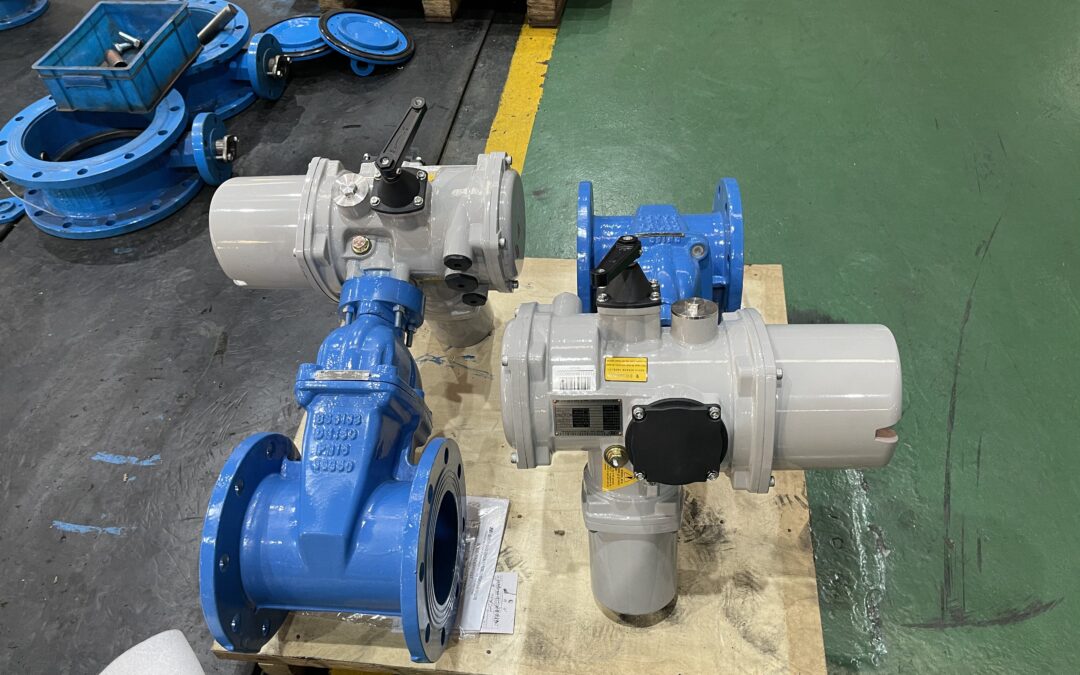
Reliable isolation and flow control remain indispensible across waterworks, industrial plants and other piping infrastructure. Gate valves satisfy these critical needs through robust yet economical designs optimized for various services. Whether molded of cast steel, ductile iron or incorporating resilient sealing technologies, gate valves excel at modulating fluid transmission simply and affordably. Proper specification harnesses their versatility safely years into the future.

Cast Steel Gate Valves
Composed entirely of corrosion-resistant alloy steels suitable for marine environments, cast steel gate valves feature:
- Thick walls resist shocks and vibration holding tight shut-offs indefinitely even after decades of use.
- All-welded construction joins components monolithically without weakening flanges or crevices for bindweed.
- Hard-chromed interiors provide a slick surface smoothly guiding gates for reliable shut-off.
Maintaining strength advantages over traditional cast iron, ductile iron valves accommodate:
- Moderate working pressures serving waterworks distribution and sewage transmission networks economically.
- Compact dimensions suiting tight equipment spaces within plants powered by their corrosion resistance.
- Threaded, flanged or mechanical joint ends tailor interfacing with any piping specification.
Replacing conventional wedge gates, resilient O-ring seals eliminate:
- Leakage concerns allowing tighter shut-off assurances ideal for isolating hazardous fluids.
- Friction enabling smooth operation from buried services to agitated chemical handling.
- Maintenance shutdowns as seal material withstands abrasive erosive media far better than metal.
Configurations
Standard features include:
- Non-rising stems preventing accidental over-torquing and breakage.
- Wheel, handwheel or motorized actuation suitsing installation ergonomics.
- Bonnet and packing seals lock out contaminants while permitting Easystem lubrication.
Conforming to industry standards from AWWA, MSS, ASME or API, gate valves’ longevity, safety and simple prismatic regulation prove their worth across countless critical flow diversions worldwide. Proper selection aligns ideal designs with hydraulic and chemical service conditions sustaining infrastructure reliably.



