En la industria global del control de fluidos, Las marcas de válvulas establecidas y los distribuidores regionales enfrentan un dilema estratégico cada vez mayor.: válvulas de catálogo estándar (como mariposas disponibles en el mercado, puerta, pelota, y válvulas de retención) son esenciales para una rotación constante del almacén, yet they rarely win high-margin EPC infrastructure tenders or severe-service industrial contracts.
When municipal water utilities, desalination plants, chemical processors, or energy contractors issue project specifications, they frequently demand non-standard face-to-face dimensions, specialized corrosion-resistant alloys, or custom actuation packages. Building dedicated in-house foundries and CNC lines for every niche requirement requires prohibitive capital expenditure (CapEx).
Partnering with an experienced manufacturing specialist for custom OEM industrial valve solutions bridges this capability gap—allowing global valve brands to scale their engineering portfolio, protect brand reputation, and accelerate time-to-market without operational bloat.
1. Expanding Portfolio Depth Without Heavy CapEx
Developing a new line of engineered valves—such as large-diameter AWWA C504 double-flanged butterfly valves, metal-seated knife gate valves, or cryogenic trunnion ball valves—involves substantial upfront investment in R&D, pattern tooling, spectrometer metallurgy labs, and high-pressure testing benches.
Leveraging Existing Foundry & Machining Infrastructure:By collaborating with an established OEM partner, valve brands gain immediate access to multi-axis CNC machining centers, automated resin-sand molding lines, and high-tonnage hydrostatic test rigs without tying up balance-sheet capital.
Faster Time-to-Market on New Product Lines:Instead of spending 12 a 18 months qualifying raw casting suppliers and debugging tooling internally, brands can move from 3D CAD approval to pilot batch delivery in4 a 8 weeks, capturing time-sensitive market opportunities.
2. Winning Complex EPC Tenders with Non-Standard Engineering
Standard catalog products are built for average operating conditions. En contraste, complex engineering projects require tailored metallurgical and mechanical configurations to prevent premature seat failure, cavitation, or galvanic corrosion.
Custom OEM manufacturing empowers brands to say“Sí”to demanding project specifications across four critical dimensions:
Specialized Body & Disc Alloys:Moving beyond standard Cast Iron, Hierro dúctil (GGG40/GGG50), and WCB Carbon Steel toSS304, SS316L, Acero inoxidable dúplex (2205/2507), Aluminum Bronze (C95400/C95800), Monel, and Hastelloyfor seawater and aggressive chemical media.
Application-Specific Seat & Trim Engineering:ConfiguringEPDM, NBR, PTFE, RPTFE, Viton (FKM), PEEK, or Stellite hard-faced metal-to-metal seatsto handle abrasive mining slurries, high-temperature steam, or zero-leakage gas service.
Custom Dimensions & International Flange Standards:Manufacturing non-standard face-to-face lengths for legacy pipeline retrofits, custom stem extensions for buried service, and multi-standard flange drillings (ASME/ANSI, EN/DIN, JIS, Licenciatura, AWWA).
Turnkey Actuation & Control Packages:Delivering factory-assembled and calibrated automated valve packages equipped with pneumatic actuators, quarter-turn or multi-turn electric actuators, gearboxes, and positioners.
3. Standard Off-the-Shelf Sourcing vs. Custom OEM Partnership
For product managers and procurement directors evaluating supply chain models, the operational differences are clear:
Strategic Factor
Standard Catalog Sourcing
Custom OEM Valve Partnership
Product Differentiation
Low (identical to competitors’ stock)
High (bespoke specs & private-label branding)
Upfront R&D & Tooling Cost
Low, but restricted to fixed designs
Shared / optimized via OEM foundry expertise
Gross Margin Potential
Compressed by price competition
High-margin project & engineering value
Material & Trim Flexibility
Limited to standard WCB / DE + EPDM
Full alloy, coating (FBE/Nylon), & trim customization
EPC Tender Competitiveness
Eliminated when specs deviate from standard
Full compliance with bespoke engineering datasheets
4. Protecting Brand Equity Through Certified Quality Governance
For a global valve brand, every valve stamped with your logo carries your company’s reputation in the field. A single casting defect or seat leak in a pressurized municipal main or fire protection network can trigger costly warranty claims and disqualify a brand from future vendor lists.
A qualified OEM manufacturer safeguards your brand through verifiable quality assurance:
Full Material Traceability:Real-timeOptical Emission Spectrometer (OES)melt analysis backed byEN 10204 3.1 Material Test Certificates (MTC)for every heat batch.
100% Presión & Leakage Testing:Every valve undergoes strict hydrostatic shell and seat leakage testing in compliance withAPI 598, EN 12266-1, o YO ASI 5208prior to coating and crating.
Global Regulatory Compliance:Manufacturing under certifiedYO ASI 9001, YO ASI 14001, and ISO 45001 sistemas, supporting product compliance acrossCE (PED), WRAS, API, ANSI, and EN estándares, alongside third-party witness inspections bySGS, Bureau Veritas (VB), TÜV, or DNV.
Authentic Private-Label Execution:Precision cast-in body logos, laser-engraved stainless steel nameplates, custom RAL fusion-bonded epoxy (FBE) coatings, and export-grade packaging tailored to your brand guidelines.
Evaluating an OEM partner requires looking beyond brochures to their actual machining tolerances and testing discipline. The videos below walk through industrial valve CNC machining, assembly, and pressure-testing procedures.
5. How to Evaluate an OEM Industrial Valve Partner
Before entrusting your brand’s private-label or custom-engineered projects to an external manufacturer, technical procurement teams should verify four core benchmarks:
In-House CAD & FEA Engineering Capability:Can their engineers review your P&IDs, perform Finite Element Analysis (FEA) on pressure-retaining bodies, and issue detailed approval drawings within 24–48 hours?
Reverse-Engineering Support:Can they 3D-scan and replicate discontinued or legacy valves for industrial plant turnarounds?
Flexible MOQs for Project Trials:Do they support low minimum order quantities (p.ej., 1–5 units for modified standard valves) alongside full-container OEM production?
Transparent Inspection & Documentación:Do they provide complete QA/QC dossiers—including dimensional reports, coating thickness gauges (DFT), and test curves—before shipment?
Partner with TWT Valve for Custom OEM & ODM Valve Manufacturing
AtVálvula TWT, we serve as the behind-the-scenes engineering and manufacturing backbone for global valve brands, EPC contractors, y distribuidores industriales. Combining decades of foundry and machining expertise with strict international quality governance, we manufacture both standard and bespokeindustrial valve product lines—includingcustom butterfly valves, válvulas de compuerta, check valves, and ball valves.
Learn more about our production facilities and quality certifications on ourAbout TWT valves, o contact our engineering teamtoday with your technical specifications or CAD drawings to start a confidential OEM consultation.
El abastecimiento de hardware de control de flujo en China ofrece innegables eficiencias de costos y una enorme capacidad de fabricación para los contratistas EPC globales., autoridades de abastecimiento de agua, y distribuidores industriales. China produce una parte importante de las válvulas industriales del mundo, ranging from municipal resilient seated butterfly valves to high-pressure oil and gas gate valves.
Sin embargo, navigating the supplier landscape presents challenges. Distinguishing a genuine source manufacturer with in-house foundry and testing capabilities from a trading company can mean the difference between a successful long-term partnership and costly project delays.
As an establishedChina industrial valve manufacturerwith decades of global export experience, Válvula TWTpresents this practical procurement guide to help B2B buyers evaluate suppliers, verify quality, and streamline international valve sourcing.
1. Source Manufacturer vs. Trading Company: How to Identify Real Capabilities
The first step in B2B valve procurement is identifying whether you are dealing directly with an original manufacturer or an intermediary.
Audit the Foundry and CNC Workshop:A genuine factory owns or directly controls its foundry, casting mold inventory, CNC machining shop, and automated painting lines.
Verify On-Site Testing Equipment:Reliable valve manufacturers maintain dedicated testing laboratories equipped with spectrometers for chemical analysis, tensile testing machines, y 100% pressure test rigs.
Inspect Export Documentation:Request Mill Test Certificates (MTCs conforming to EN 10204 3.1) and verifiable ISO, CE, and WRAS/NSF quality certificates.
2. Key Standards and Certifications to Verify
Industrial valves installed in water transmission, generación de energía, or municipal infrastructure must comply with internationally recognized design and hygiene standards:
Application Sector
Essential Design Standards
Key Quality & Health Certifications
Abastecimiento & Municipal
EN 593, AWWA C504, Licenciatura 5155, EN 1171
WRAS, NSF/ANSI 61, YO ASI 9001
Industrial & Químico
API 609, API 600, ASME B16.34
CE / PED 2014/68/EU, YO ASI 14001
Fire Protection
UL Listed, FM Approved
YO ASI 45001
Ensure that supplier certificates are issued by accredited third-party bodies (such as TÜV, SGS, or Bureau Veritas) and that the product scope matches your project specifications.
3. Essential Quality Control Steps Before Dispatch
To mitigate risks when sourcing overseas, establish a strict Quality Assurance (QA) agreement with your supplier covering four critical inspection checkpoints:
Spectro Analysis of Raw Castings:Verify that ductile iron (GGG40/GGG50) or stainless steel heats meet required chemical compositions before machining.
Coating Thickness & Adhesion Inspection:Check internal and external Fusion-Bonded Epoxy (FBE) coating thickness (typically $\ge 250\ \mu\text{m}$) and spark testing for pinhole-free corrosion protection.
100% Hydrostatic Shell & Seat Leakage Testing:Ensure every valve undergoes pressure testing according to ISO 5208 or API 598 prior to packaging.
Export Packaging:Confirm that valve ends are protected with heavy-duty plastic caps and packed in heat-treated, fumigated plywood cases for ocean transport.
4. Leveraging Custom OEM and ODM Manufacturing
If your project requires specialized face-to-face dimensions, specific gearboxes, or custom brand markings, partner with a factory experienced in tailored engineering.
Through our specialized OEM custom industrial valve solutions, TWT Valve collaborates with international brands and engineering firms to provide private labeling, custom casting logos, and specialized internal trim configurations tailored to regional market needs.
Partnering with TWT Valve
With over four decades of metallurgical experience, state-of-the-art CNC machining centers, and a proven track record across global waterworks and power projects, Válvula TWTdelivers factory-direct reliability with full international compliance.
Learn more about our manufacturing heritage, advanced quality testing facilities, and global project references on ourAcerca de la válvula TWTpage.
Ready to Streamline Your Valve Sourcing?
Planning your next pipeline tender or looking to evaluate a direct factory partner in China? Contact TWT Valve todayto request technical catalog packages, quality certificates, or competitive factory-direct quotations.
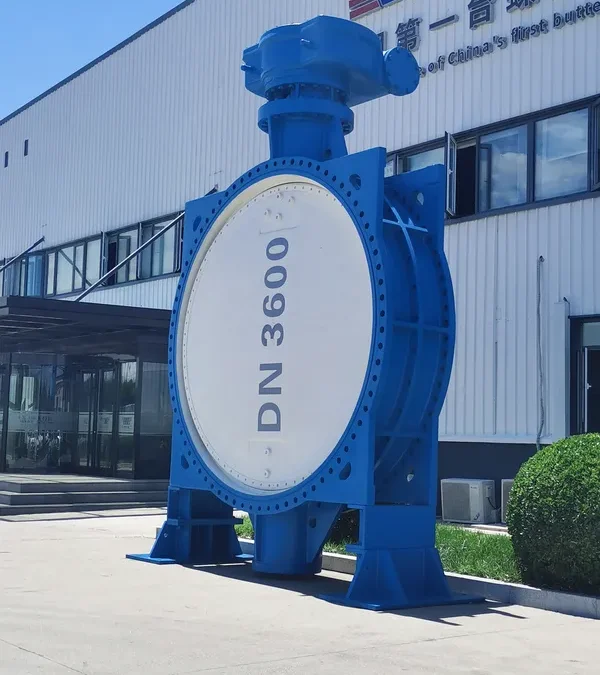
En ampliaciones a gran escala de la red municipal de agua, plantas desalinizadoras regionales, y sistemas de refrigeración industrial de gran volumen, las válvulas estándar disponibles en el mercado son insuficientes. These critical infrastructure projects rely heavily onlarge diameter industrial valves—typically defined as sizes ranging from DN1000 (40 pulgadas) up to DN3000 (120 pulgadas) and beyond.
Operating at massive scale, a single large-diameter valve must withstand hundreds of tons of hydrostatic pressure, resist continuous line deflection, and operate smoothly over a service life spanning decades. Manufacturing flow control hardware of this magnitude presents severe engineering, metallurgical, and machining challenges. As a premierChina industrial valve manufacturer, Válvula TWTshares an in-depth look into how advanced engineering and precise production deliver excellence in large-scale valve manufacturing.
The Engineering Challenges of Large Diameter Valves
Designing and producing heavy-duty valves above DN1000 requires overcoming physical and mechanical limitations that do not apply to smaller valves:
Under working pressure, the total surface area of a DN2000 disc experiences enormous hydrostatic thrust. Even minor structural deflection in the valve disc or body can cause seal misalignments, binding of the drive shaft, or localized seal tearing. Engineers must utilize Finite Element Analysis (FEA) to simulate stress distributions and optimize ribbing patterns on the valve body and disc before casting.
2. Casting Integrity and Metallurgical Uniformity
Pouring several tons of molten ductile iron or steel into a single mold carries risks of shrinkage cavities, porosity, and uneven cooling stresses. Achieving uniform nodular graphite distribution throughout thick wall sections is essential to prevent micro-cracks under dynamic line shock.
3. Torque Management and Actuation
As valve size increases, operating torque scales exponentially. Actuating a large double eccentric butterfly valve or heavy DI gate valve requires specialized heavy-duty multi-turn gearboxes or hydraulic/pneumatic actuators paired with high-precision drive stems to guarantee smooth 90-degree rotation without shaft deformation.
Core Milestones in Manufacturing Excellence
To consistently meet rigorous global infrastructure standards, large valve manufacturing requires specialized factory equipment and strict quality control:
Precision CNC Machining:Massive vertical lathe centers and floor-type boring mills are necessary to machine flange faces, body seats, and shaft bores to sub-millimeter tolerances.
Epoxy Powder Coating Protection:Large valves installed in buried underground pipelines or marine environments receive uniform, non-toxic Fusion-Bonded Epoxy (FBE) powder coatings to ensure corrosion resistance and fluid purity.
Sealing System Precision:Utilizing high-resilience, WRAS/NSF-certified EPDM rubber or dual-offset metal sealing systems to achieve zero-leakage shut-off under fluctuating pressures.
To review mechanical specifications and flange connection standards for large-scale hardware, browse our fullindustrial valve products catalog.
Key Applications in Global Infrastructure
Large diameter valves serve as primary control nodes across major infrastructure networks:
Project Sector
Valve Type Applied
Operational Requirement
Municipal Water Mains
Double Eccentric Butterfly Valves (DN1000–DN2400)
Low head loss, cierre hermético, and low actuation torque
Pumping Stations
Placa doble / Válvulas de retención de disco basculante
Non-slam fast response to prevent destructive water hammer
Raw Water Intake
Válvulas de compuerta con asiento resiliente (NRS)
Deep burial durability and zero-leak isolation
Power Plant Cooling Lines
Flanged Rubber Seated Butterfly Valves
Resistance to cavitation and high flow velocity
Tailored OEM Solutions at TWT Valve
Every major water transmission or power generation project operates under unique pressure ratings, trench layouts, and regional standards. Through our specialized OEM custom industrial valve solutions, TWT Valve custom-engineers large-diameter valves with tailored face-to-face dimensions, specialized disc materials (Duplex SS, Nickel-Aluminum Bronze), and integrated bypass valve systems for pressure equalization.
Uncompromising Quality Assurance
AtVálvula TWT, quality control is built into every step. Our testing facilities feature heavy-duty hydraulic testing rigs capable of subjecting large valves to 100% shell hydrostatic pressure tests and double-direction seat tightness verification prior to export packaging.
Learn more about our manufacturing heritage, heavy machining equipment, and global certifications on ourAcerca de la válvula TWTpage.
Consult on Your Heavy-Duty Project Specifications
Are you managing a large-scale municipal water scheme or thermal plant tender requiring certified large-diameter valves? Contact TWT Valve todayto request technical support, 3D CAD blueprints, or a competitive factory-direct quote.
En el tratamiento de aguas municipales, redes de distribución urbana, y sistemas de plomería residencial, La salud pública y la seguridad del agua son prioridades absolutas.. Every component that comes into direct contact with potable water—from large-diameter isolation valves to automated control units—must meet rigorous international health standards.
When specifying flow control hardware for drinking water projects, standard material durability is not enough. Regulators and municipal authorities demand proof that internal components do not leach toxic chemicals, heavy metals, or support microbial growth. This is whereWRAS y NSF certificationsbecome critical. As a trustedChina industrial valve manufacturer, Válvula TWTexamines why these compliance marks are indispensable for potable water valves.
The Hidden Risks of Uncertified Drinking Water Valves
Potable water is treated, filtered, and tested before entering municipal pipelines. Sin embargo, as water travels through valves and fittings, it remains in contact with metallic bodies, elastomeric seals, and protective coatings for extended periods.
If a valve is manufactured from uncertified or substandard materials, several hazards can arise:
Chemical Leaching:Toxic compounds or plasticizers from low-grade rubber seats (such as commercial NBR or recycled elastomers) can leach into the water stream, altering taste, odor, y seguridad.
Microbial Growth:Poor-quality interior epoxy coatings can degrade over time, providing a nutrient bed for bacterial biofilms to colonize.
Corrosion & Heavy Metal Contamination:Low-grade casting alloys can corrode prematurely, releasing undesirable metals into the public water supply.
What Is WRAS Certification? (UK Standard)
WRAS (Water Regulations Advisory Scheme)is a certification mark that demonstrates compliance with high standards set out by water regulations in the United Kingdom.
What It Tests:WRAS approval specifically tests non-metallic materials, elastomers (like EPDM and NBR rubber seals), and coatings to ensure they do not cause contamination, taint water, or promote the growth of aquatic microorganisms.
Compliance Assurance:For valves installed in UK municipal water networks or projects governed by British standards, passing mechanical tests is insufficient; the specific rubber compounds and epoxy powdersmusthold valid WRAS approval.
What Is NSF Certification? (North American & Global Standard)
NSF (National Sanitation Foundation)—specificallyNSF/ANSI 61 y NSF/ANSI 372—is the gold standard for drinking water system components in North America and across many international markets.
NSF/ANSI 61:Focuses on health effects, evaluating whether any contaminant or chemical compound leaches from the valve product into drinking water.
NSF/ANSI 372:Establishes mandatory criteria forlead-freecompliance, restricting the weighted average lead content in wetted surfaces to no more than 0.25%.
Achieving WRAS and NSF compliance requires rigorous control over every stage of valve production:
Certified Elastomer Formulation:Valve seats and O-rings must use virgin EPDM or NBR formulations explicitly tested and registered under WRAS or NSF guidelines.
Fusion-Bonded Epoxy (FBE) Revestimiento:Both interior and exterior valve body surfaces are coated with non-toxic, food-grade epoxy powder that resists chemical corrosion and prevents direct contact between water and ductile iron.
Traceable Supply Chains:Manufacturers must maintain strict batch records proving that raw materials match certified laboratory testing formulations.
Through our specialized OEM custom industrial valve solutions, TWT Valve manufactures drinking water valves equipped with certified components tailored to international municipal bidding requirements.
Quality Assurance at TWT Valve
AtVálvula TWT, we integrate uncompromising health and safety standards into our manufacturing processes. Every valve destined for municipal waterworks undergoes 100% shell hydrostatic testing, low-pressure seat tightness testing, and strict quality verification.
Learn more about our foundry heritage, advanced testing laboratories, and global compliance certificates on ourAcerca de la válvula TWTpage.
Source Certified Valves for Your Municipal Project
Are you bidding on a municipal water project that mandates strict WRAS, NSF, or ISO compliance? Contact TWT Valve todayto request compliance certificates, technical data sheets, and factory-direct project pricing.
Seleccionar la válvula de mariposa industrial adecuada implica algo más que especificar los materiales del cuerpo y las dimensiones del disco.. One of the most critical engineering decisions is choosing the correctend connection type. The connection design determines how the valve integrates into the piping system, how easy it is to install or replace, and whether it can handle specific operational conditions such as dead-end service.
The three primary connection styles for industrial butterfly valves areOblea, Arrastrar, y con bridas (Double Flanged). As an establishedChina industrial valve manufacturer, Válvula TWTbreaks down the differences, ventajas, and ideal applications for each connection type to help you select the best hardware for your piping infrastructure.
1. Wafer Type Butterfly Valves: Compact & Economic
Structural Design
A válvula de mariposa de obleafeatures a compact, flat body designed to be sandwiched between two pipe flanges. Long bolts (studs) pass through the entire pipe flange assembly and encase the valve body.
Key Characteristics
Ultra-Compact Footprint:Short face-to-face dimensions save space in tight mechanical rooms or pumping stations.
Lightweight & Económico:Minimal body material reduces both valve weight and transport costs, making it lower in cost compared to flanged alternatives.
Limitations:Wafer valves cannot be used indead-end service (where one side of the pipe is disconnected for maintenance while the other remains under pressure), because removing the downstream flange bolts releases the valve entirely.
2. Válvulas de mariposa tipo orejeta: Versatile for Dead-End Service
Structural Design
A válvula de mariposa de orejetafeatures threaded metal inserts (agarradera) protruding outward around the perimeter of the valve body. Bolt holes match the bolt pattern of the connecting pipe flanges.
Key Characteristics
Independent Bolting:Instead of through-bolts, short bolts thread into the valve body from both sides.
Dead-End Service Capability:Because each flange is bolted independently to the valve body, the downstream piping can be disconnected without relieving line pressure on the upstream side. This is essential for pump station maintenance and tank isolation.
Moderate Weight:Heavier than wafer types due to the extra metal lugs, but still lighter than double flanged bodies.
3. con bridas (Double Flanged) Válvulas de mariposa: Maximum Heavy-Duty Stability
Structural Design
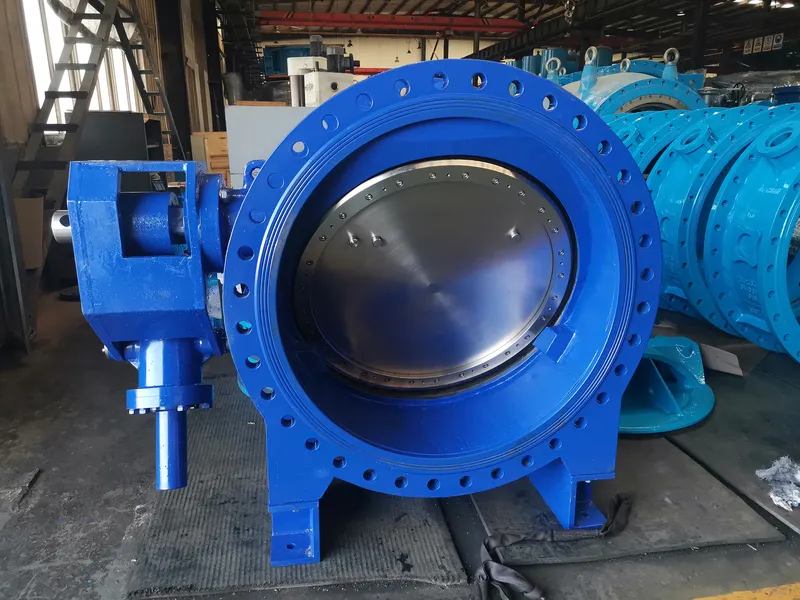
A válvula de mariposa de doble bridafeatures complete integral flanges at both ends of the valve body, designed to mate directly with matching pipe flanges using standard nut-and-bolt sets.
Key Characteristics
High Structural Integrity:Flanged connections handle line stress, thermal expansion, and bending moments far better than wafer or lug valves.
Ideal for Large Diameters:Highly recommended for large-diameter pipelines (DN300–DN3000) and underground municipal water mains.
Superior Gasket Sealing:Provides robust sealing surfaces for high-pressure lines (PN16, PN25, Class 150/300).
Side-by-Side Comparison: Oblea vs.. Lug vs. con bridas
Feature / Metric
Válvula de mariposa de oblea
Válvula de mariposa de orejeta
Double Flanged Butterfly Valve
Bolting Method
Long studs pass through both pipe flanges
Short bolts thread directly into body lugs
Bolted directly flange-to-flange
Dead-End Service
No
Sí
Sí
Weight & Costo
Lightest / Lowest Cost
Moderate
Heavy / Highest Structural Rigidity
Space Required
Minimal face-to-face
Moderate face-to-face
Longer face-to-face dimension
Best For
Space-constrained pipelines, general utilities
Pump outlets, line isolation, maintenance nodes
Large-diameter water mains, high-pressure lines
To explore detailed technical datasheets and flange drilling options across all connection styles, browse our fullindustrial valve products catalog.
How to Choose the Right Connection Type for Your Project
Choose Wafer Valveswhen pipeline installation space and budget are primary constraints, and the line will not require single-side disconnection during operation.
Choose Lug Valveswhen you need isolated downstream maintenance capability, dead-end service at pipe terminals, or reliable pump discharge isolation.
Choose Double Flanged Valvesfor high-pressure surge lines, large-diameter buried pipelines, or critical infrastructure where structural integrity is paramount.
Custom Engineering Solutions at TWT Valve
Whether your project calls for resilient seated wafer butterfly valves, double eccentric lug valves, or large-diameter flanged butterfly valves, Válvula TWTdelivers precision-machined solutions tailored to international standards (EN 1092-2, ANSI B16.1, AWWA C504, Licenciatura 5155).
Through our specialized OEM custom industrial valve solutions, we offer custom face-to-face dimensions, specialized seat materials (EPDM, NBR, Viton, Metal), and custom body coatings for aggressive media.
Learn more about our manufacturing heritage, advanced testing equipment, and global certifications on ourAcerca de la válvula TWTpage.
Need Technical Drawings or Factory-Direct Pricing?
Not sure which connection style fits your engineering blueprints? Contact TWT Valve todayto speak with our sales engineers, request 3D CAD models, or receive a competitive factory-direct proposal.