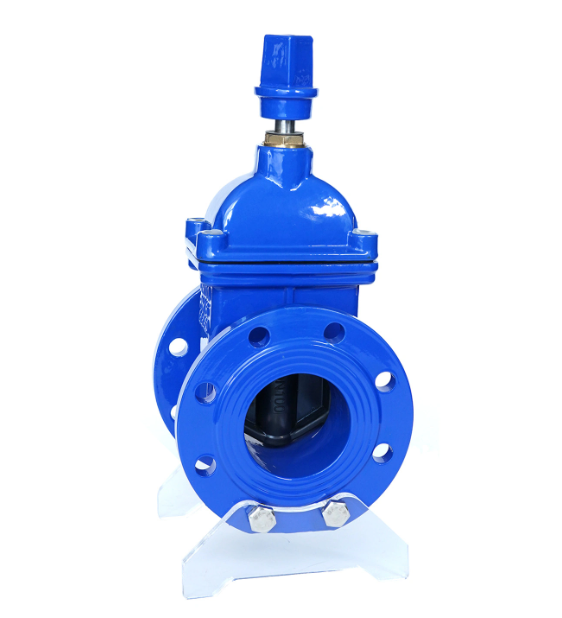
Explorer le monde diversifié des vannes à vanne
Chaque type de robinet-vanne possède ses propres caractéristiques uniques, presque comme des personnalités, parfaitement adapté pour relever différents défis en matière de contrôle des fluides. Dans cet article, nous embarquons dans un voyage pour découvrir les bizarreries et les capacités de ces compagnons de vannes, discovering where they shine brightest. From handling the gentle flow of water to the mighty rush of oil and gas, understanding the nuances between these gate valves is akin to mastering the art of orchestrating fluid dynamics in industrial symphonies. Let’s delve into the world of gate valves and explore the differences and applications of three distinct types: manual gate valve, robinet-vanne en fonte, and non-rising stem gate valve.
Manual Gate Valve
Conception et fonctionnement:
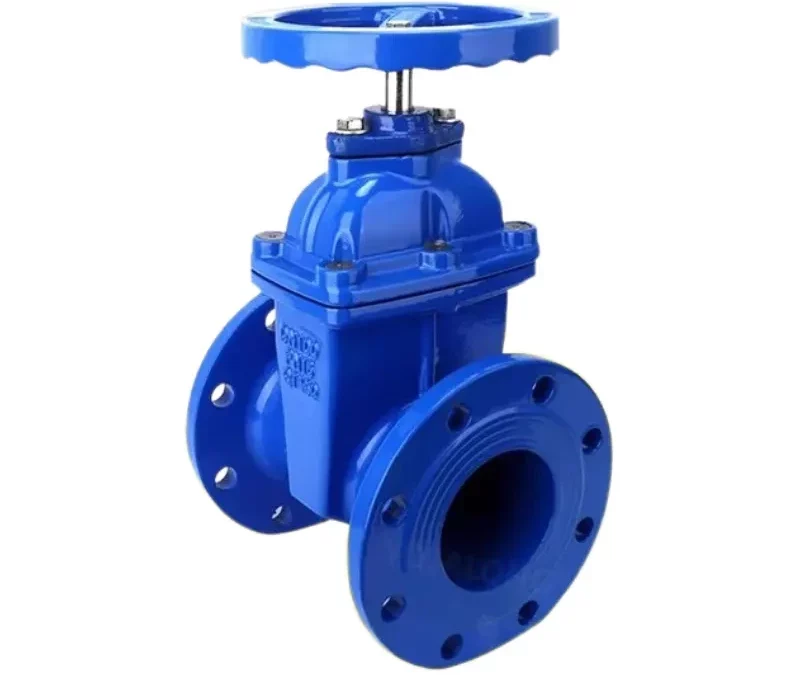
UN manual gate valve, also known as a knife valve or slide valve, is a linear motion valve. It features a flat closure element (the “gate”) that slides into the flow stream to provide shut-off. The valve’s operation involves moving the gate perpendicular to the flow direction. Manual actuation (usually via a handwheel) controls the gate’s position.
Avantages et inconvénients:
Avantages:
- Inexpensive and easy to maintain.
- Excellent for on-off services.
- Inherently fire-safe when used with a metal sheet.
Disadvantages:
- Poor throttling characteristics due to erosion of the seat and disk during throttling.
- Slow open and close time.
- Not suitable for sanitary applications.
Applications:
- Used in various industrial sectors, y compris le pétrole et le gaz, pharmaceuticals, fabrication, automotive, and marine.
- Ideal for slurries and viscous liquids (par exemple., heavy oils, molasses, cream).
- Wherever a reliable shutoff valve is needed.
Cast Iron Gate Valve
Design and Features:
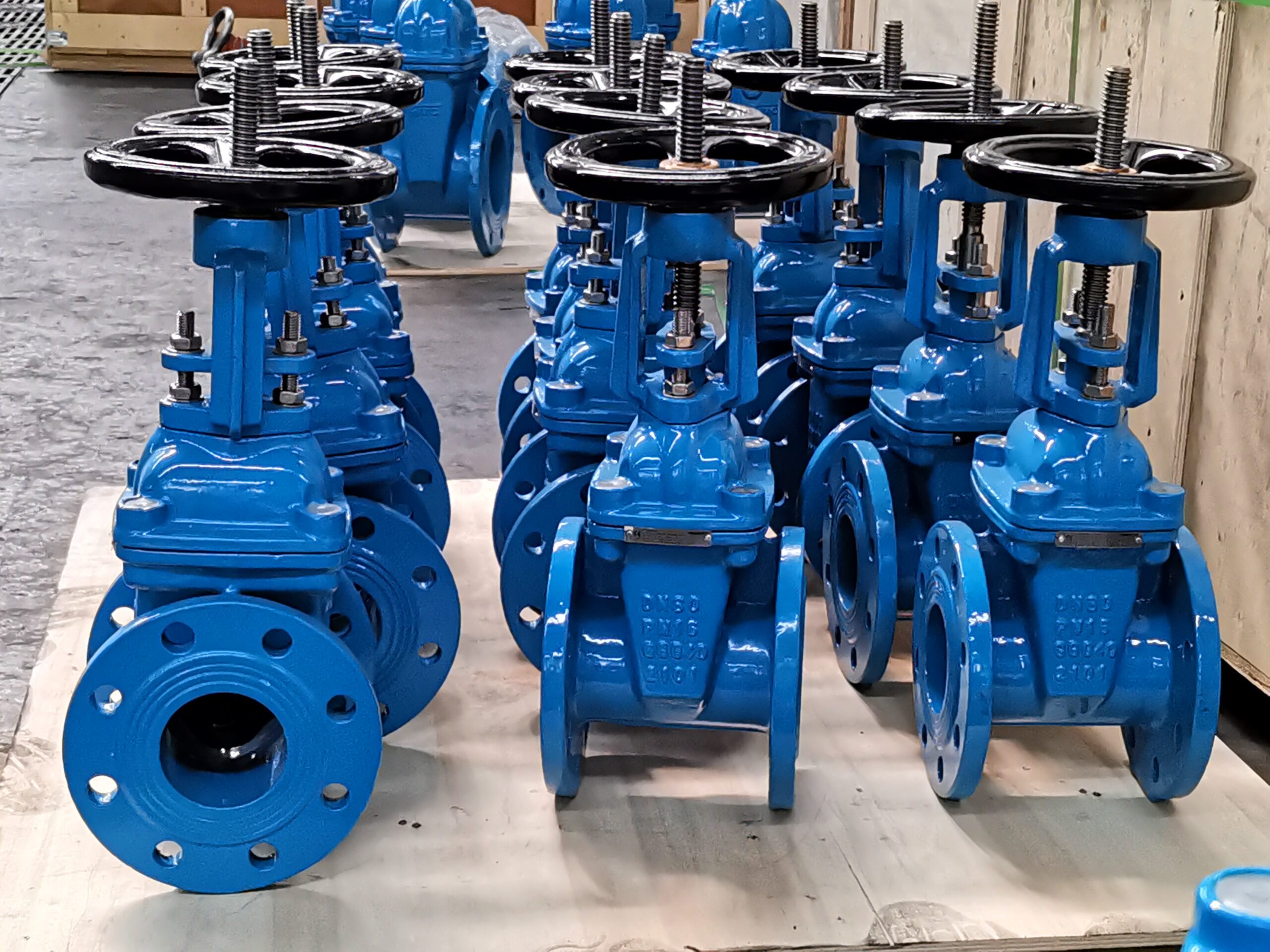
Cast iron gate valves are commonly made from ductile iron or cast iron. They come in both rising stem and non-rising stem designs. Rising stem gate valves have a stem that moves vertically during operation. Non-rising stem gate valves have a stationary stem, simplifying installation and maintenance.
Avantages et inconvénients:
Avantages:
- Space-saving design (non-rising stem).
- Suitable for underground applications and ships.
- Resilient seated versions available for water treatment.
Disadvantages:
- Limited stem lubrication (non-rising stem).
- Corrosion susceptibility (non-rising stem).
Applications:
- Cast iron gate valves find use in water treatment, wastewater management, and other industrial processes.
- Non-rising stem variants are popular where vertical space is limited.
Non-Rising Stem Gate Valve
Design and Functionality:
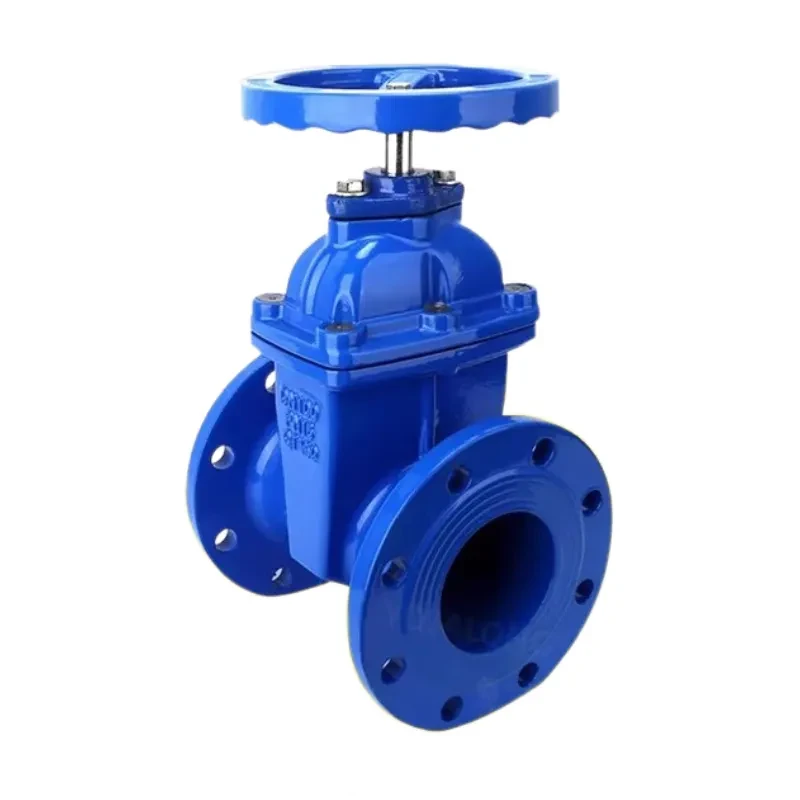
Unlike traditional rising stem gate valves, China non-rising stem gate valves operate differently. The stem does not move visibly during valve operation. Plutôt, it rotates within the valve body to raise or lower the gate.
Avantages et inconvénients:
Avantages:
- Space-efficient (no need for extra space above the valve).
- Easy installation and maintenance.
Disadvantages:
- Limited stem lubrication.
- Potential for corrosion.
Applications:
Widely used on ships, in underground installations, and wherever vertical space constraints exist. Suitable for applications requiring infrequent valve use.
In summary, gate valves play crucial roles in various industries. Whether you need a reliable shutoff, space-saving design, or specialized features, understanding the differences between these gate valve types ensures optimal selection for your specific application needs.